
On this pageTable of contents+
- 1. Featured Snippets Fell Sharply. Are They Still Worth Pursuing?
- 2. How Does AI Overview Select Content, and What Can Increase the Chance of Inclusion?
- 3. AI Overviews and Featured Snippets Appeared to Trade Places in March. Was This Related to a Google Update, and Should Teams Watch These Dates More Closely?
- 4. Sitelinks Rose Almost Tenfold. Does the Site Architecture Need to Be Rebuilt?
- 5. Non-Branded Queries Also Trigger Sitelinks. Should Brand and Generic Keywords Still Use Separate Structural Standards?
- 6. Knowledge Cards Still Have Limited Coverage but Grew by 54 Percent. Is It Worth Preparing Early?
- 7. Will AI Overviews Reduce Website Traffic, and What If Users Get the Answer Without Clicking?
- 8. Since SEO Tools Can Track AI Overview Coverage, Should AI Citation Become a Routine Metric?
- 9. AI Overviews Are Flexible. Could They Eventually Replace Other Search Features, and Should Teams Prepare for That Direction?
- Conclusion

Between 2024 and 2025, the structure of Google's search results changed substantially.
AI Overviews moved to the foreground and began to absorb some functions previously served by other result features.
The source article drew ten observations from an Ahrefs analysis of one million US desktop search-result pages. These source-era figures may affect how an SEO team interprets the market:
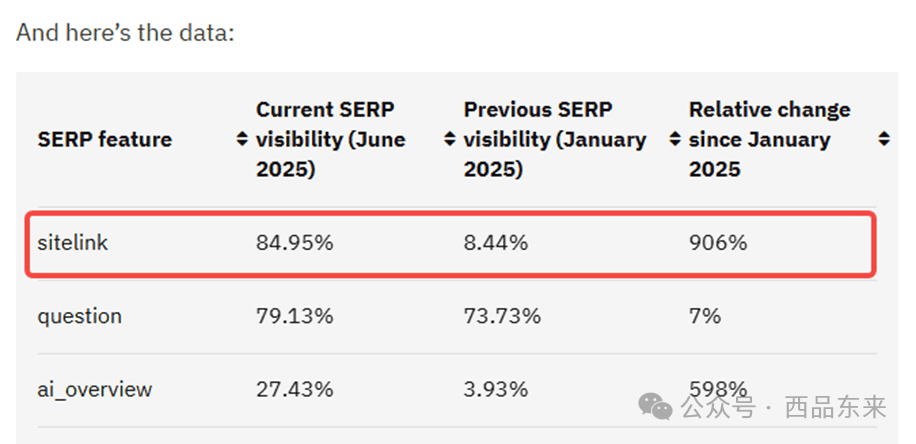
- AI Overview visibility reportedly rose from 3.93 percent to 27.43 percent, an increase of almost six times in six months.
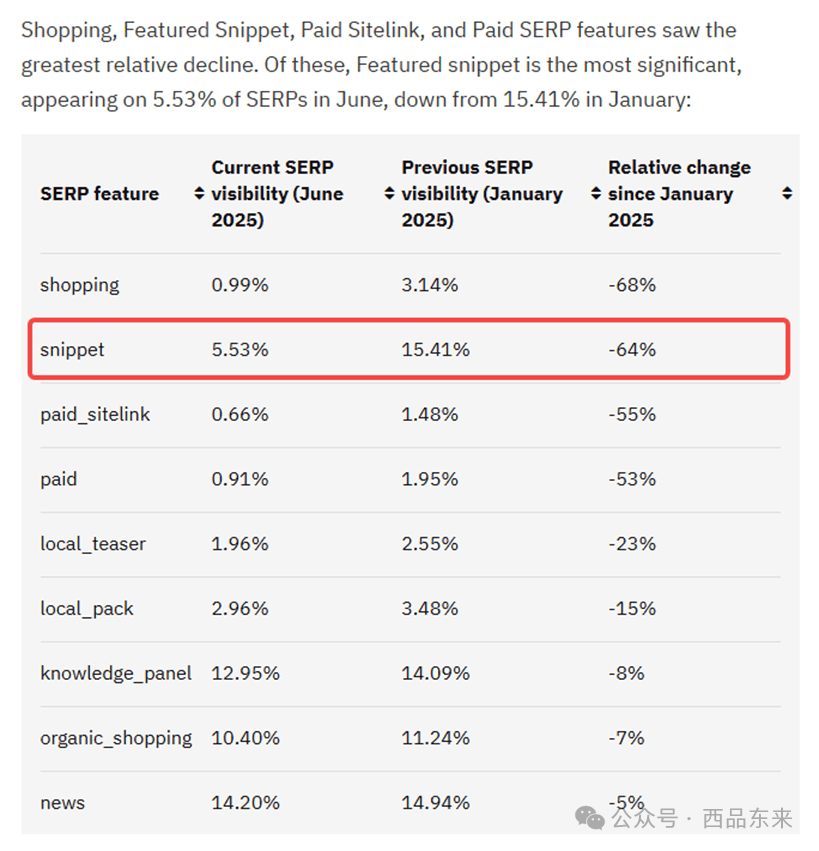
- Featured Snippet visibility fell from 15.41 percent to 5.53 percent, a decline of more than 60 percent.
- Sitelinks reportedly rose from 8.44 percent to 84.95 percent as scroll-to variants expanded.
- Paid Sitelinks, Shopping Ads and other advertising modules declined in the source dataset.
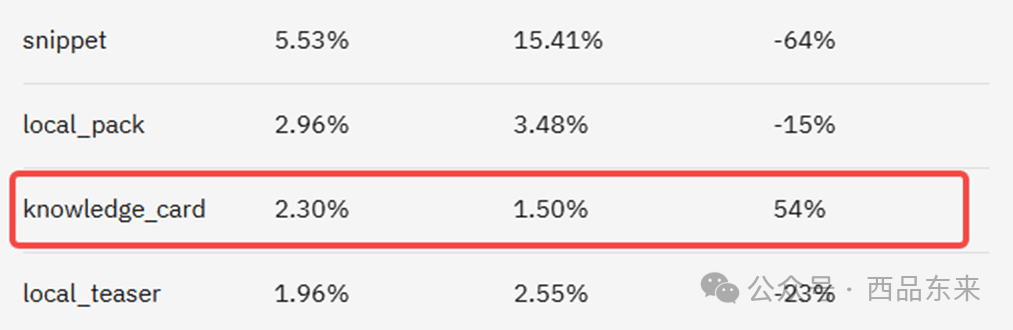
- Knowledge Card visibility increased by 54 percent and appeared for more broad queries.
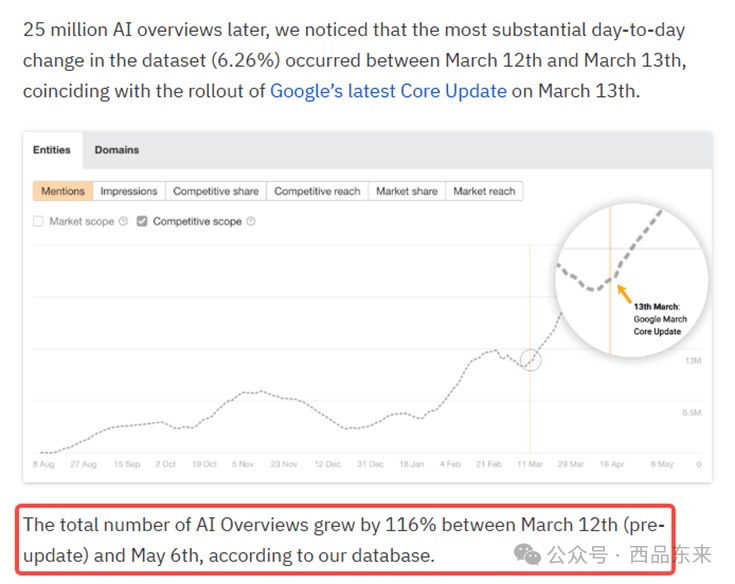
- The source observed a clear handover between Featured Snippets and AI Overviews in March.
- Sitelinks expanded sharply for non-branded queries, raising the importance of page structure.
- Search-feature volatility increased as interface changes coincided with core algorithm updates.
- The source argues that content selected by AI depends not only on ranking but also on structure, semantics and entity relationships.
- User behavior continued to shift toward zero-click results, shortening the traditional path from a result page to a website visit.
These figures may already suggest a wider pattern, but not every team has time to monitor each dataset closely.
The article therefore turns those observations into nine practical questions and addresses them in sequence.
The aim is to clarify which priorities may be losing value and which capabilities deserve more attention.
1. Featured Snippets Fell Sharply. Are They Still Worth Pursuing?
The source says they should no longer be the primary target.
Data source: Ahrefs.
In the source dataset, visibility fell from 15.41 percent to 5.53 percent in six months. The author interprets this as substitution rather than a minor adjustment.
Google increasingly used AI Overviews for summary-style answers that Featured Snippets had previously supplied.
The source identifies two consequences:
1. The optimization target changes: carefully formatted questions and answers have limited value if the content cannot be selected and cited by AI-generated results.
2. Structural demands increase: content needs not only clear formatting but also complete units that can be reorganized and combined in a generated answer.
Featured Snippets can still appear, but the article treats them as a secondary outcome rather than the main objective.
The central strategy is to make content easier for automated systems to understand, parse and reuse accurately.
2. How Does AI Overview Select Content, and What Can Increase the Chance of Inclusion?
The article's answer is that citation depends on structure and semantics as well as rank.
The source reports that 76 percent of AI Overview citations came from pages ranking in the top ten. The first cited source ranked second on average, while the second and third cited sources averaged fourth and fifth.
Traditional rankings therefore still influenced the likelihood of selection, but did not explain it completely.
Content also needed to be divisible into clear units and complete enough for those units to be recombined.
Generated search systems can extract passages that answer a specific question rather than reproduce an entire page. Clear question-and-answer units may be easier to identify, separate and combine.
The article recommends three priorities:
1. Make the structure easy to divide: use accurate subheadings, clear paragraphs and complete semantic units.
2. Match the way users ask questions: align each section with a real need and keep the answer concise and information-dense.
3. Provide trust signals: make the author, brand, expertise and referenced entities identifiable.
The source also states that about 14 percent of cited pages ranked beyond position 100. Such pages may satisfy special long-tail, contextual or time-sensitive needs, but this pattern is not reliably reproducible and should not be the primary strategy.
3. AI Overviews and Featured Snippets Appeared to Trade Places in March. Was This Related to a Google Update, and Should Teams Watch These Dates More Closely?
The source says yes: content optimization can have important timing windows.
Data source: Ahrefs.
In mid-March, the dataset showed a sharp rise in AI Overview visibility and a clear decline in Featured Snippets. The timing was close to a Google core update, and the movement exceeded the usual range.
The author interprets this as a product-interface change moving alongside algorithmic changes, rather than as an incidental redistribution.
SEO teams should therefore monitor search-result features as well as ranking movement.
The article recommends responding at two levels:
Timing: identify likely update windows and coordinate major launches and structural changes carefully, while recognizing that update schedules are not guaranteed.
Structure: monitor the visibility of features such as AI Overviews, Featured Snippets and Sitelinks, and use those movements as evidence when deciding how content should be presented.
Not every update invalidates the strategy, but updates can change how content is displayed. Identifying those structural shifts may be more useful than simply publishing more pages.
4. Sitelinks Rose Almost Tenfold. Does the Site Architecture Need to Be Rebuilt?
The article sees this as an opportunity created by improved passage-level interpretation, not merely a reason for a cosmetic redesign.
Data source: Ahrefs.
Sitelinks visibility reportedly rose from 8.44 percent to 84.95 percent in six months. The source links much of this change to scroll-to links that can point users directly to text within a page rather than only to items in a navigation menu.
Text fragments can use the :~:text= syntax to direct a browser to matching content without a traditional HTML anchor. The source interprets this as evidence that Google can surface useful passages within a page, not only its top-level entry point.
Teams should therefore ask:
- Does the page use a meaningful heading hierarchy such as H1 through H3?
- Are sections clearly organized with identifiable semantic boundaries?
- Does the page offer understandable internal navigation, such as a table of contents or stable anchors?
If all three answers are no, the issue is not whether the design needs a refresh; the page lacks an interpretable content structure.
Recommended actions:
- Prioritize important long-form pages where clearer structure can materially improve navigation.
- Keep important pages reasonably close to the site's main navigation; the source recommends fewer than three levels where practical.
- Use a consistent naming convention for section anchors.
- Add a table of contents and relevant in-page links when they make a long page easier to navigate.
- Keep modules semantically clear and structurally simple so users and systems can locate individual sections.
5. Non-Branded Queries Also Trigger Sitelinks. Should Brand and Generic Keywords Still Use Separate Structural Standards?
The source says no: clear structure is becoming a baseline for every type of page.
The wider use of scroll-to Sitelinks challenged the assumption that Sitelinks appear only for branded searches. A well-structured page may expose passage-level links for a broader query.
Brand and non-brand pages can therefore both be displayed as a set of identifiable sections.
Where generic pages once competed mainly through content volume, the source argues that modular structure now plays a larger role in discoverability.
It recommends three standard practices for all page types:
- Clear heading levels that label the meaning of each section.
- Modular layouts that keep related information together and boundaries easy to identify.
- Stable, descriptive anchors that match real user intent and support direct navigation.
6. Knowledge Cards Still Have Limited Coverage but Grew by 54 Percent. Is It Worth Preparing Early?
The article treats this as an early structural opportunity that had not yet become saturated.
Data source: Ahrefs.
Coverage was only 2.3 percent in the source dataset, but six-month growth exceeded 50 percent and was second only to AI Overviews. The author interprets that pattern as expansion with relatively limited competition.
The article highlights three characteristics of Knowledge Cards:
- Prominent trust: they occupy a visible area of the result page.
- Relative stability: once an entity panel is established, its core information may change less frequently than ordinary rankings.
- Higher entry requirements: clear entities, trusted sources and suitable structured data can help systems reconcile the underlying facts, although markup alone cannot guarantee a panel.
The source observed frequent triggers in experience-led categories such as food, travel and education, sometimes alongside AI Overviews. That made accurate entity information valuable in a zero-click environment.
Recommended starting points included:
- Use suitable Organization, Product or Person schema to describe verifiable brand attributes.
- Connect the entity to relevant authoritative databases and third-party references where editorial policies permit.
- Improve the homepage, About page and brand-information pages so their identity and relationships are clear and consistent.
7. Will AI Overviews Reduce Website Traffic, and What If Users Get the Answer Without Clicking?
This is a core challenge of zero-click search.
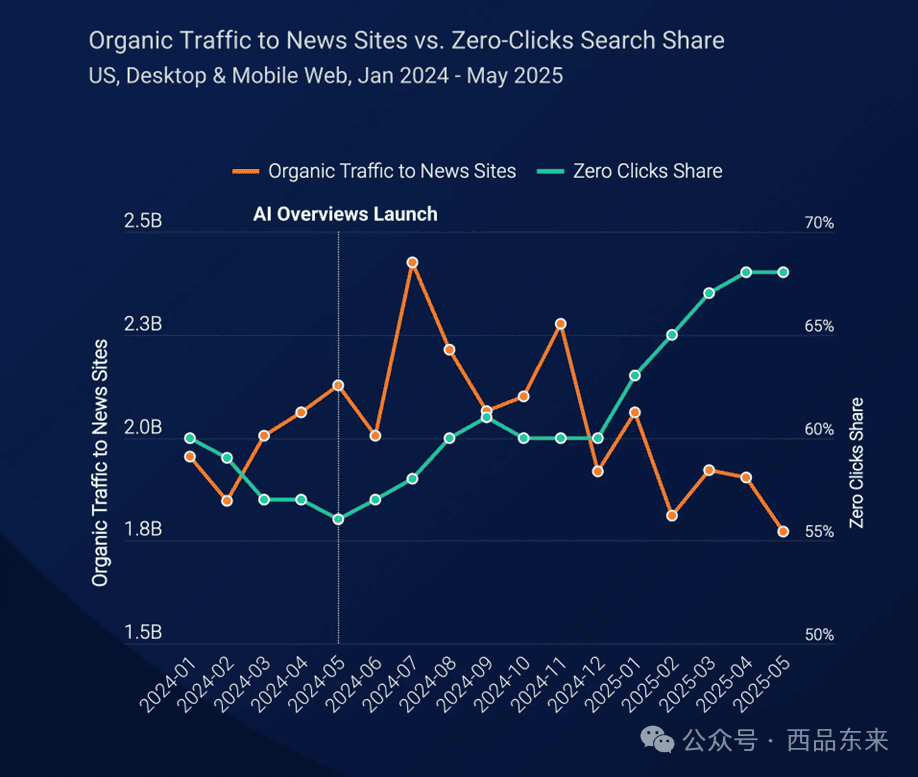
Data source: Similarweb.
The source argues that AI Overviews were changing the path users take through search. It cites a source-era estimate that zero-click searches had reached 69 percent, meaning more queries ended on the results page without a website visit.
Traffic pressure was already visible for some publishers. For lead-generation and commerce brands, the deeper risk was interruption of the decision journey.
The article proposes three layers of response:
- Foundation: improve the likelihood of accurate citation through complete, information-dense passages and clear semantic structure.
- Page: deliver the main value early with a summary, comparison table or direct conclusion instead of forcing users to scroll before understanding the point.
- Product: create experiences that cannot be reduced to a short answer, such as calculators, configuration tools or price simulators.
8. Since SEO Tools Can Track AI Overview Coverage, Should AI Citation Become a Routine Metric?
The source says yes: the SEO measurement set needs to expand.
AI Overviews add another dimension to search visibility. They may not produce a click, but can determine whether a brand appears in the user's field of view.
Traditional reporting focuses on rankings and traffic, while citations influence who receives attention before a click. A page that is never cited may be absent from that part of the journey.
The source lists three categories of monitoring tools:
- Ahrefs: Brand Radar can track changes in brand appearances across AI results and support trend analysis.
- Similarweb: Rank Tracker can mark keywords that trigger AI Overviews and help teams identify affected target queries.
- GA4: custom channel or referrer rules can identify measurable visits from AI services, although analytics cannot reveal impressions that produce no visit.
The article recommends tracking:
1. Keyword-level AI Overview activation: which queries show generated answers, and do they include important commercial topics?
2. Page-level citation performance: which pages are cited, how often and how stable is the pattern?
3. Brand-visibility trends: how does citation volume change after publishing or restructuring content?
9. AI Overviews Are Flexible. Could They Eventually Replace Other Search Features, and Should Teams Prepare for That Direction?
The source sees evidence of a longer-term shift toward AI-led result pages.
AI Overviews can combine information from several sources and respond to a task, so they may overlap with functions served by Featured Snippets, Knowledge Cards and People Also Ask. The extent of that substitution varies by query and continues to change.
The source also cites planned infrastructure spending of more than USD 85 billion and two billion monthly users for AI Overviews as signals of strategic importance at the time of writing. These dated figures should be read in their original 2025 context.
Traditional SEO still mattered: the source reported that a page ranking first had about a 25 percent chance of being cited directly. The difference was that competition increasingly occurred at passage level as well as page level.
The article recommends three long-term priorities:
1. Adjust content granularity: organize material around user tasks and create complete answer units that still make sense when quoted alone.
2. Strengthen identifiable expertise and entities: mark up verifiable information about authors, brands and sources so relationships are explicit.
3. Build controllable distribution channels: invest in video, tools and owned audiences to reduce dependence on a single search-result format.
Conclusion
When the structure of search changes, the first adjustment may be the team's decision framework rather than the volume of content it produces.
These nine questions are not a checklist of isolated tactics. They are intended to provide a clearer framework for deciding what to monitor and how to respond.