
Build authority through relevant, verifiable relationships
The Chinese source describes a high-quality, white-hat link-building service intended to strengthen site authority, overcome ranking plateaus and support long-term SEO. It says the service rejects black-hat methods and gives a three-to-six-month timeframe for stable ranking growth. That timeframe is a source-stated objective, not a guarantee. Actual results vary with the site, its pages, rival sites, the links earned, the work completed and changes in search systems.

Request an initial link-building consultation. The Chinese button labels this consultation as free; confirm the current terms before booking. The agreed plan should state the target market, eligible tactics, disclosures, destination pages, review process and measurement method before outreach begins.
Why Build Backlinks?
Backlinks are one of the signals that search systems may use when assessing whether a site is authoritative. The source compares each link to a vote of confidence: the number of references and the standing of each referring source may affect how much the links help. This analogy does not mean that every link is a vote or that more links automatically produce higher rankings.
Improve Search Rankings
The source says high-quality backlinks can influence keyword rankings and help a page move beyond a second-page plateau. Links are only one part of that work and cannot compensate for an inaccessible, irrelevant or weak page.
Increase Website Authority
References from credible sites can help search systems and users assess a site's standing. The source says this matters especially in YMYL categories. Medical, legal, financial and other high-stakes content also requires strong on-page evidence and appropriate professional review; links alone cannot establish accuracy.
Bring Direct Traffic
A useful placement on a relevant platform can send visitors directly to the linked page. Whether those visits become qualified enquiries or customers must be measured rather than assumed.
Create Long-Term SEO Value
The source says one good link can remain useful for two to three years and describes it as a cost-effective digital asset. Link survival and value vary with the publisher, page, context and search systems, so the period is not a promised lifespan.
The Source's View of Five Link-Building Misconceptions
The source challenges five common beliefs that it says can limit link-building work. Its numerical and policy statements are retained below with their evidentiary limits, so they should not be read as universal rules.
Misconception 1: Link Quality Matters More Than Link Quantity
The source argues that a few high-quality links may be insufficient because top-ranking sites often have more than 100,000 links. It describes a pyramid with many ordinary links at the base and a small number of high-quality links at the top. No sample, market, date or causal analysis is supplied for the 100,000-link statement. A plan should therefore evaluate the actual competitive set and exclude manufactured volume instead of treating this figure as a target.
Misconception 2: Backlinks Must Come From the Same Industry
The source says only a small share of links to leading sites come from the same industry and argues that an authoritative source can help even when it is not in the identical field. It warns that requiring an exact industry match can reduce the opportunity pool and slow acquisition. A credible connection must still exist between the referring page, its readers or the two organizations. Authority metrics alone do not make an unrelated placement useful.
Misconception 3: Spam Links Automatically Cause a Penalty
The source says Google generally treats spam links as ineffective rather than deducting value directly, including links that a competitor might point at a site from gambling or adult pages. This is a broad policy interpretation, not a permanent assurance for every link pattern. If the links appear deliberately manipulative or a manual action exists, investigate what happened. Also rule out security abuse. Check current search-engine guidance before removing links or using a disavowal process. Our link-spam risk guide provides further context.
Misconception 4: Backlinks Can Determine Rankings on Their Own
The source compares links to an amplifier. It says they may accelerate a strong page but can expose problems when the underlying content is poor. The practical point is that content and link work need to support each other; a backlink program cannot replace technical access, accurate information or a page that meets the user's need.
Misconception 5: Every Backlink Should Use an Exact-Match Anchor
The source warns that repeated exact-match anchors can look over-optimized and may coincide with ranking loss. It recommends a varied profile that includes brand terms, generic language, URLs and natural keyword variants. Anchor text should first describe the destination honestly and fit the publisher's sentence.
Our Link-Building Services
Link-Building Strategy
The source describes a tailored plan intended to match the client's industry and applicable SEO rules.
- Competitor analysis
- Study where major competitors obtain links and how they use those sources, then use the evidence to plan realistic opportunities for the client.
- Target-keyword planning
- Select language connected to the client's core business and destination pages. Keyword data informs page choice, but it does not justify forced commercial anchor text.
- Link-type mix
- Plan a varied set of content, social, forum and other channels. Every channel still needs editorial relevance, proper disclosure and a documented reason for linking.
High-Quality Backlink Acquisition
The intended service is to obtain links from credible sites and assess their safety, relevance and potential SEO value.
- Natural link acquisition
- Create strong material for relevant publishers and explore news releases or sponsored editorial content where appropriate. Any paid or arranged placement must follow the publisher's rules, applicable disclosure requirements and current search-engine spam policies.
- Blog-comment links
- Join a relevant discussion only when the comment adds useful information. Do not post automated or promotional comments merely to place a link.
- Directory submissions
- The source names DMOZ and Yahoo Directory as examples. Those are dated examples rather than current recommendations. Verify that any live directory is maintained, selective, relevant and useful to its audience before submitting a site.
- Resource-page links
- Work with relevant resource pages when the destination genuinely improves the resource and the publisher makes an independent editorial decision.
Social-Media Link Building
Social distribution can increase exposure and visits and create opportunities for people to discover and cite the material.
- Publishing social content
- Share useful content on platforms such as Facebook, X or Twitter and LinkedIn so interested users can visit it and may choose to reference it.
- Working with influential people
- Collaborate with relevant industry voices to introduce the client's site. Document sponsorships or other material relationships and do not present an arranged promotion as an independent endorsement.
Backlink Quality Review and Improvement
The source describes a broad review intended to keep links useful, reduce risk and support better SEO results.
- Link-quality assessment
- Use tools such as Ahrefs, Moz and Semrush alongside manual review. Metrics can support a decision but cannot prove that a source is authoritative or safe.
- Reviewing suspected spam links
- Monitor weak or harmful-looking links and investigate them before taking action. Do not remove or disavow a link solely because a third-party metric is low.
- Anchor-text improvement
- Review anchors against the linked page and the surrounding language. Prefer natural descriptions over a mechanically optimized keyword pattern.
Expanding Link Channels
The source proposes a wider network of potential channels within and around the client's industry.
- Forum links
- Publish genuinely useful information in relevant forums and include a link only when it helps answer the discussion and the community permits it.
- Question-and-answer platforms
- Answer suitable questions on platforms such as Zhihu or Quora and cite the client's page only when it is a useful supporting resource.
- Partner link exchanges
- The source proposes reciprocal links with relevant partners. Any exchange needs an authentic business or editorial reason and current spam-policy review; large or compulsory exchange schemes are excluded.
Transparent Results Reporting
The source promises detailed data so clients can follow the work and assess what their investment produced. This section says clients can follow results in real time. By contrast, the FAQ later describes monthly reports, so the current reporting cadence must be confirmed. The report covers:
- the number of acquired links and their sources;
- changes in third-party domain-authority measures;
- website traffic trends; and
- ranking changes.
Reports show what the team did. They should not imply that one activity caused a later change without supporting evidence. Use website analytics to define the baseline, period and relevant outcomes.
Creative Link Building
The source uses creative content and campaigns to encourage voluntary sharing and citations.
- Viral marketing
- Develop videos, charts or other distinctive material and distribute it through suitable social channels. Reach and links are possible outcomes, not guaranteed effects.
- Interactive campaigns
- Run an online competition, giveaway or other participation-based campaign where it suits the brand. Publish clear terms, follow platform and market rules and disclose incentives connected to links or endorsements.
International Link Building
The service can adapt acquisition work to the needs of an international market. The source presents global links as a way to extend the brand's influence; that is an objective rather than an assured result.
- Multilingual link building
- Plan outreach for the target market and language. The source names English, German, Italian, Japanese and Spanish among the common language options; current delivery capacity must be confirmed.
- International resource partnerships
- Build relationships with appropriate industry resources in different markets rather than assuming that one global list fits every country.
Guest-Post Link Building
The source offers original articles for relevant, high-quality blogs and sites, with the aim of supporting SEO and brand exposure. Guest contributions must be useful to the publisher's readers, fact-checked and disclosed where a commercial arrangement exists.
- Focused placement and original content
- Select a site that fits the industry need, then create an original contribution in which any link appears naturally. The content-writing process should provide research and editorial review.
- Tracking and longer-term relationships
- Check the placement after publication and maintain legitimate publisher relationships. No provider can ensure that a third-party page or link will remain live permanently.
Why Choose the Link-Building Service Described by the Source?
The source warns that weak services can reduce perceived authority, harm a brand, over-optimize anchors or leave clients with disappearing links. It presents the following service claims as ways to manage those risks. The figures and absolutes are not independently audited and must be confirmed before they become current sales commitments.
Source-Stated Ranking and Traffic Gains
The source says clients' core keywords improved by more than 20 positions on average within three to six months and that organic traffic grew by 50% to 300%. It provides no sample, baseline, attribution method or distribution for these figures. They are unverified historical statements, not forecasts for another site. Review the measurement issues in our backlink statistics guide.
Source-Stated Domain-Authority Improvement
The source advertises links from sites with DA of at least 40, including scarce .edu and .gov links, and claims three-to-five-times greater authority transfer. DA is a third-party metric rather than a search-engine score, the multiplier is not defined and a domain suffix does not establish editorial merit. Check each candidate on its real page: who reads it, what it says, why it would link and how the link would be obtained.
White-Hat Safety Commitment
The source promises 100% white-hat work, says it follows Google's webmaster guidance and excludes PBNs, link wheels and other black-hat methods. It also says clients will not be penalized because of the links. The excluded tactics and policy-led intent are retained, but no provider can guarantee zero search risk. The working plan must be checked against current policies and disclose paid or arranged relationships.
Broad Industry Coverage
The source names healthcare, real estate, hotels, adult products and cryptocurrency among the fields it can serve. Medical, financial, adult, crypto and other regulated or restricted categories require market-specific legal, professional, platform and publisher review. Listing a category here is not automatic approval to undertake or publish high-risk work.
Source-Stated Team Support
The source describes leadership by SEO specialists with more than ten years of experience, a native-level content team, 24/7 technical support and multilingual service. Current staff credentials, language capacity, coverage hours and response terms require records and a written scope before these statements are used as audited service facts.
Flexible Commercial Terms
The source offers monthly payment without a contract, tiered outcome-based pricing, adjustable strategy and a dedicated one-to-one account manager. Confirm the current price and how either party may end the work. The written terms must also define acceptance, each paid outcome and when the manager is available. Payment terms do not change the need for policy-compliant acquisition.
Which Businesses Does the Source Say the Service Suits?
The source broadly recommends the service to businesses that depend on online growth and want more customers from search. A backlink program creates value only when authority is a demonstrated constraint and the destination pages are technically accessible, accurate and useful.
Export Businesses
For exporters that rely on Google for overseas customers, the source proposes international links to support queries such as a product term combined with 'export.' The aim is to reach more markets and enquiries; market fit and query demand need to be verified first.
Local Service Businesses
For clinics, law firms and other local providers, the source proposes links from local sources to support city-and-service queries and help nearby customers find and visit the business. Regulated professional claims need appropriate review, and local citations must represent the business accurately.
Cross-Border Ecommerce and SaaS Companies
The source describes a product-keyword link strategy for independent ecommerce sites and SaaS companies, supported by content marketing. Relevant visits and better commercial-query rankings are objectives rather than promised outcomes.
Businesses in Restricted Categories
The source says adult-products and cryptocurrency sites require a more cautious approach that avoids high-risk links. Any plan for a restricted or regulated category requires current legal, platform, publisher and search-policy review in each target market.
Startups and New Sites
The source proposes building an initial link base for new brand sites and startups and gives three to six months as the period for establishing an SEO foundation and helping the new site progress sooner. The period is an indicative source term, not a ranking or traffic guarantee.
Businesses Facing a Ranking Plateau
For established sites with useful content that remains on search-result pages two or three, the source proposes authoritative links to help core terms move to the first page. Confirm through technical, content and competitive review that external authority is actually the limiting factor before beginning outreach.
Businesses the Source Says Are Not a Fit
- Businesses that expect a first-page result in three days, which conflicts with the source's view of how SEO works.
- Businesses unwilling to invest in content, because useful links need worthwhile destination pages.
- Projects with budgets too low for the research, creation and editorial work required by the proposed service.
Source-Listed Link-Building Packages
The Chinese page lists the following packages. Quantities, authority thresholds, media names, replacement terms and deliverables are source-stated commercial terms. They require current written confirmation and a tactic-level policy review; they are not a promise that a fixed volume of links will be available or appropriate.
Basic Link-Building Package
Suitable for: startups, new sites or projects with a limited budget.
Included in the Source Package
- 15 to 20 source-described high-quality links per month from sites with DA 30 or above;
- coverage across five to eight industry-related resources;
- basic ranking tracking for five core keywords; and
- a monthly link-building report.
Source-Stated Objective
Build a backlink foundation for a new site, improve its SEO authority and work toward steadier keyword rankings and traffic. These are objectives, not assured results.
Advanced Link-Building Package
Suitable for: growing businesses that need to address a ranking plateau.
Included in the Source Package
- 25 to 35 source-described high-quality links per month from sites with DA 40 or above;
- coverage across 10 to 15 strong resources in different industries;
- three guest posts in source-described authoritative media;
- ranking tracking for 10 core and 20 long-tail keywords; and
- a competitor backlink-gap analysis.
Source-Stated Objective
Within six to twelve months, work toward substantial gains for core terms, more monthly traffic and steadier progress beyond existing ranking plateaus. The period and outcomes are not guaranteed.
Most Popular Package
Suitable for: industry leaders and highly competitive fields. The Chinese page labels this card 'Most popular'; no sales data is supplied to verify that label.
Included in the Source Package
- 40 to 50 source-described top-tier links per month from sites with DA 50 or above;
- five placements in source-described authoritative media, with Forbes and Inc named as examples;
- links from scarce .edu or .gov resources;
- multilingual link building in Chinese, English, Spanish and Japanese;
- comprehensive monitoring for more than 30 keywords; and
- a quarterly SEO strategy review.
Source-Stated Objective
Use top-tier links and cross-industry coverage to strengthen brand authority and work toward better rankings in several language markets. First verify that the opportunities exist and that publishers choose independently. Disclose any commercial arrangement and check every tactic against current policies. None of the named placements or outcomes is assured.
Custom Link-Building Plan
The source offers a tailored plan with link types and quantities selected for the client's stated needs. A custom scope should also record which tactics are excluded and how a prospect is accepted or rejected.
Our Link-Building Process
Website Analysis and Assessment
Review the site to establish its current domain measures, keyword positions and content structure. Third-party domain metrics support the baseline but are not substitutes for page-level and business evidence.
Keyword Optimization
The source says target keywords are used as anchor text in a data-informed plan. In practice, the wording must remain natural and describe the destination accurately; the keyword plan cannot justify a forced exact-match pattern.
Competitor Research
Analyze competitors' backlink profiles in detail, identify credible gaps and choose tactics that fit the client's own assets rather than copying every competitor link.
Content Creation and Publication
Create informative, linkable content and seek publication on sites the source describes as highly authoritative. Each publisher must be credible and retain editorial control, and commercial relationships require appropriate disclosure.
Results Monitoring and Improvement
Review links at agreed intervals, refine the strategy and investigate potentially risky links. Record why any removal or disavowal action is necessary before changing the profile.
Source-Provided Link-Building Cases
HealthTap: Link Building for a Healthcare SaaS Platform
The source says the team built a structured program for HealthTap. It says medical schools and government health agencies linked to the site, the team wrote specialist articles for medical-technology platforms and doctor communities recommended the resource. Healthcare claims, institutional relationships and publisher approval require supporting records and professional review.
The source reports more than 300 new high-quality links after three months, with over one-third from high-authority sites, and attributes better core-keyword rankings and organic traffic to the work. It supplies no baseline, link list, market, query set or attribution method. The statement is unverified and not predictive.
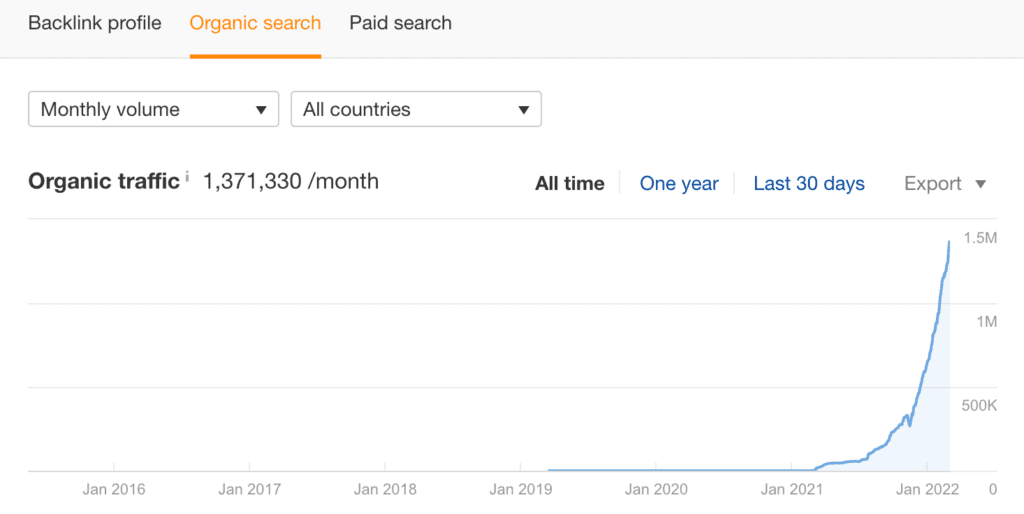
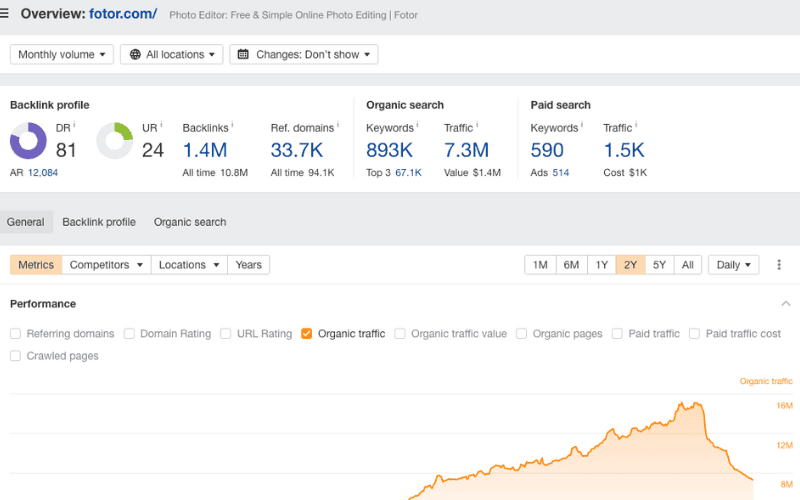
Fotor: Backlink Improvement for a Design Tool
For Fotor, the source describes a global plan that included coverage in well-known technology media, professional recommendations in design communities and content partnerships with design schools.
It says the number of links rose markedly over six months and helped global traffic grow. No count, baseline, traffic definition or causal method is given, so this remains an unverified source-provided account rather than an expected result.
Saifilter: Link Building for an Industrial B2B Business
The source says the team designed a focused plan for this industrial-filter business. It says industrial directories listed the company, a technical white paper persuaded educational sites to link and suppliers formed a referral network.
After one year, the source says high-quality links increased from zero to more than 200, most from relevant industry sites, and attributes stronger core-keyword rankings and enquiry conversion to the work. The source provides no link inventory, query set, conversion baseline or attribution analysis. The statement is unverified and not predictive.

Narwal: Link Building for Smart Hardware
To help Narwal compete, the source describes a layered plan involving reviews by leading technology media, local-market backlinks and links earned through video content.
The source says site authority and visibility for core product terms increased substantially within six months and brought considerable qualified traffic. It provides no metric definitions, baseline, query set or attribution method. The statement is unverified and not a forecast.
The Chinese source links to a Chinese case-study archive, but no equivalent published English target exists in the translation ledger. The English page therefore does not create a cross-language 'More cases' link.
Build a Stronger Backlink Profile for Your Website
Begin with the site, market and pages that need support. A proposal should identify credible reasons for publishers to cite those pages, the acquisition methods that are allowed, the methods that are excluded and the evidence used to judge the work.
Frequently Asked Questions About Link Building
Will You Provide Proof of the Link Sources?
The source promises a transparent monthly report listing source URLs, Domain Authority values, traffic data, anchor use and screenshots of Google index status. It says links can be checked with Ahrefs, Semrush and other tools. These fields should appear in the current scope; third-party tools and screenshots support verification but do not prove causal ranking impact.
Can We Specify an Industry or Region?
The source says clients can request focused targeting. It names healthcare, finance and industrial resources, local media and chambers of commerce, and support in Chinese, English, Japanese and Spanish. Confirm that suitable publishers exist in the target market. Also confirm the necessary expert review and the team's current language capacity.
How Long Does It Take to See Results From Link Building?
The source says noticeable traffic and keyword gains usually appear within three to six months and that interim reports show progress. It gives no sample and does not define 'noticeable.' Links take time to earn and index, and sites perform differently. Treat the period as the source's observation range, not a guarantee.
How Do You Check Backlink Quality?
The source describes a three-stage screening process:
First, select sites with Domain Authority of at least 30 and exclude spam resources. DA is a third-party measure, so the live page, audience, editorial process, traffic evidence and outbound-link pattern still need manual review.
Second, use a native-level content team to write original articles for the placements. Current language staffing and subject expertise must be confirmed, and high-risk claims require appropriate professional approval.
Third, monitor whether links are indexed. The source offers free replacement for links that are not indexed; the current replacement period, eligibility, publisher constraints and remedy must be stated in writing.
Can Link Building Cause a Search-Engine Penalty?
The source says it uses white-hat methods, rejects black-hat techniques and obtains links from legitimate sources to support stable long-term rankings. That approach is intended to reduce risk, but no provider can ensure that every link is safe or that policies will not change. Each tactic needs current policy review, honest disclosure and continuing monitoring.
How Do You Evaluate Link-Building Results?
The source's regular reports cover new-link counts, source quality, traffic growth and keyword changes, then use the findings to adjust the plan. Evaluation should also record the baseline, period, supported pages, referral visits, qualified outcomes and other SEO work completed during the same period. The source's promise to safeguard business growth is treated as an objective, not an assurance.