Run SEO as an accountable growth operating system
Build full-funnel search coverage through deep semantic understanding rather than link volume or a pile of undifferentiated content. Effective SEO starts by understanding a business, its products and the people it needs to reach. We do not use a fixed template, low-quality content or bulk link tactics.
We study the product value and customer journey, then combine structured content analysis, keyword research and search-behavior evidence to develop a content system that can be maintained over time.
The objective is not ranking alone. It is to connect relevant discovery with a useful path to enquiry or purchase. Search visibility, traffic and conversion can change, and none is guaranteed.
Request an SEO consultation. The Chinese source describes the consultation as free; confirm the current scope and terms when booking.
Why Choose GlobalBrandsDigital for Search Engine Optimization?
We focus on durable SEO work, not a short-lived headline result.
Keywords Based on Evidence, Not Guesswork or Invented Phrases
The first step in SEO is not simply choosing terms. It is understanding the product and the customer. We do not accept every suggested phrase without review, and we do not pad a keyword count with brand combinations or invented terms that have little or no demonstrated demand.
Product research, search-intent analysis and market data inform a connected network of primary terms, long-tail phrases and question-led searches. The purpose is to cover the actual search journey. Tool volumes are estimates, and demand varies by market and time.
Content That Can Move Past an Optimization Bottleneck
When a company outsources SEO, content production can become the main constraint. The source describes an end-to-end service spanning content planning, writing and editing, page design and visual publishing support.
Each page should connect structure, intent and a relevant conversion path so it can help the right person find the business and decide what to do next. Publishing more pages does not prove that the work is useful or commercially valuable.
No Speculative Link Schemes
We use links only when they are relevant, editorially defensible and controllable within clear quality standards. We do not use mass placements, forum spam or other tactics intended to manipulate rankings.
The first priorities are a coherent site structure, useful content and a sound user experience. Links cannot make a site safe from algorithm changes, and Google decides how it evaluates them.
Commercial Meaning, Not Just a Polished Report
Regular reporting can cover keyword visibility, content coverage, user-behavior signals and conversion journeys. Interpretation should distinguish an observed visit or enquiry from a confirmed sale and state any attribution gap.
The aim is to show which searches bring relevant visits and which pages contribute to genuine enquiries. A report is useful only when the underlying definitions, sources and limitations are visible.
Experience with Complex Search Programs
The Chinese source says the team has served more than 200 clients across DTC, ecommerce, B2B, SaaS and international-trade markets. It also describes experience with complex architectures, bilingual international sites, localized search and semantic SEO. These are current-company and cumulative-experience claims that require internal project records before they can be treated as verified.
Semantic planning is used to connect related pages into a coherent system. It may improve how the site is understood, but it cannot create compounding growth automatically.
Transparent Collaboration, Technical Support and Continuing Maintenance
The source describes a formal contract, client ownership of website access and data assets, no hidden charges and a traceable record of completed work. It also offers optional monthly maintenance so content and technical work can evolve together. The client should rely on the signed terms to learn who owns each asset, what the work costs, what the team will deliver, how support works and how either party can cancel.
If you are considering SEO, the first useful step is an honest baseline: where the site stands, what limits it and which direction the evidence supports. Ask us to define that baseline and the records needed.
Our SEO Operating Process
We use a structured process built around search intent, content relationships and technical performance. It can support a new website or an established site that has reached a growth constraint. The precise scope and deliverables depend on the agreement.
01. Discovery and Product Learning
Before selecting keywords or commissioning content, we discuss the product structure, target customers, core value propositions and business model. This establishes the objectives and resource boundaries.
Source-listed deliverables: a product-knowledge worksheet, interview summary, user profiles and initial demand hypotheses.
02. Competitor and Market Assessment
Tool data and manual research are used to examine competitors' keyword coverage, content structures, technical signals and observed growth patterns. The findings can reveal a route worth testing or a gap the business can serve; they do not prove why a competitor ranks.
Source-listed deliverables: a competitor SEO report, differentiated opportunities and a reference growth model.
03. Keyword Research and Semantic-Network Planning
Product value, search behavior and funnel-stage intent are combined into a layered network of primary, long-tail and question-led terms. Each important topic should have a suitable page role rather than being repeated everywhere.
Source-listed deliverables: a keyword matrix, section recommendations and an initial URL plan.
04. Site Architecture and Page Planning
We map sections and page types, including landing, hub, product and editorial pages, to create an information architecture that people and search systems can navigate.
Source-listed deliverables: a diagram of the site's architecture, recommended navigation and an initial map of the path to conversion.
05. Content Planning and Delivery
A content map translates the semantic structure into work for the homepage, supporting pages, product pages and articles. Every assignment needs an explicit question, page role and source standard.
Source-listed deliverables: a content plan, article-delivery documents and support for publishing text and images.
06. On-Page Optimization and Internal Links
Titles, descriptions, heading hierarchy, anchor text, internal-link relationships and calls to action are reviewed together. The work should clarify relevance and the next step without stuffing terms or creating misleading links.
Source-listed deliverables: advice for each page, a map of the link structure and recommended CTA positions.
07. Technical SEO and Performance
The technical scope can include robots.txt, sitemaps, Schema markup, loading performance and Core Web Vitals. Repairs are verified against the agreed issue; no technical task can guarantee crawling, indexing or ranking.
Source-listed deliverables: a technical diagnostic report and a development-coordination task list.
08. Analytics and Ranking Monitoring
Tools such as Google Analytics and Google Search Console can show where keywords appear, how many visits each page receives, what users do, whether the site is technically healthy and where people leave a path to conversion. The parties must agree on access, consent and the meaning of each measure.
Source-listed deliverables: a monthly SEO report, an optimization feedback sheet and recommendations for the next stage.
09. Strategy Iteration and Continuing Optimization
Observed results and market changes inform revisions to keyword priorities, content direction and technical tasks. The point is to maintain a search system that can be reviewed and improved, not to claim that growth will continue indefinitely.
Source-listed deliverables: a strategy-adjustment proposal, historical comparison report and a documented growth model.
Specialist SEO Solutions
Individual services can be combined around a specific problem. A company with its own content team may need only keyword research and a content map. A company that employs developers may need the team to describe structural changes and help put them in place. A fully managed program is also described in the source. Discuss which combination fits the actual resources and constraints.
Website analytics: interpret behavior data to identify better-founded optimization priorities.
Website diagnostics: investigate the causes of traffic loss and define repair options.
Website repair: resolve confirmed technical faults and improve measured site health.
Keyword research: connect real search needs with commercially relevant opportunities.
Page optimization: make each important page more relevant and useful, with a clearer path to conversion.
SEO content writing: produce original, sourced content intended to support discovery and decisions.
Link building: earn or develop relevant, policy-compliant links without manipulative placement.
Technical optimization: maintain a crawlable, performant and well-structured technical foundation.
Semantic architecture: make entities, topics and page relationships easier to interpret.
SEO Across Different Industries
The source lists tailored work for DTC, B2B and B2C companies; cross-border ecommerce; SaaS; education; manufacturing; international trade; outdoor products; energy storage; healthcare; social media; travel; legal services; financial services; cryptocurrency; home and garden; adult products; construction; accounting; gambling; multilingual sites; lending; CBD or cannabis; and pet products.
Industry experience can inform terminology, demand patterns and site structure, but it does not remove the need for current research. Before working in healthcare, legal services, finance, crypto, lending, gambling, adult products, CBD or cannabis, game assets or another regulated or restricted field, we must confirm that the client and offer are lawful. The target market and platforms must permit the content. The way the client accepts money and promotes the offer must also follow the rules. SEO must not be used to evade safeguards or facilitate prohibited activity.
Google SEO Cases Described by the Chinese Source
The ten accounts below preserve the source's brand context, work and stated results. The page does not supply contracts, underlying analytics exports, complete baselines, attribution methods or an independent audit. Its screenshots show tool snapshots from particular dates and may not match the narrative totals. All figures are source-provided historical claims, not independently verified results or forecasts.
01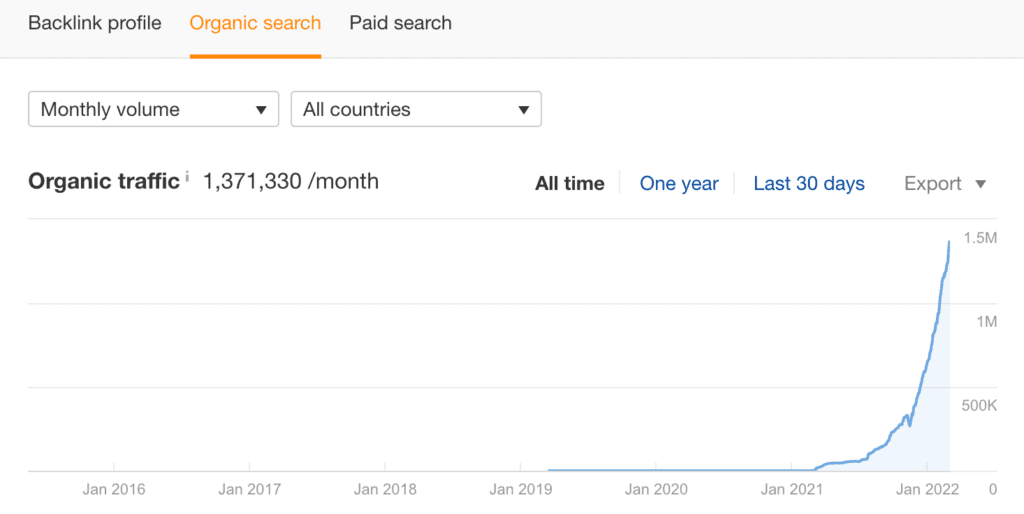
HealthTap: A Technical and Data-Led Traffic Increase
The source describes HealthTap as a large US SaaS healthcare platform with US$88.3 million in financing, a 120-person technical team whose members graduated from Stanford, Ivy League universities, Tsinghua University and Peking University, and a medical network spanning 170 countries and 140,000 licensed physicians. It says technical faults and strong competition constrained the site.
The listed work began with technical repairs to orphan pages, indexing, titles and descriptions. It then mapped millions of keywords, reviewed competitors and developed content and link plans.
Source-reported result: traffic increased by 100% in three months and organic traffic exceeded 2.5 million before continuing to rise. The unit, market, baseline, exact period and attribution are not defined; the financing, team, physician and performance statements require supporting records.
02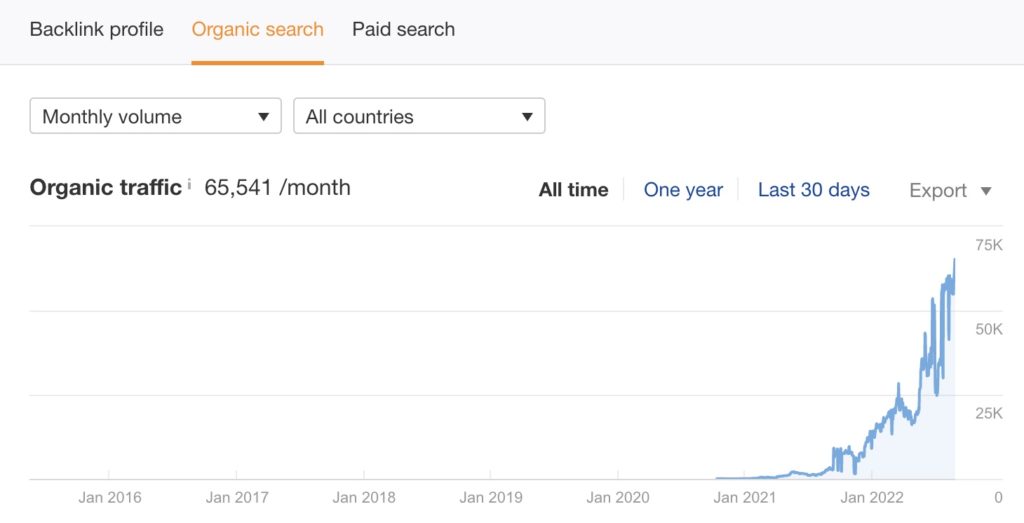
Beyourlover: Finding an Opening in a Highly Competitive Market
The source describes Beyourlover as an adult-products brand in one of Japan's most competitive markets. The multilingual-site program included technical repair, speed improvements, keyword research and content marketing.
Source-reported result: traffic grew by 400% in one year, more than 1,000 core terms entered Google's first page, more than 300 reached the Top 3 and sales increased tenfold. The market, query set, sales basis and attribution are not supplied. For adult products, we must check the law in the target market, the platform rules, how the client takes payment and whether the content is permitted.
03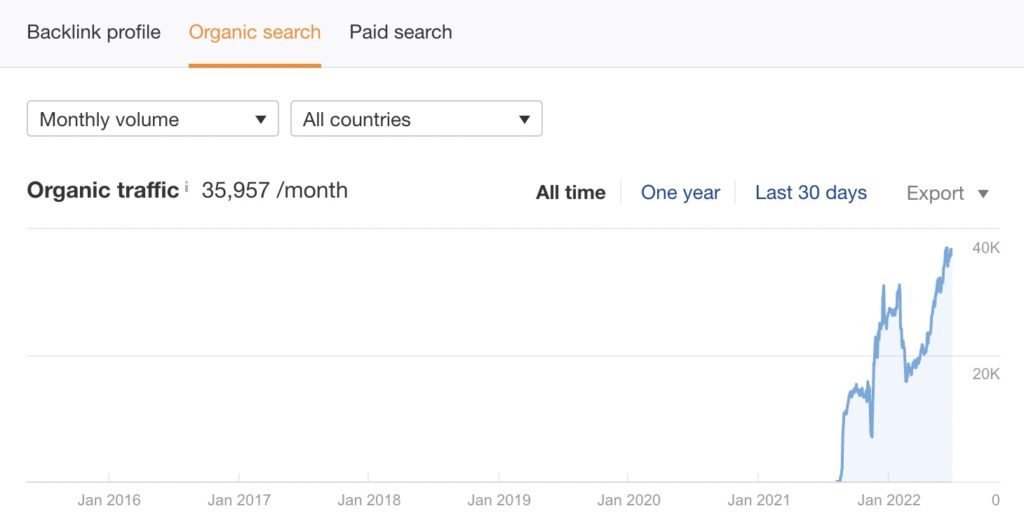
Yeelight: From a New Program to a Source-Described Category Benchmark
The source calls Yeelight a Xiaomi-ecosystem company and an emerging smart-lighting brand, compares it with Philips and says it was preparing for an IPO. It says the SEO program began from zero and covered on-page optimization, content marketing, technical repair and off-site digital PR.
Source-reported result: 494 keywords reached the first page and traffic reached 22,200 in six months. The market, query set, traffic definition and attribution are not supplied. The corporate, IPO, comparison and performance claims require dated records.
04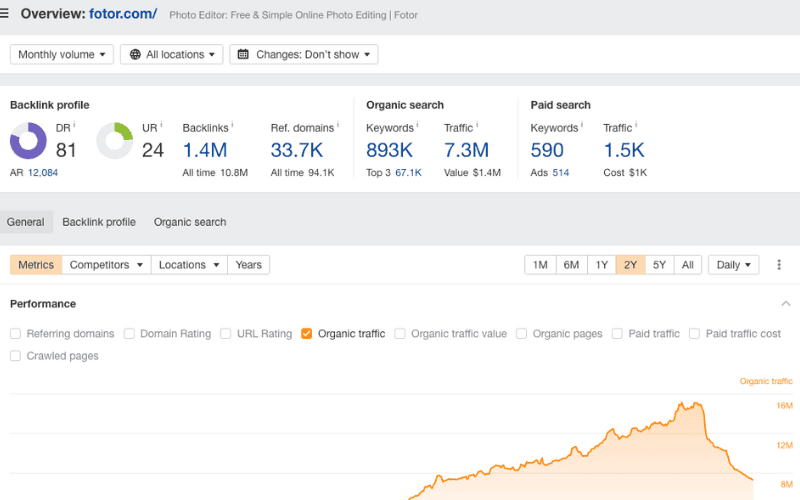
Fotor: Large-Scale Search Work for an AI Image Platform
The source describes Fotor as a global AI image-editing platform, says the BBC called it a lightweight version of Photoshop and places it in competition with Canva. It says the challenge was to extend an existing advantage. The listed work combined semantic optimization, link building, content marketing and technical repair.
Source-reported result: website traffic reached 16 million. The source does not define the date, geography, traffic unit or attribution. The publisher description, competitive comparison and result require supporting records.
05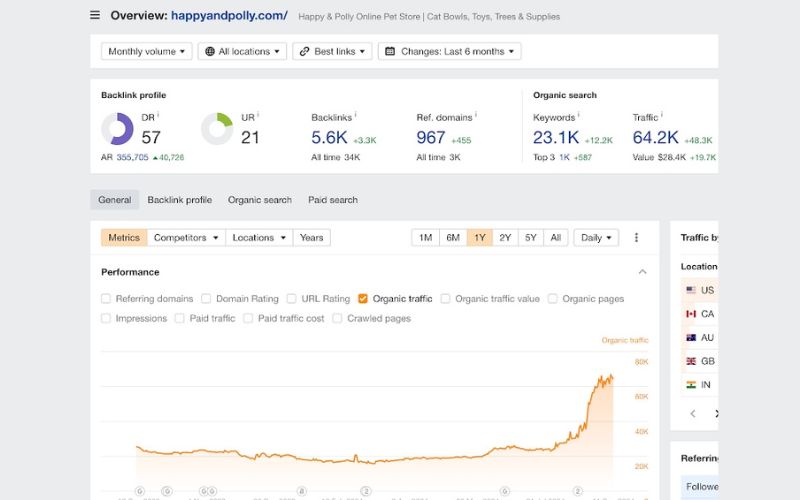
HappyandPolly: Detailed Optimization for a DTC Pet Brand
The source describes HappyandPolly as an emerging Chinese pet brand with a large audience on Instagram and TikTok. It says the website's search performance did not match that social visibility. Work covered category and subcategory improvements, removal of unnecessary pages, semantic optimization and product-page priorities informed by sales feedback.
Source-reported result: more than 1,300 terms reached the first page and traffic exceeded 30,000. The source does not provide the query set, market, period, traffic unit or attribution.
06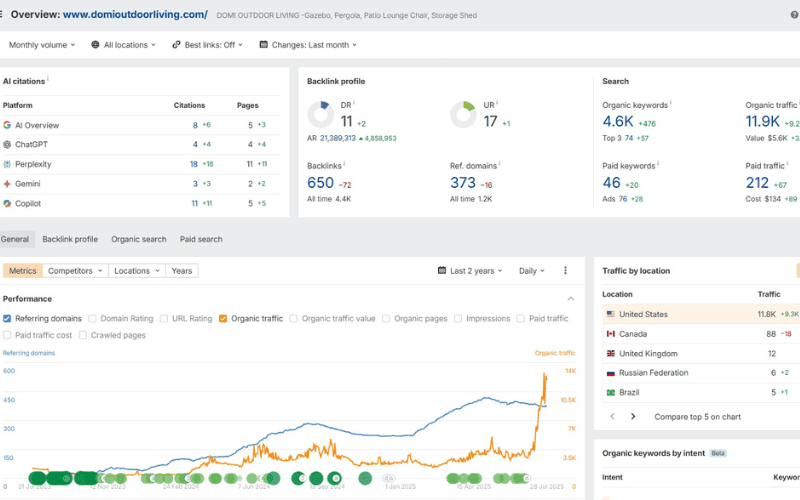
Domi: A Manufacturing Group's B2B-to-B2C Ecommerce Transition
The source says Domi belongs to a large Chinese manufacturing group that had operated purely as a B2B factory. It describes a move toward a combined B2B and B2C model, using IRIS USA as an ecommerce category reference. The program supported site-structure improvements, a rebuilt keyword system and a content-marketing plan.
Source-reported result: average daily organic traffic reached 6,000 and annual online sales exceeded RMB100 million, with a stable online conversion system supporting the move from manufacturing toward retail. The traffic, revenue, attribution and comparison require source records.
07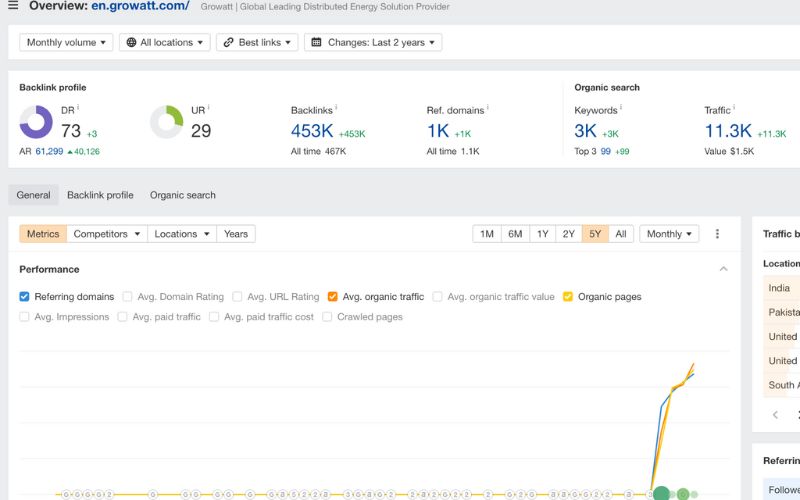
Growatt: Search Support for a Global Energy-Storage Brand
The source says Growatt was founded in Shenzhen in 2010, is one of the world's most competitive distributed photovoltaic and energy-storage solution providers, ranked first in global residential photovoltaic-inverter shipments, ranked among the top four hybrid energy-storage inverter manufacturers and serves more than 100 countries. The program included local-search work, authoritative digital-PR links and industry technical content coordinated with site structure.
Source-reported result: monthly organic traffic stabilized between 6,000 and 10,000 and global search influence increased. The market-position, geographic and performance claims require dated supporting records.
08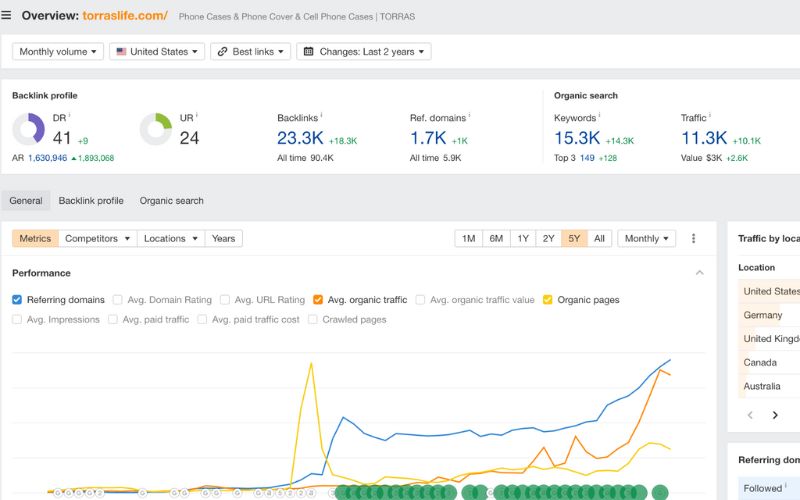
Torraslife: Search Work for a Premium Digital-Accessories Brand
The source describes Torraslife as a well-known Chinese iPhone-accessories brand comparable with Spigen, ESR and OtterBox. It attributes more than RMB1 billion in annual revenue and global online and offline distribution to product design and marketing innovation. It says overseas expansion exposed constraints in speed, content and conversion efficiency.
The listed work covered site speed, page optimization, structural rebuilding, content and topical marketing, digital PR and SEO training for the team.
Source-reported result: organic traffic exceeded 30,000, branded-keyword performance improved substantially and the work supported global promotion and sales growth. The revenue, traffic, ranking and attribution claims require dated records.
09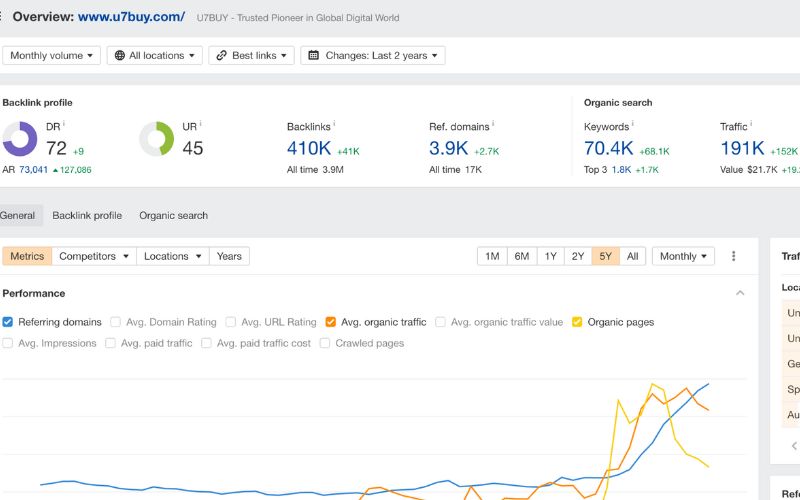
U7buy: A Multilingual Game-Asset Marketplace
The source describes Hong Kong-headquartered U7buy as a global digital-goods marketplace offering game accounts, virtual items, currency transactions and power-leveling services. It names G2G, PlayerAuctions and MmoGah as competitors. For a multilingual, multi-site structure with more than 40,000 pages, the program covered technical SEO, hreflang, site structure, links and content.
Source-reported result: organic traffic exceeded 500,000 and U7buy became one of the strongest search performers among comparable game-asset platforms. The screenshot, narrative total, category position and attribution differ or remain undefined. Services involving game assets require current legal, intellectual-property, game-publisher, marketplace, payment and market eligibility; the work must not facilitate account abuse or platform-rule evasion.
10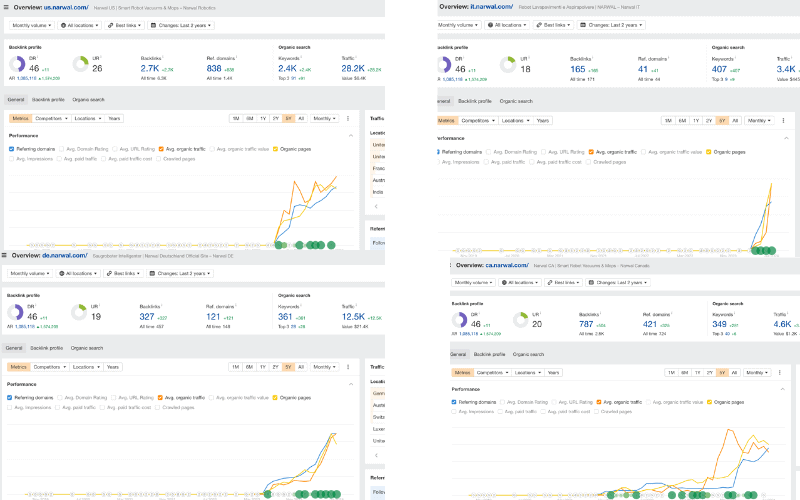
Narwal: Building a Search Structure for a Growing Robot-Vacuum Brand
The source presents Narwal as an emerging robot-vacuum brand moving from awareness into a growth stage and compares it with iRobot's Roomba, Roborock and Ecovacs. Work covered product-semantic keyword research, link building, page repair, product categories and semantic-network structure.
Source-reported result: organic traffic stabilized at 30,000 and the high-volume term robot vacuum entered Google's Top 3, making SEO an important acquisition source. The source does not state the market or date, explain how it located the query, define the traffic unit or show what caused the result. It also says the result broke the international brands' dominance; that is the source's interpretation, not a measured finding.
See the SEO Process, Not Just the Reported Result
The source presents SEO as a system that can be tracked, measured and reviewed. It says each client receives regular reports and a work view showing what has been completed, what is in progress and what comes next. Those records make delivery visible; they do not by themselves verify a commercial result.
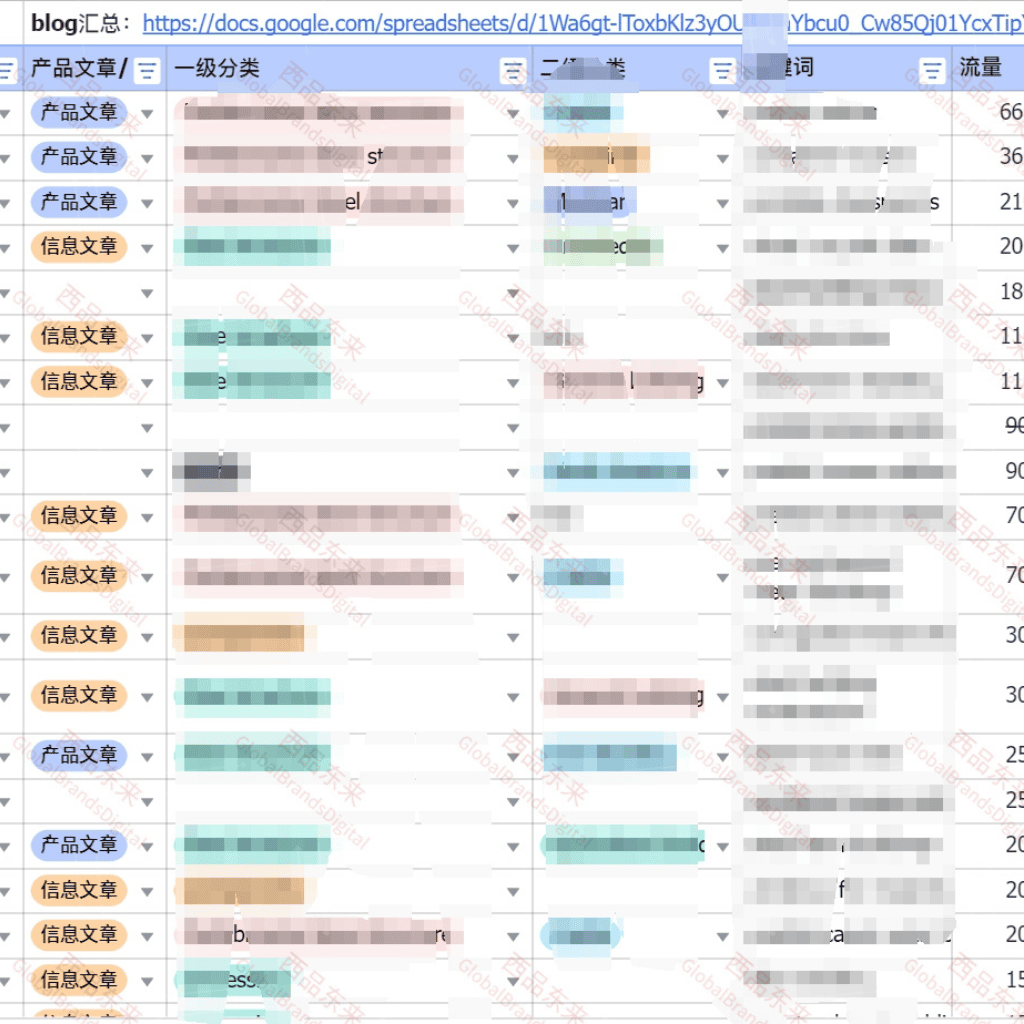
- Keyword research and strategy-mapping sheet: records estimated demand, intent categories and recommended page placement.
- Content-writing plan: records what each article should cover, which keyword maps to it, when to publish it and how soon the team should act.
- Technical diagnostic and optimization checklist: tracks structural, crawling and loading issues and their repair status.
- Competitor-analysis sheet: compares keyword coverage, content strategy and structural differences.
- Link-execution record: records the source, type, anchor text and timing so quality and disclosure can be reviewed.
- Stage performance report: tracks where terms appear, how traffic changes, what users do and which steps lead towards a conversion; the report must define every measure and state what it cannot show.


SEO Service Packages
The source says it does not impose a fixed keyword count because effective SEO depends on semantic coverage rather than moving a few selected terms. Research can include primary, long-tail, question-led and conversion-oriented searches, but every term should represent a real user need and have a suitable page role.
It rejects invented terms and arbitrary product-plus-city combinations used only to increase a reported total. Estimated demand and conversion potential still need validation against the target market and observed results.
GlobalBrandsDigital Approach
- No fixed keyword ceiling; the strategy covers the relevant semantic breadth.
- Terms come from observed searches, industry research and the planned content structure.
- Primary, long-tail, question-led and conversion-oriented terms serve different page roles.
- Keyword reporting can include visibility changes, intent groups and tracked conversion journeys.
- The keyword set and semantic structure can be adjusted as evidence changes.
Typical Fixed-Keyword Provider Described by the Source
- Sets a number such as 30 terms but offers little control over the quality of the set.
- Relies on client-selected or system-generated phrases that may be imprecise.
- Uses mainly product-plus-location phrases with limited conversion intent.
- Provides an isolated ranking sheet without useful context.
- Keeps the term set fixed and does not adjust it readily.
Choose a Service Package
Starter Package
Best fit in the source: a new website or a client without an established SEO foundation.
Included
- Product and customer-journey learning.
- Keyword-strategy design.
- Foundational site structure for sections, URLs and page templates.
- A content map for the homepage and core-page frameworks.
Source-stated objective
The source proposes establishing a sound SEO foundation within one to three months so search systems can crawl and understand the site, with keyword visibility and initial traffic beginning after launch. It frames this as the basis for later organic traffic and enquiries. These are objectives, not guaranteed timing or outcomes; a new site may take longer and may not rank or receive traffic immediately.
Full-Stack Growth Package
Best fit in the source: clients in competitive sectors or multilingual markets. The source labels this the most popular option, but supplies no selection data.
Included
- Everything in the Steady Growth package, subject to the signed scope.
- Managed SEO across strategy, content, technical work and execution.
- A quality-controlled, policy-compliant link strategy and implementation.
- Multilingual content optimization and hreflang configuration.
- Conversion-journey work for product guidance, CTA design and behavior analysis.
Source-stated objective
The source proposes that within six to twelve months, core terms could hold first-page positions three to five in the main market, monthly organic traffic could exceed 10,000, multilingual markets could grow together and content and structure could generate enquiries and brand exposure. It supplies no baseline, market, probability or evidence for the forecast. None of these positions, traffic levels, enquiries or timeframes is guaranteed.
Steady Growth Package
Best fit in the source: a website with an existing body of content or product information.
Included
- Everything in the Starter package, subject to the signed scope.
- A connected semantic keyword network.
- Continuing content for product pages, articles and FAQs.
- Deeper page-structure work across internal links, categories and templates.
- Continuing technical SEO for crawling, speed and structured data.
Source-stated objective
The source proposes a three-to-six-month program to improve the site and match pages with more suitable terms. It aims to move core terms into the first-page Top 10, grow daily organic traffic and begin generating form enquiries or product sales. The source provides no baseline, market or probability. These are planning goals; we do not guarantee positions, growth, enquiries, sales or timing.
Every company has a different search path. If these packages do not match the need, request a scope based on the site, market, resources and measurable baseline.
More Google SEO Services
The source also describes specialist support for local and international markets, internal capability building, continuing advice and website development. Availability and scope must be confirmed for the current engagement.

Local SEO: Improve Regional Discovery
For a business that genuinely serves a local area, the work can correct its local details and improve landing pages so nearby customers can find and assess it. The source names restaurants, retailers and service businesses as examples. Local positions and customer volume are not guaranteed.
International SEO: Enter Global Markets
International SEO can support multinational companies and brands entering new markets through localized research, content, structure and technical language targeting. Rankings still depend on competitors, whether the business qualifies in that market and how search systems evaluate the pages.
SEO Training and Corporate Workshops
Structured training can help an individual or team understand current SEO concepts and apply them to its own work. The curriculum, exercises and evidence standard should match the learners' roles and starting level.
SEO Consulting: Continuing Strategic Support
Consulting can help a company or individual define and review a longer-term SEO direction. Advice should explain what it assumes, cite the evidence and name the person who will put it into practice. It cannot ensure that the chosen direction will produce a particular result.
SEO Website Development
We can plan a new or redesigned site so it begins with clear architecture, crawlable pages, fast delivery and defined content roles. The source recommends this service for new businesses, redesigns and sites that need a stronger SEO base.
Use a Professional SEO Strategy to Help the Brand Stand Out
Frequently Asked Questions About Google SEO
Why Invest in Google SEO?
SEO can improve how a site is discovered for relevant searches, bring people with a clearer need and support brand credibility over time. It may help prospective customers reach the business during research and make paid channels less important. Many factors beyond SEO still affect positions, traffic, trust and the cost of winning a customer.
Can Google SEO Guarantee the Number-One Position?
No. Search positions depend on many changing factors controlled by search systems, competitors, users and the website itself. The work can make pages more relevant, fix technical faults and track where they appear, but no provider can guarantee first place, stable traffic or a lasting competitive lead.
How Do You Respond to Search-Algorithm Changes?
We monitor documented updates and observed performance, review whether the site's content, structure or technical delivery has a confirmed issue and adjust only when the evidence supports a change. No team can make a site immune to updates or know every part of an algorithm.
Is the SEO Service Suitable for a New Website?
Yes. A new website can benefit from sound architecture, useful content and deliberate keyword-to-page mapping before it develops avoidable problems. A new domain still needs time and evidence to earn visibility; SEO cannot create instant trust or rankings.
How Long Does SEO Take to Show Results?
The Chinese source gives a general range of three to six months and says some technical improvements may be observable in one to two months. These are broad source estimates, not commitments. Timing depends on the baseline, market, crawl and indexing, implementation speed, competition and the metric being measured. Regular reports should show observed progress against a defined starting point.
Can You Help If Google Has Penalized My Website?
We can diagnose available evidence and propose work such as removing or disavowing qualifying spam links, correcting policy or quality problems and improving weak content. The source says the team has previously helped clients resolve penalties, but supplies no cases or records. Google decides whether and when a site recovers, so diagnosis and repair cannot guarantee reinstatement or restored traffic.
Does SEO Need to Continue After the Initial Optimization?
Usually, yes. The site, competitors, customer demand and search systems continue to change. Monitoring, content maintenance and technical ownership help the site respond. Stopping does not automatically cause a decline, and continuing work does not guarantee that a position will hold; the decision should follow measured need and business value.