On this pageTable of contents+
- What Do B2B and B2C Mean?
- What Does B2B Mean?
- What Does B2C Mean?
- Seven Essential Differences Between B2B and B2C
- 1. Who Is the Customer?
- 2. How Does the Transaction Happen?
- 3. How Do Order Value and Volume Differ?
- 4. How Quickly Does a Sale Happen?
- 5. How Does the Choice of Marketing Differ?
- 6. What Matters Most in the User Experience?
- 7. Which Industries and Platforms Typically Use Each Model?
- Is Your Business B2B or B2C? A Three-Minute Check
- Who Do You Mainly Serve?
- How Complex Is the Transaction?
- How Do You Mainly Acquire Customers?
- Examples of B2B and B2C
- How Should B2B and B2C Websites and SEO Differ?
- B2B Websites: Make Information Clear and Convert Trust into Leads
- B2C Websites: Design the Experience and Journey for Conversion
- What If the Business Is Hybrid?
- What Other Business Models Should You Know?
- What Does DTC Mean?
- What Does C2C Mean?
- What Is the Difference Between D2C and B2C?
- What Is the Difference Between B2C and O2O?
- What Do B2B, B2C and B2G Mean?
- What Is a B2B Platform?
- GlobalBrandsDigital Helps International Businesses Plan the Next Step

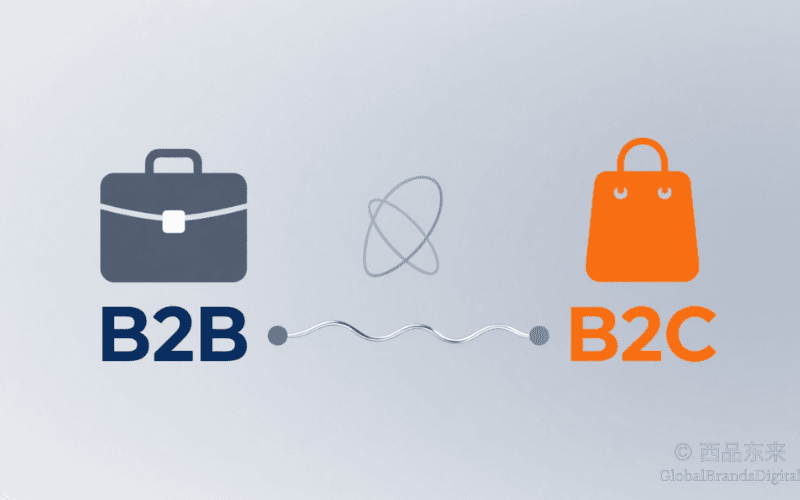
The central difference between B2B and B2C is this: B2B serves business customers, so transactions depend on trust, expertise and efficiency; B2C serves individual consumers and relies more heavily on emotion, affinity with the brand and the quality of the experience.
In transaction terms, B2B is closer to a wholesale partnership: you take part in the discussion as an adviser and a long-term partner. B2C is closer to a retail experience: you are the seller, the brand and the source of recommendations. The former relies more on reason and expertise; the latter, on emotion and appeal.
This article explains the practical differences from an operator's perspective, drawing on brands the source team has worked with. It also covers how to plan SEO content for each model and introduces newer business models worth considering beyond B2B and B2C.
By the end, you should have a clearer sense of where your business sits.
What Do B2B and B2C Mean?
What Does B2B Mean?
B2B, or business to business, describes a transaction between companies. One example is selling a product or service to another company. In a B2B model, the buyer is usually a company, team or institution with a defined objective, a set process and several rounds of approval. Even a small order may require a quotation, comparison and negotiation, so the sales cycle can be long. Once trust has been established, however, the relationship may continue for years.
What Does B2C Mean?
B2C, or business to consumer, describes a company selling directly to an individual, as an online shop does. A consumer may see an advert, open the page and decide to buy within minutes. Offers, page design, brand tone and other people's reviews can matter more immediately than a seller's claimed technical advantage.
Seven Essential Differences Between B2B and B2C
Whether you are building a website, working on SEO or setting a marketing strategy, you first need to understand how these two models operate differently. The source team summarizes seven differences it encounters most often.
1. Who Is the Customer?
B2B serves business customers. The real customer is often not one person but a combination of roles: procurement, technical staff, finance and perhaps the owner. You are therefore communicating with a decision chain, not a single point of view.
B2C serves an individual consumer. If one person thinks the product is right, that person may place an order within minutes. The process is usually simpler and more direct, with less background checking or repeated comparison.
2. How Does the Transaction Happen?
A B2B transaction is relatively complex. It may involve an initial conversation, revisions to a proposal, internal discussion and several quotations. These steps take time, but an established working relationship can be durable.
B2C places more emphasis on immediate response. Whether the page holds a visitor's attention in the first few seconds can strongly affect the chance of conversion. A weak user journey, pricing approach or trust signal may cause the visitor to leave.
3. How Do Order Value and Volume Differ?
B2B orders generally have a higher value and are often placed in volume. They may also include services or custom requirements. The buyer considers long-term cost control and the value the purchase can create.
B2C orders tend to have a lower average value and rely more on individual purchases, repeat orders and promotions. Consumers usually care more about whether the price and offer are attractive than about the return over the next three months.
4. How Quickly Does a Sale Happen?
B2B transactions usually move slowly because of the decision process, but a slower pace does not mean a passive buyer. The logic of the content and the completeness of the page can directly affect whether the prospect leaves contact details.
B2C decisions are much faster and can be impulsive. Capturing the consumer's attention immediately is therefore often more important in the marketing process.
5. How Does the Choice of Marketing Differ?
B2B depends more heavily on trust, with useful content and expertise as its foundation. Building confidence through website content, a case library and practical industry material can compound over the long term.
B2C marketing focuses more on reach and conversion efficiency. Advertising, social media, creator promotion, page layout and headline copy can all affect the purchase rate.
6. What Matters Most in the User Experience?
A B2B visitor wants to understand quickly: Can you solve my problem? Have you succeeded in a relevant case? Where can I contact you? The answers influence whether that person is willing to begin a conversation.
B2C puts greater emphasis on a smooth shopping experience. Image quality, loading speed and the tone of customer reviews are among the details that can affect conversion.
7. Which Industries and Platforms Typically Use Each Model?
Industrial manufacturing, export trade, software systems and equipment rental commonly lean toward B2B. The website acts more like the front of a sales operation, capturing leads and building trust.
Consumer goods, beauty, apparel, fast fashion and small personal-care appliances generally lean toward B2C. These businesses face large audiences, fluctuating traffic and price sensitivity.
B2B and B2C rest on different operating logic. Understanding the differences is not about attaching a label to the business; it is about avoiding preventable mistakes. Once you know the business's position, you can decide where to invest resources and whether the website can make effective use of the traffic it receives.
Is Your Business B2B or B2C? A Three-Minute Check
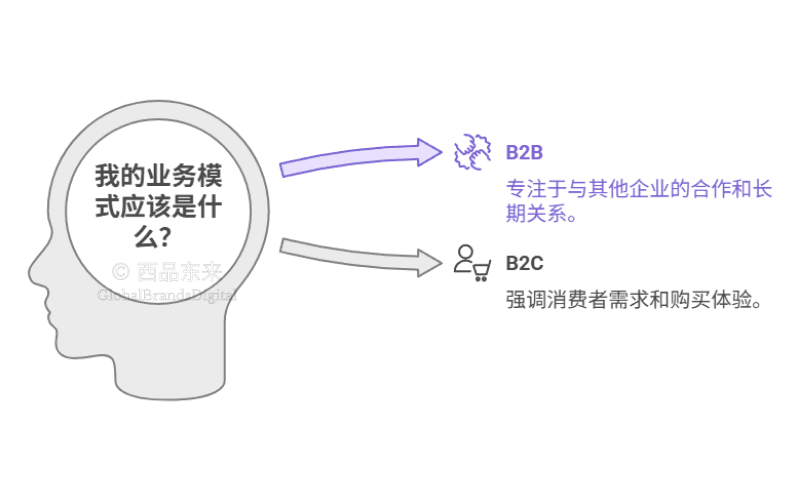
If you understand the basic difference but are still unsure which model describes your business, the following questions can help you clarify its position quickly.
This is not a theoretical test. It reflects boundaries the source team says it commonly sees in client work. Compare them with your product, customers and daily operating process, and the pattern should become clearer.
Who Do You Mainly Serve?
The customer's identity is the most direct way to identify the model.
If orders come from companies, factories, channel partners or distributors, or if a customer needs internal approval before ordering, the model is typically B2B. You serve an organization whose concerns include efficiency, cost and the potential for a long-term partnership.
If individual consumers arrive from an advert, social post or search result and buy directly from the website, the model is B2C. The buyer considers the price, packaging, reviews and experience, and the transaction usually involves no other decision-maker.
Some businesses serve several groups. For example, they may sell to agents and also offer an online purchase route to end users. This can be a hybrid model, but you still need to decide whom to prioritize. When the primary audience changes, the content, layout and advertising logic change with it.
How Complex Is the Transaction?
Look back at a typical sale. How many steps does it require?
If the customer asks for a proposal, signs an NDA, negotiates payment terms or discusses specifications, delivery dates and prices over several rounds, the transaction has typical B2B characteristics. The website needs to capture a lead rather than force an immediate order.
If the customer can learn about the product, compare it, order and pay on the page, the transaction is lighter and more characteristic of B2C. Conversion rate, page pacing and the way visitors move through the site become more important.
The source team says it has seen many businesses fail to settle this question early. Their websites become neither a clear route to a solution nor an effective product display, which helps neither sales nor SEO. The underlying problem is not simply design; it is an unclear view of the business.
How Do You Mainly Acquire Customers?
The marketing method also indicates which business model predominates.
B2B relies more on content marketing, industry relationships and specialist channels. A company may have a sales team, attend trade shows, send email campaigns or promote itself on LinkedIn. The conversion cycle is relatively long, and lead quality matters.
B2C relies more heavily on traffic from social media, creators, Google Ads and organic search. The conversion path is shorter, but competition is intense and results depend strongly on content quality, advertising creative and the landing page.
If referrals and sales visits provide most customers, the business probably still operates mainly with B2B thinking. If it runs Facebook advertising, works with creators and targets consumer searches, its approach is more characteristic of B2C.
Examples of B2B and B2C
- A factory that receives export enquiries, prepares custom work, sends samples and then signs a contract is a typical B2B business.
- An independent brand that sells apparel, accessories or personal-care products through Instagram, TikTok and a direct checkout is a typical B2C business.
- A SaaS company serving business users is usually B2B. A low-cost, self-service subscription that converts automatically may also have some B2C characteristics.
- An online course is B2C when an individual pays for it, but B2B when it is packaged for delivery to a school or training organization.
- A cross-border fast-fashion seller with frequent product selection, rapid launches, visual merchandising and social engagement is clearly oriented toward B2C.
- A seller of precision equipment, instruments or production components that requires specialist discussion of quotations and technical specifications is clearly B2B.
How Should B2B and B2C Websites and SEO Differ?
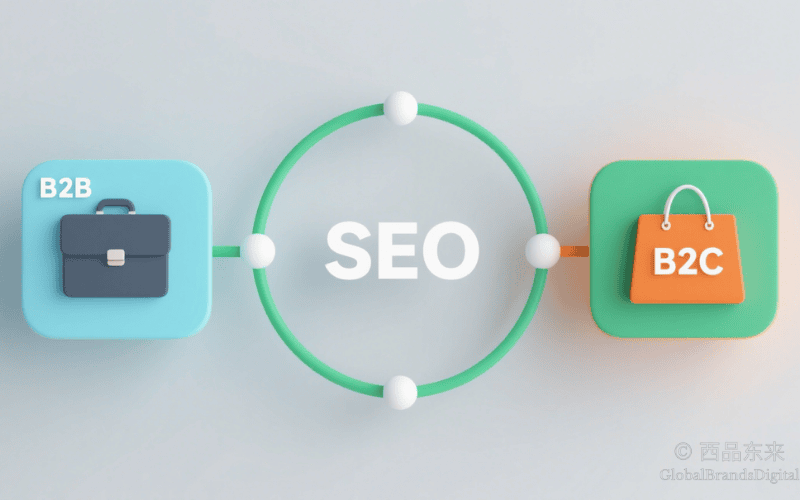
Once the business model is clear, the website should no longer follow a generic formula. B2B and B2C differ in substance, so their site structure, content logic, conversion path, SEO keywords and landing-page strategy need separate consideration. Otherwise, visitors may not understand the offer, and search engines may struggle to identify whom the page serves.
The following patterns come from the source team's service experience and can inform the construction or revision of an independent website.
B2B Websites: Make Information Clear and Convert Trust into Leads
A B2B website is essentially a sales tool. Its purpose is not usually to close the deal on the spot, but to encourage a prospect to leave contact details or take another step toward trust.
The most common structure includes the following kinds of page:
- Product or service pages: explain clearly what you provide, which problem it solves and the relevant specifications, cases or process.
- Industry application or solution pages: organize the offer by use case, such as healthcare or cross-border warehousing.
- Case-study pages: show whom you served, which problem was addressed and how the work was carried out.
- Form or contact pages: keep the entry point visible, the process short and the fields adaptable.
The core SEO targets are often not the most popular terms, but specific long-tail phrases with less competition, such as:
- warehouse management system for the healthcare industry
- custom ERP solution for international ecommerce
- quote from an overseas contract clothing manufacturer
A common mistake on B2B sites is to use polished design and formal corporate copy but fail to show the visitor the relevant solution or the next contact step. The source team's recommendation is to make the page less about who you are and more about what you can help the customer accomplish.
B2C Websites: Design the Experience and Journey for Conversion
A B2C independent website is more like an online shop. Its central task is to make browsing comfortable and help a customer complete an order without unnecessary delay.
The design should be clear, concise and fast to load. A common structure includes:
- Homepage: communicate the brand tone and direct visitors to core, new or popular products.
- Category pages: group products by type, style or function so visitors can filter them quickly.
- Product pages: use clear images and copy, visible reviews, transparent prices and a simple add-to-cart action.
- Blog, when useful: target searches with buying guides, styling advice and thematic content.
The SEO keyword strategy should follow the buyer's actual search intent. Do not look only at brand terms; consider how a buyer would search, for example:
- lightweight sun-protection shirt for summer
- niche French-style earring recommendations
- which moisturizing-serum brand suits sensitive skin
B2C content also needs a regular rhythm. New product launches, seasonal features and buyer's guides can all become entry points from search or topics for social media.
What If the Business Is Hybrid?
Some companies serve agents and end consumers at the same time. In that situation, the source team recommends:
- Separate the user journeys in the site structure. For example, place "Partner with us" and "Buy now" entries in the main navigation.
- Write for each audience separately. For example, use one set of content for a distributor FAQ and another for end consumers.
- Separate the URL paths for SEO so search engines can distinguish the subjects and keywords of each page type.
Whether the model is B2B or B2C, the goal is not to make the website more complicated. It is to give the right person the right content on the right page. That is where conversion begins.
What Other Business Models Should You Know?
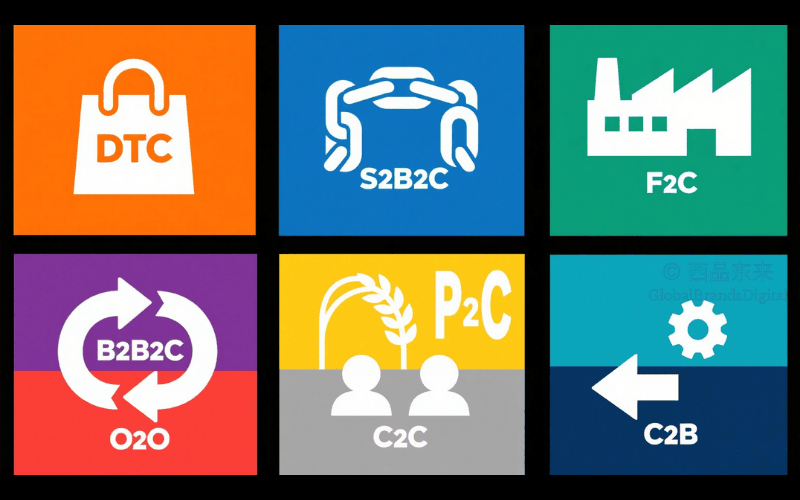
Many brands entering international markets are not purely B2B or B2C. They may serve both channels and end customers, or combine a platform with agents. Understanding more commerce models can clarify the business's position, reveal potential issues and make it easier to choose a suitable website and acquisition strategy.
| Model | Full name | How it works | Suitable industries or businesses | Common platforms or formats named in the source |
|---|---|---|---|---|
| DTC | Direct to Consumer | The brand reaches end customers directly, controls its traffic and data, and emphasizes user experience and content marketing | Beauty, fast fashion, consumer electronics and lifestyle brands | Independent websites, social media such as Instagram and TikTok, and Shopify |
| S2B2C | Supplier to Business to Consumer | A platform equips smaller merchants to serve consumers through services such as SaaS, logistics and training | Regional brands, local service providers and businesses expanding through channels | Alibaba's ecosystem, Weimob, Youzan and Xiaohongshu group buying |
| F2C | Factory to Consumer | A factory sells directly and removes intermediaries, gaining a price advantage but taking responsibility for operations, fulfilment and after-sales service | Export factories and manufacturers developing their own brands | Independent websites, livestreaming and mini programs |
| B2B2C | Business to Business to Consumer | The business serves companies and end customers, combining wholesale with its own retail operation | SaaS providers, ecommerce platforms and brands using both direct sales and distribution | Multi-merchant marketplaces and combined ERP and storefront systems |
| P2C | Producer to Consumer | Content creators monetize an audience through their own products, collaborations or selected merchandise | Creators, bloggers and small teams with an established social audience | TikTok or YouTube combined with a store system such as Shopify |
| M2C | Manufacturer to Consumer | A manufacturer leads the brand operation, combining production capacity with brand development | ODM/OEM factories and manufacturers with proprietary products | Independent websites and a coordinated network of brand social accounts |
| O2O | Online to Offline | Online acquisition leads to an offline service, a pattern common in local businesses | Restaurants, beauty services, domestic services and local appointment businesses | Meituan, Dianping, or an independent website combined with a mini program |
| C2C | Consumer to Consumer | Individuals transact with one another in markets such as second-hand goods, auctions and creative products | Second-hand marketplaces, individual sellers and creators | Xianyu, eBay, Xiaohongshu and Redbubble |
| C2B | Consumer to Business | A customer states a requirement and businesses respond or bid, with reverse customization at the center | Custom design, outsourced-service platforms and tender-based businesses | ZBJ.com, custom T-shirt platforms and crowdsourcing websites |
What Does DTC Mean?
DTC, or direct to consumer, means that a brand sells directly to the end customer without a distributor in the middle. Independent websites and self-operated stores are common examples.
What Does C2C Mean?
C2C, or consumer to consumer, describes consumers buying from and selling to one another, such as second-hand transactions on Xianyu or eBay.
What Is the Difference Between D2C and B2C?
With D2C, the brand sells to consumers itself. B2C can also include a platform selling a brand's products, as Tmall and JD.com do. D2C gives the brand more control, whereas platform-based B2C depends more heavily on the platform's traffic.
What Is the Difference Between B2C and O2O?
In the simplified contrast used by the source, B2C completes an order through an online journey, whereas O2O uses an online interaction to bring the customer to an offline service. One example is ordering a meal online and collecting it in person.
What Do B2B, B2C and B2G Mean?
B2B means business to business, such as an equipment supplier selling to a company.
B2C means business to consumer, such as an online shop selling clothes to an individual.
B2G means business to government, such as a company providing a system or service to a government body.
What Is a B2B Platform?
A B2B platform is an online marketplace where businesses transact with other businesses through wholesale, partnerships or custom services.
Examples named in the source include Alibaba.com, Made-in-China, Global Sources and 1688, as well as regionally focused services such as Thomasnet and TradeIndia.
GlobalBrandsDigital Helps International Businesses Plan the Next Step
In recent years, the way customers decide and the way companies operate have changed in both B2B and B2C.
B2B companies increasingly value online acquisition and the influence of useful content, whereas B2C businesses are moving more quickly toward independent websites, owned channels and DTC models. More mature technology also makes it possible to combine several models.
Instead of remaining stuck on whether the label is B2B or B2C, define the path early and develop a pace that suits the business.
If you are considering how to build an independent website or where to focus your SEO work, you are welcome to discuss the options with the source team.
As an international-market agency focused on Google SEO, GlobalBrandsDigital says it has served more than 200 brands across B2B and B2C industries since 2014. The team combines SEO, content, website development and paid acquisition to offer practical direction suited to the business's stage. This experience does not guarantee traffic, conversions or commercial results.