
On this pageTable of contents+

Historical Scope and Evidence
Evidence note: this is a faithful localisation of a dated source analysis. Tool interfaces, rankings, traffic estimates, Core Web Vitals results, CPCs and brand site structures may have changed. The comparisons below describe the captured period and should be revalidated before they inform current investment or forecasting.
Have you noticed that organic traffic converts especially well in Google Analytics and decided you want more of it?
Perhaps you have invested heavily in organic growth, yet every channel except organic search has improved; outside branded queries, little traffic has appeared.
This problem has affected Chinese DTC brands at many funding stages, from early ventures to heavily financed companies.
This source-era analysis examines portable energy storage, a category that was attracting substantial investor interest at the time.

The international expansion of the energy-storage sector can be traced back to around 2015.
As supportive policies appeared across North America, Europe, Australia, Japan and South Korea, more Chinese portable-power brands entered these markets.
By the time of the source analysis, I had advised several energy-storage brands on Google SEO.
Those projects covered global programs, Europe- and US-focused programs, Japan and South Korea, and several export manufacturers.
That work provided practical familiarity with the market.
For this comparison, I selected three representative brands: EcoFlow, BLUETTI and Jackery.
Comparing them helps explain why one brand led organic traffic, why a newer brand was accelerating and why another was progressing more slowly in the source snapshot.
The final section draws broader lessons for DTC traffic strategy.
1. Comparing the Three Brands
1.1 US Traffic Comparison
1) SEO data comparison
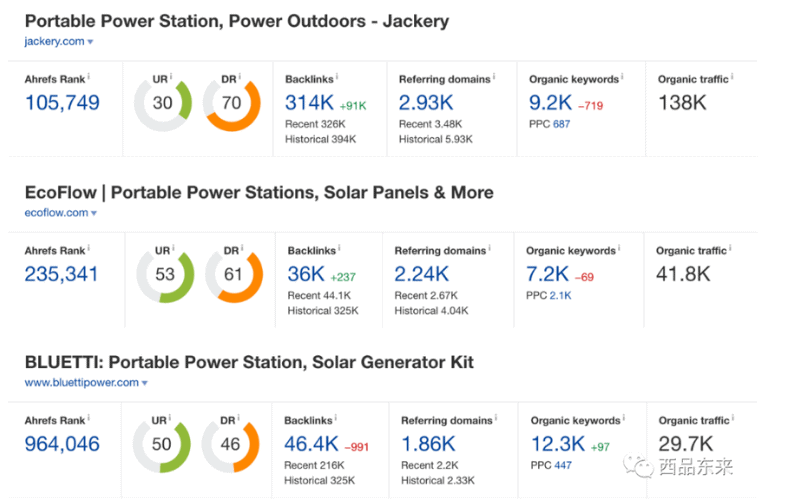
The source Ahrefs snapshot showed approximately 138,000 monthly organic visits for Jackery.
EcoFlow and BLUETTI were both below 50,000 in that snapshot.
Jackery had a head start: the brand began expanding overseas around 2012.
On the growth curve, however, BLUETTI was advancing quickly.
What might explain that acceleration?
The later sections examine possible drivers.
2) Overall traffic comparison
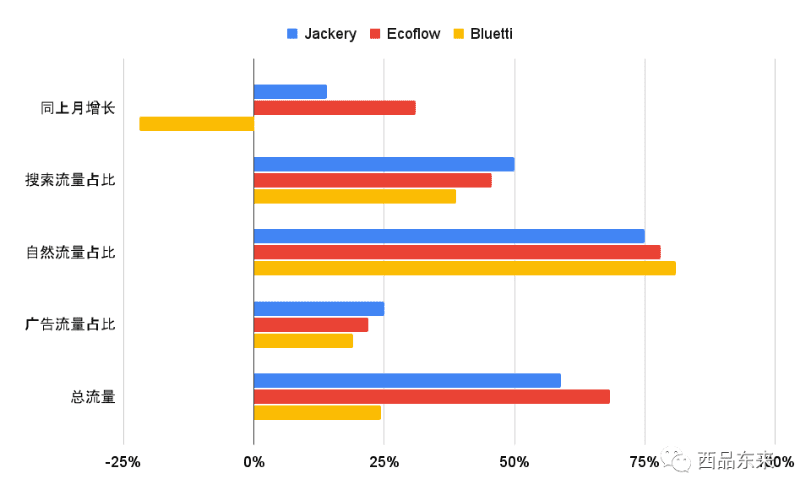
Relative traffic comparison based on the source Similarweb snapshot.
Note: Similarweb estimates are directional and do not represent verified first-party website data.
The chart compares the channel mix for all three brands.
Why did Jackery lead organic traffic in this snapshot?
And why was BLUETTI's organic traffic growing fastest?
The SEO details offer useful clues.
1.2 Detailed SEO Comparison
3) Indexed-page comparison
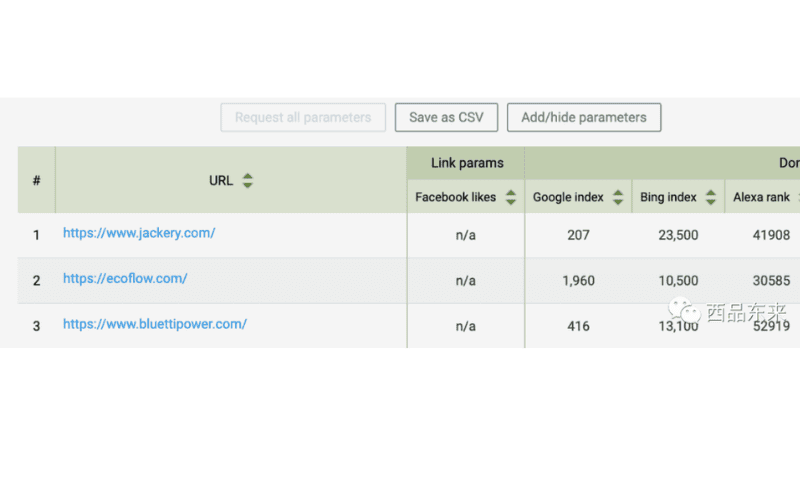
Further checks suggested that EcoFlow used country or market subdomains across several sites.
That architecture made the raw indexed-page total look higher.
The source therefore adjusted EcoFlow's data before comparison.
The resulting estimate appears below.
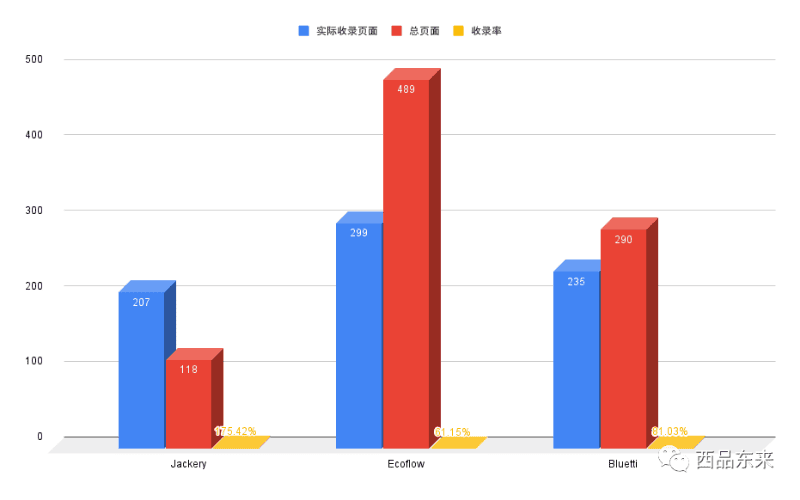
In this historical snapshot, the three sites had an approximate page-count ratio of 1:4:2.
The source calculated index ratios of 178% for Jackery, 61% for EcoFlow and 81% for BLUETTI.
More pages can indicate broader site content, although page count alone does not establish quality.
EcoFlow appeared to have the broadest content footprint.
Its index coverage still needed investigation.
BLUETTI's index ratio looked healthier, but the source observed possible keyword cannibalization across many pages.
Jackery appeared to have numerous low-value or redundant URLs indexed.
The practical recommendation was to enrich useful pages and consolidate duplicates before they created wider search-quality risks.
4) Site-architecture comparison
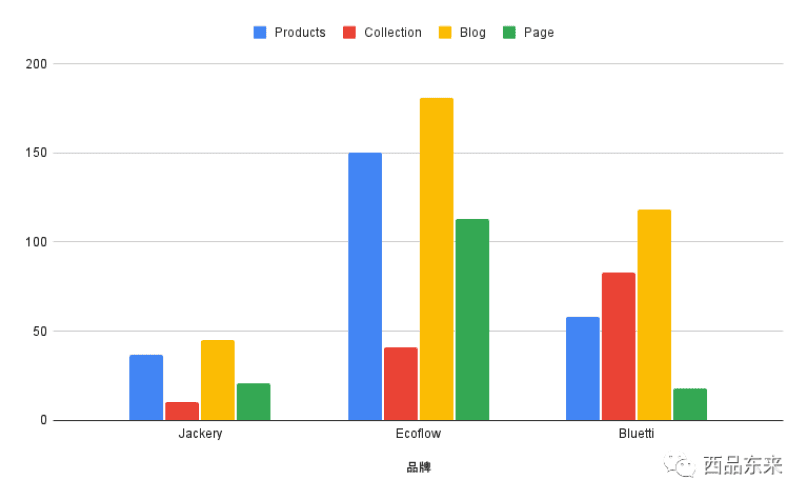
For ecommerce, product pages, collection pages, articles and other pages provide a practical way to compare information architecture and merchandising.
Apart from BLUETTI's red segment in the source chart, the three sites had broadly similar page-type structures.
Their proportional mixes were also similar.
The source suggested that the yellow segment might offer room for further differentiation.
5) Product SKU comparison
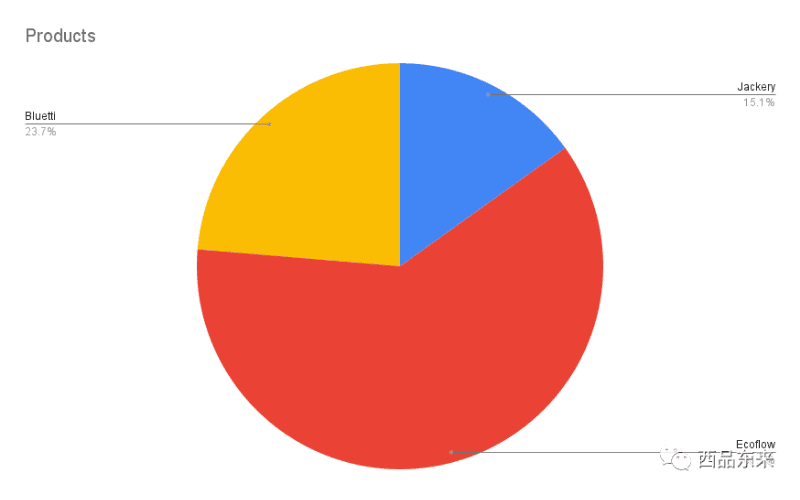
The chart shows the SKU mix recorded for the three brands.
EcoFlow represented 61.2% of the product SKUs in this source dataset.
SKU breadth can correlate with organic visibility in ecommerce, but it is only one factor and should not be treated as a ranking guarantee.
A broader, well-structured range can satisfy more distinct needs and search intents.
6) Product-keyword rankings
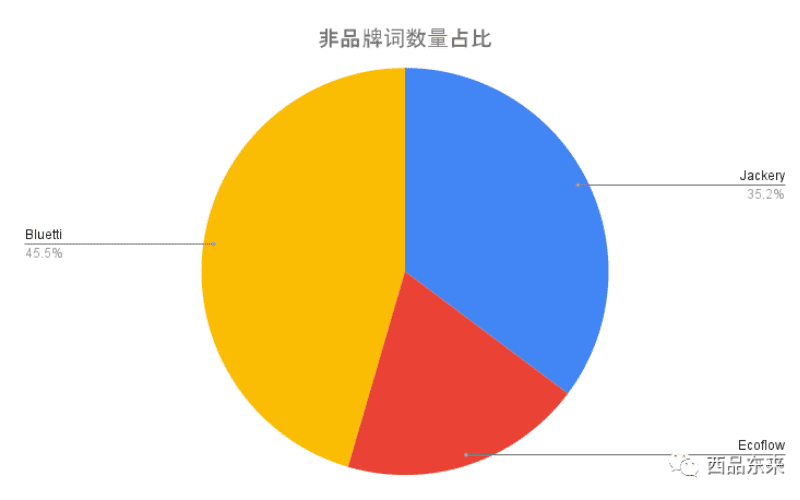
After branded terms were excluded, BLUETTI had the largest share of ranking product keywords in the source dataset.
That result was directionally consistent with its stronger index ratio.
Index coverage can be one signal of page health, but it does not by itself prove page quality.
Stronger pages can rank for a wider range of relevant queries.
The source interpreted BLUETTI's combination of index coverage and page quality as a reason for its broader keyword footprint despite having fewer pages.
Keyword count alone is not enough; rankings for commercially important terms matter more.
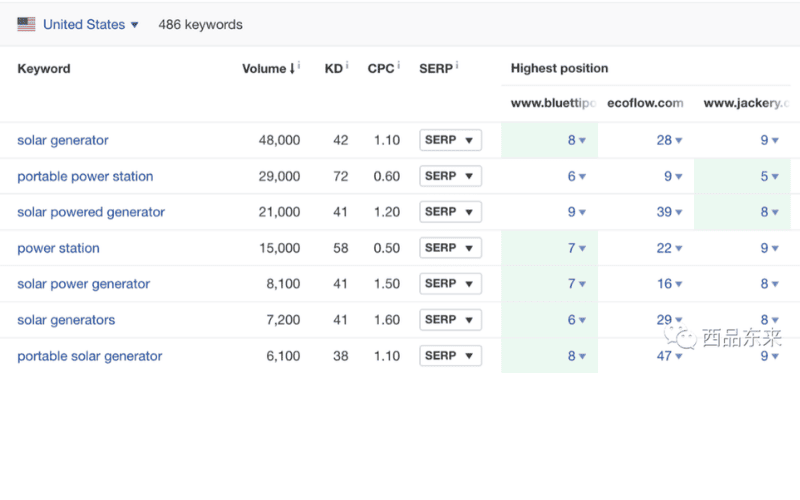
The source filtered for seven shared keywords with search volume above 5,000.
The next comparison reviews their positions at the time.
BLUETTI ranked ahead of the other two brands for five of the seven terms.
Jackery led for two terms.
EcoFlow did not lead any of the seven in that snapshot.
Although BLUETTI's total search traffic was still lower, the source saw a plausible path to catching Jackery if the trend continued; this was an interpretation, not a forecast.
EcoFlow's lower positions also appeared related to page-quality issues in the source review.
7) Technical SEO comparison
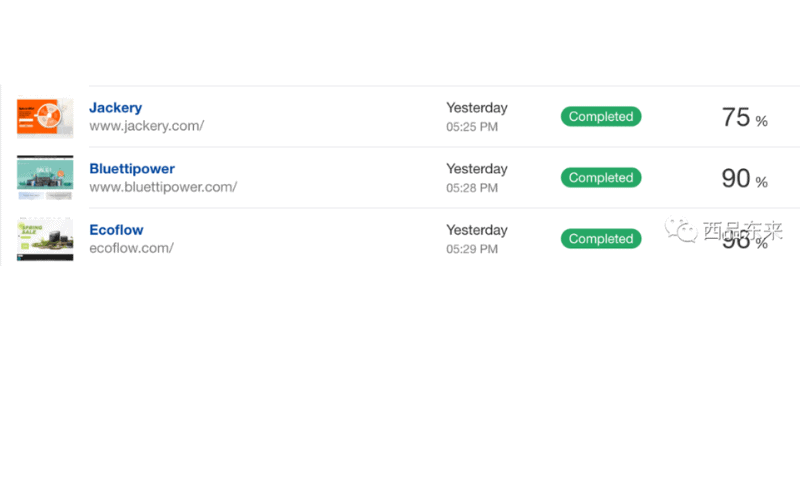
All three sites had technical issues, especially orphan pages, suggesting that internal linking needed attention.
The source also found problems such as multiple title tags, overlong titles and redirect errors.
Resolving technical constraints can shorten the path between publishing and search discovery.
For client work, the source set a target of clearing the full technical checklist and noted that tool scores are not business outcomes.
8) Content-marketing comparison
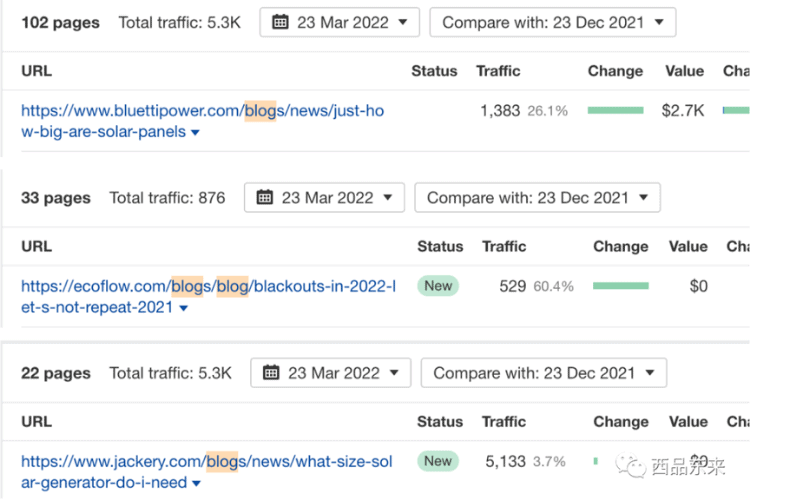
BLUETTI's content program was the strongest of the three in the source review.
Its main strength was connecting products with real use cases and organizing content around the user.
9) Backlink comparison
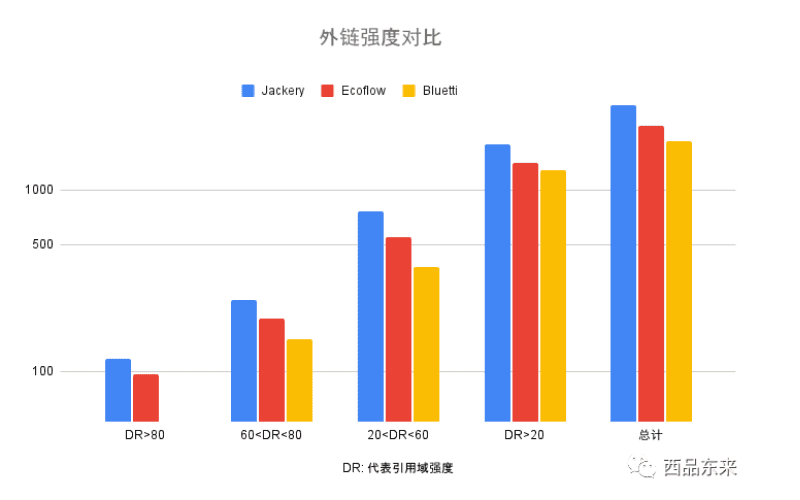
By domain-rating bands, Jackery was strong throughout the source chart, with EcoFlow close behind.
Domain Rating alone is not a sufficient measure of link quality.
Follow status, editorial placement, page depth and topical relevance also matter.
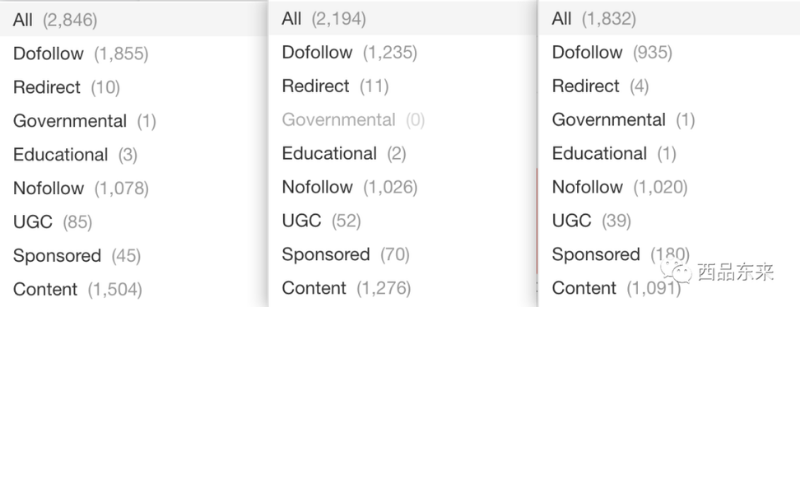
On that broader assessment, the source rated BLUETTI's backlink profile highest.
EcoFlow ranked second in the source assessment.
Low-quality or poorly matched links can create risk, stagnation or weak returns rather than reliable ranking gains.
Ongoing monitoring and qualitative review are needed to manage that risk.
10) How Google appeared to understand the brands
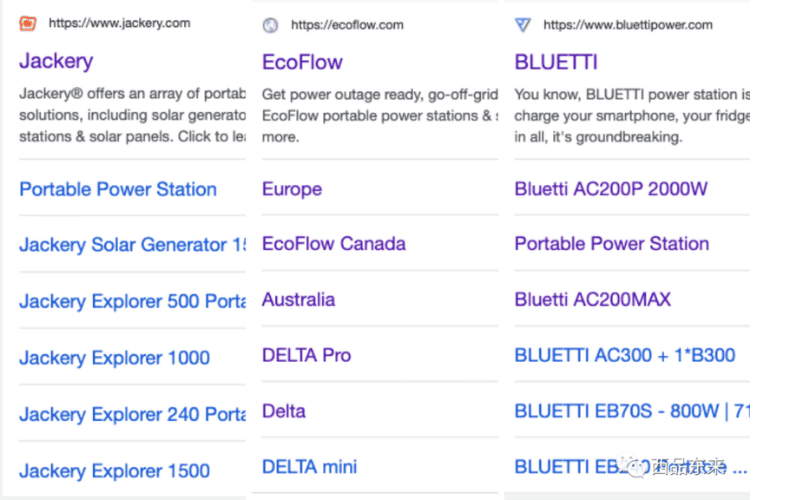
The source interpreted sitelinks as clues to the parts of a site users and Google consider important.
Jackery and BLUETTI showed conventional ecommerce sitelinks; EcoFlow's result looked less typical.
What was unusual?
EcoFlow.com acted as a global entry point that routed visitors to market-specific sites.
Its page links pointed to the US site, yet the US site was absent from the sitelinks shown in the source capture.
The original author discussed a possible cause elsewhere. We preserve what the page showed but do not claim that the author's explanation was verified.
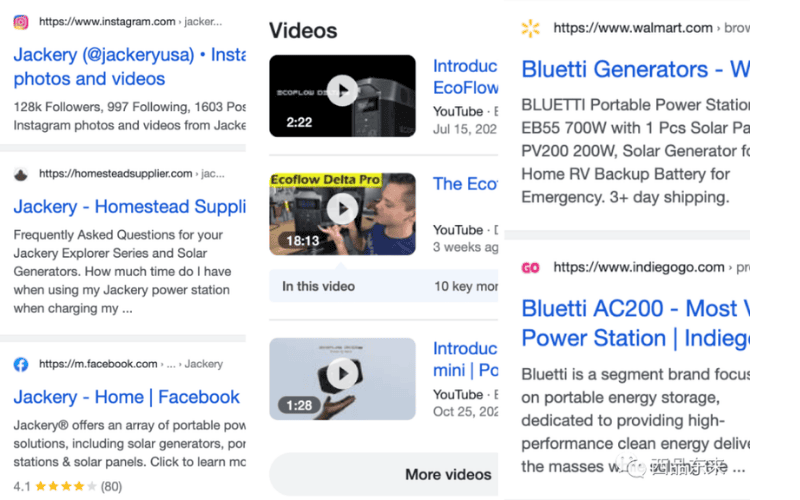
Branded search-result pages provide another view alongside sitelinks.
Official social or media profiles in the results can suggest that Google understands the brand more clearly. Results still vary by query, market and time.
A small brand with little marketplace or third-party coverage can behave differently.
In the captured results, only Jackery's official media profiles and EcoFlow's YouTube channel appeared prominently.
Overall, the source judged Jackery to have the strongest brand trust signals in Google at that time.
11) Website experience comparison
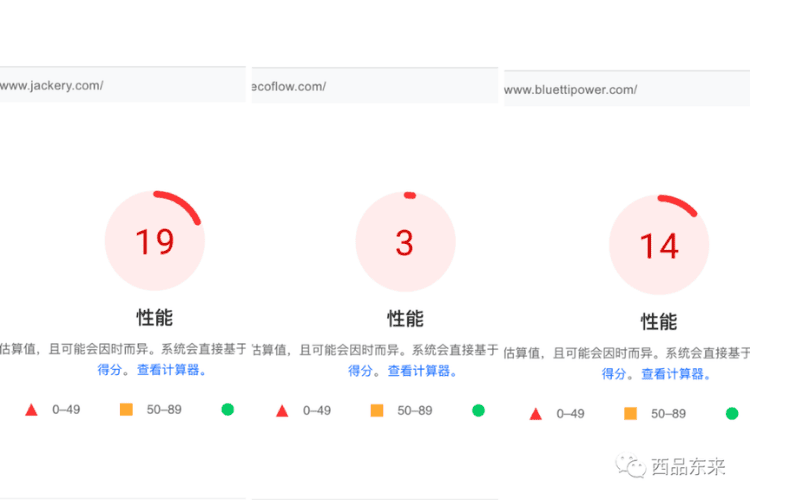
None of the three sites passed the Core Web Vitals assessment shown in the historical snapshot.
That was not unusual for the sites reviewed at the time.
Many complex ecommerce sites, including Shopify stores, struggled with the assessment in that period.
The author saw some sites improve after they passed the test. That pattern does not prove one caused the other.
The source did not identify a direct penalty merely for failing the assessment.
12) Other experience factors
| Brand | Product-page design | Shopping experience |
| Jackery | Usable interface, but sections were not clearly differentiated. | Multiple payment methods, address autofill and instalment options; the source rated the overall journey positively. |
| EcoFlow | Usable interface, but sections were not clearly differentiated. | The source found friction in the shopping journey, particularly recurring errors when adding products to the cart. |
| BLUETTI | Technology-led interface with clearer sections. | Smooth purchasing and thoughtful details, although instalment payments were missing in the source review. |
User experience is central to operating a direct-to-consumer website.
This source review considered only several core indicators, the interface, product-page design and the purchasing flow.
A fuller assessment should examine every step in the customer's buying journey.
That deeper journey analysis sits outside this article.
Taken together, the source data showed Jackery as the established SEO leader.
EcoFlow and BLUETTI were nevertheless closing parts of the gap.
1.3 Where Each Brand Could Improve
Each brand had several areas that could be strengthened.
Addressing them could create more room for qualified organic growth.
The source highlighted three priorities for each brand.
Jackery
1. Make title tags more closely aligned with search intent.
2. Improve page quality and reduce low-value pages.
3. Invest more consistently in content marketing.
EcoFlow
1. Clarify a confusing internal URL structure.
2. Simplify and correct the multilingual architecture.
3. Resolve inconsistencies between www and non-www hosts.
BLUETTI
1. Improve title tags for search and users.
2. Consolidate numerous duplicate product pages.
3. Strengthen structured-data implementation.
These issues are common across ecommerce sites, particularly when multiple market sites are involved.
How should a team approach them?
The source proposes several architecture options.
If a site is already live, evaluate migration risk carefully before applying any of these patterns.
For a small team with limited engineering capacity, a simpler structure may be appropriate.
1) Use domain.com as a global entry point that directs users to the appropriate country experience.
The source cites Philips Hue as an example of this routing pattern.

2) A larger team with stronger engineering capacity can consider two further patterns.
The source cites SHEIN's market structure as one example.

Alternatively, use country-code domains.
United States: domain.com
United Kingdom: domain.co.uk
Australia: domain.co.au
Each pattern can work; the right choice depends on resources, localisation needs and governance.
Country-specific domains can be especially useful in markets where local expectations differ substantially, such as eyewear.
1.4 Risks to Monitor
EcoFlow
EcoFlow used an older domain in the source period, and domain history can bring both advantages and liabilities.
A clean, established domain may retain useful recognition and links.
A domain with an unrelated or problematic history can require more remediation.
The source considered EcoFlow's chosen domain history potentially challenging.
It previously belonged to an international company.
After that company closed, another owner acquired the domain and redirected it to an unrelated ecommerce site, according to the source's historical review.
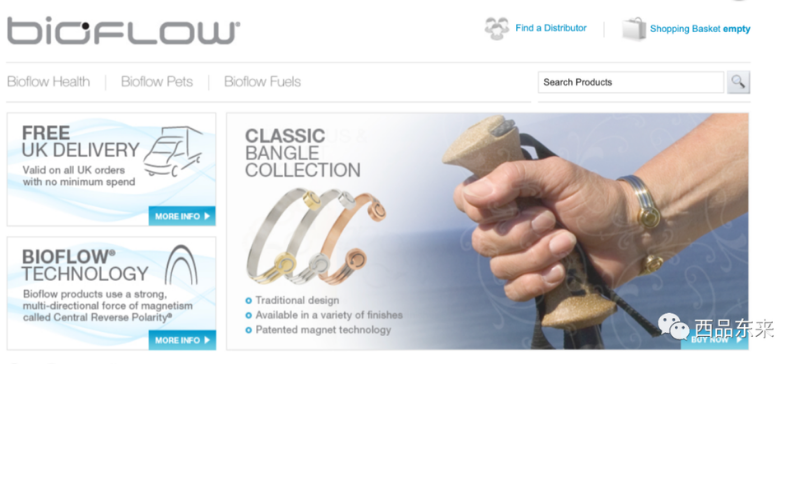
The author therefore considered domain history one possible factor in EcoFlow's difficulty ranking for broad terms; it was not established as the sole cause.
Jackery also used an older domain whose history was not entirely aligned with its current business.
Its longer period of consistent use appeared to reduce that concern.
Smaller brands should still investigate an aged domain carefully before acquiring it.
That is particularly important for a brand-led site.
Even when the name was not chosen specifically for SEO, domain-history review belongs in search risk management.
2. Lessons for the Wider Ecommerce Market
After comparing three leading portable-power companies, we can step back and consider the broader ecommerce market.
1. Strong SEO can reduce dependence on other acquisition budgets.
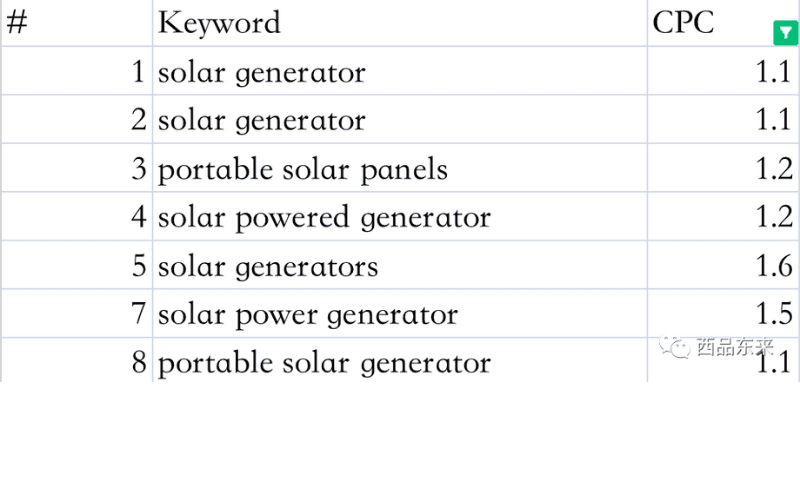
In the source-era Ahrefs snapshot, core portable-energy keywords had an average CPC of about US$1.10.
Relative to the category's high average order value, that CPC appeared modest.
The source interpreted this as a sign that paid-search competition in the category was not yet mature.
It expected CPCs to rise as more competitors entered, although current pricing should be checked independently.
Brands that invested in SEO before the category became crowded could potentially reduce future dependence on paid traffic.
SEO content can also be adapted for social, video and podcasts, increasing the value of the original research.
2. In an emerging category, build organic foundations early.
A team may postpone SEO because even category leaders appear to receive limited search traffic.
Low search demand in an emerging category does not mean demand will remain low.
The source points to SHEIN's earlier growth stage as a comparison, not as a guaranteed pattern.
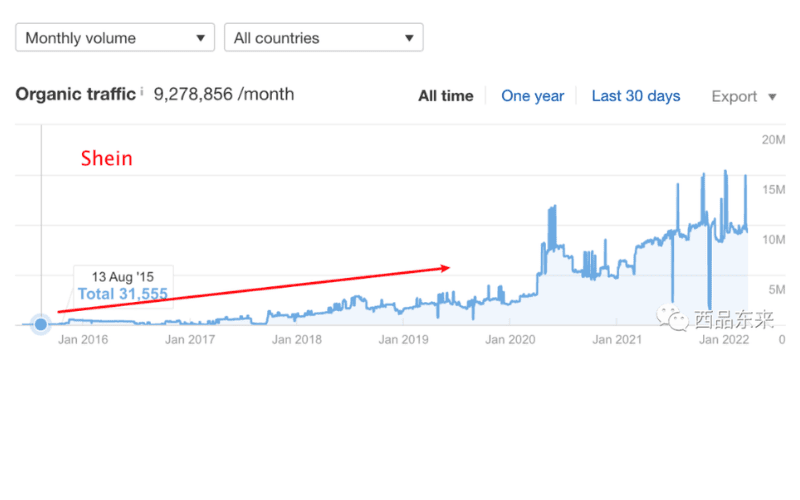
If portable energy continues expanding across markets, related searches and customer research are likely to evolve with it.
New terminology and query volume can grow as the category becomes more familiar.
For an emerging, high-consideration product, early organic investment can create a useful learning advantage.
3. SEO can support DTC conversion.
Teams unfamiliar with SEO may underestimate the conversion intent available through organic search.
The source compares this with a paid-search campaign that reportedly achieved an ROI of 10, but the figures are not independently verified.
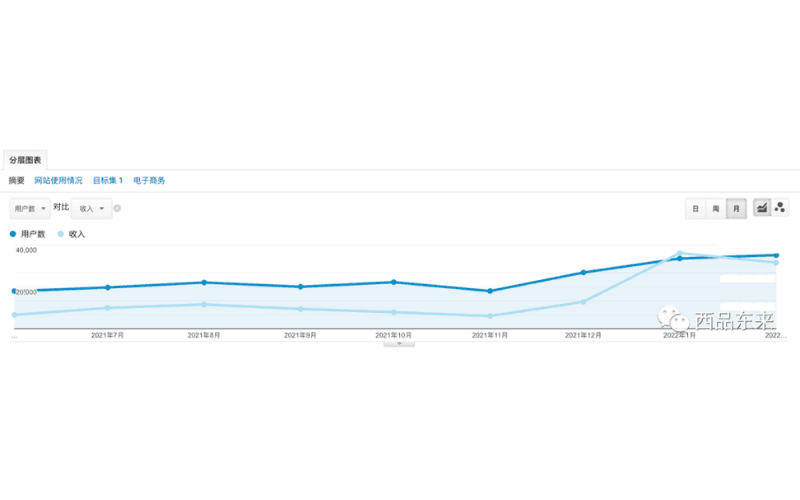
In one consulting engagement cited by the author, ROI reportedly increased sixfold over seven months.
You may wonder whether that reported increase required unusually high spending.
The author stated that total SEO expenditure during those seven months was no more than RMB 50,000.
These historical figures describe one source-reported engagement; they are not a promise of comparable returns.
4. SEO can reflect the quality of a DTC operation.
An ecommerce site with strong SEO often has several supporting characteristics.
It represents a credible brand with positive customer sentiment.
The site is well maintained and offers a strong user experience.
Its pages satisfy search intent and address genuine customer problems.
Its backlink profile includes relevant recommendations from people and organisations.
Its structure helps users navigate efficiently.
Other operational strengths may also contribute.
The source linked BLUETTI's rapid growth to this combination of factors.
Why describe SEO as an important expression of DTC quality?
DTC aims to deliver more product value to customers by removing unnecessary friction.
Google's search systems also aim to satisfy users' information and task needs.
Serving searchers well can create more opportunities for a site to be discovered, though no result is guaranteed.
This overlap may help explain why some brand founders have a search background.
The operating principle is similar: understand and serve the audience.
3. Final Thoughts
Building durable SEO for a DTC brand is more difficult than it may first appear.
Even a product ranking seventh or eighth may generate few orders.
That is normal when large marketplaces capture much of the available traffic.
Amazon, Walmart, Etsy and review publishers may all occupy prominent positions.
In that situation, the brand may need more distinctive and creative search strategies.
Following only standard tactics may not create meaningful differentiation.
Otherwise, pages may remain on page two or near the bottom of page one.
Those positions often deliver limited traffic.
They may therefore make little difference to the site's overall organic growth.
The original article closes by encouraging Chinese DTC brands to compete globally and build products from the East for international customers.
Turn the comparison into a current baseline with our website diagnostics service, or follow the English SEO learning hub for a structured implementation path.