
On this pageTable of contents+
- 1. Research How AI Systems Select Content
- 1. Research GEO Questions
- 2. Analyze Generative Search Results
- 3. Analyze Competitor Citations
- 4. Assess Brand Understanding
- 2. Writing for People and AI Requires Different Checks
- 1. Increase Information Density and Make Claims Verifiable
- 2. Name Entities Explicitly
- 3. Keep Information Current
- 3. Build a Structure That Is Easy to Understand
- 1. Make Information Easy to Scan
- 2. Answer Questions Directly
- 3. Add Appropriate Schema Structured Data
- 4. Distribute GEO Content Deliberately
- 1. Publish on Platforms That Fit the Audience
- 2. Develop Genuine User-Generated Content
- 3. Participate in Relevant Social Discussions
- 5. Establish Brand Credibility
- 1. Seek Relevant Links and Credible Media References
- 2. Make Information Transparent and Verifiable
- 3. Keep Core Descriptions Consistent
- 6. Improve the Technical Foundation
- 1. Keep the Site Fast
- 2. Support Mobile Devices
- 3. Keep the Information Architecture Clear
- 4. Add Accurate Schema Markup
- 5. Make Each Page Explainable
- 7. Test and Iterate
- 1. Test Multiple Structures for the Same Subject
- 2. Update the Evaluation Criteria
- 3. Performance Requires Iteration
- 4. Response Speed Can Affect the Result
- 8. Conclusion

GEO has become a frequently discussed term in the past two years.
The important change is not the terminology, but the way AI systems select content.
That shift matters to any team that still relies on organic acquisition.
Our team now treats GEO as a regular part of content strategy.
The aim is not only to understand it, but to apply it to practical problems and evaluate the results.
This article leaves the broad conceptual framework aside and focuses on one question:
How do AI systems select content, and how should a team respond?
1. Research How AI Systems Select Content
Understanding how AI systems select content is an important starting point for GEO.
We divide the work into four actions that can influence subsequent organic performance.
1. Research GEO Questions
Content programs once began primarily with keywords.
AI-generated answers often respond to complete questions, including natural, long-tail formulations.
Instead of only: digital marketing strategies
Consider: What are the best digital marketing strategies for small businesses in 2025?
The deliverable should be a question map, not only a keyword matrix.
Start with the way people actually question AI systems and identify what they want to resolve. This can affect whether relevant content is retrieved and understood.
Tools such as Ahrefs and AlsoAsked can support this work, alongside manual research across multiple sources.
If readers are interested, we can cover the operational method in a separate article.
2. Analyze Generative Search Results
The challenge is not always too little content. Often, the existing content is not presented in a form that an AI system can use.
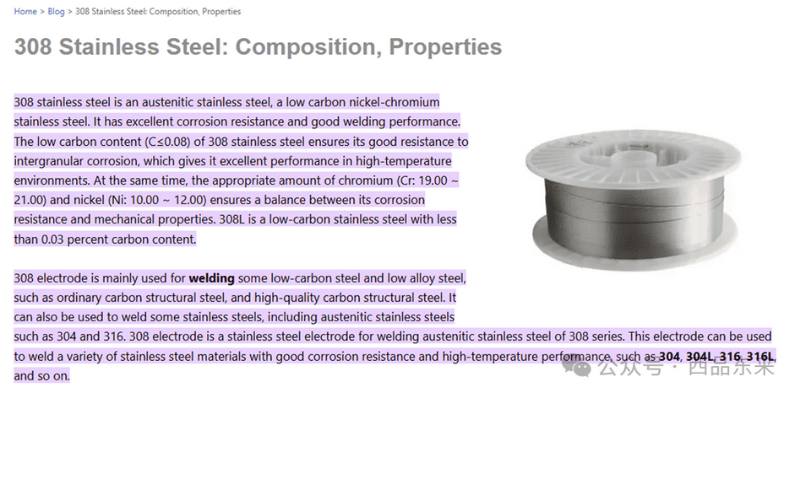
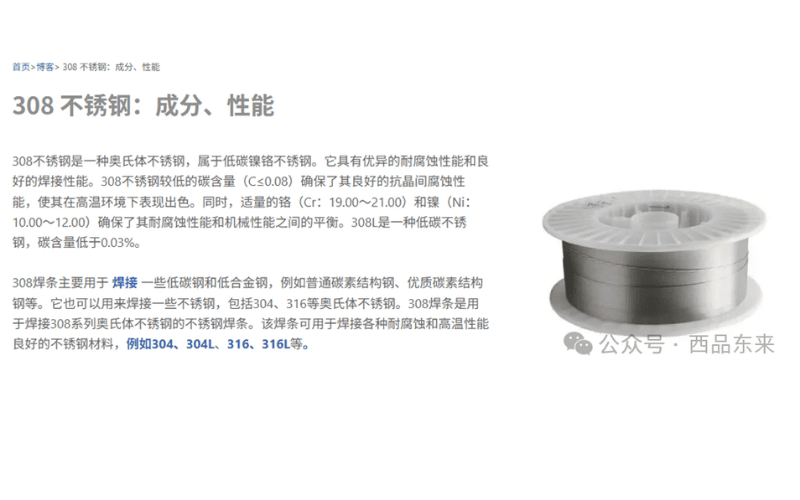
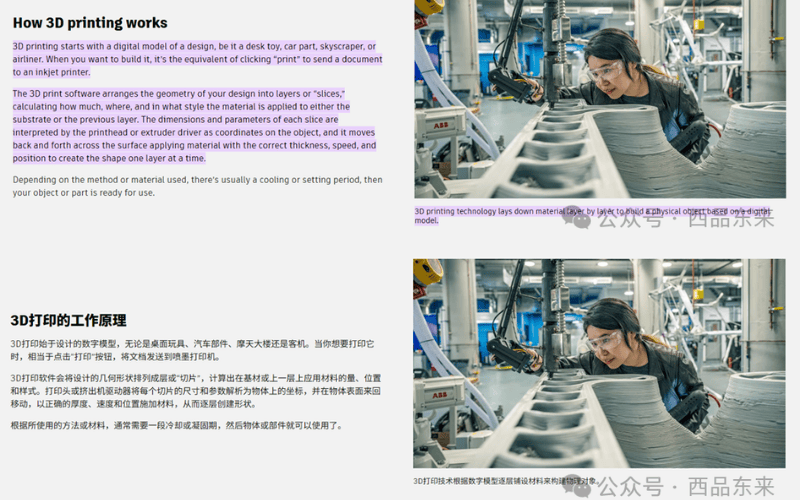
Open relevant generative search tools - the source names Google SGE, Perplexity and ChatGPT - and enter central industry questions. Observe three things:
• Which questions receive an answer? • What format does the answer use: a paragraph, list or summary block? • Which websites are cited, and what do their pages have in common?
The review may favor content that is clearly structured and precisely worded. Clean semantics and dense, useful facts can matter more than length alone.
Such pages are often systematically organized rather than built around repeated keyword use.
Example 1:
Example 2:
3. Analyze Competitor Citations
Search AI tools for questions related to the business and record which sources are cited.
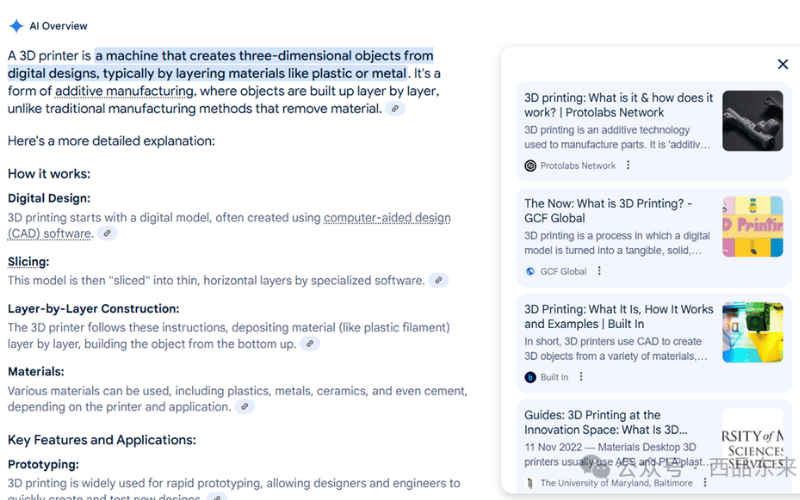

Open those sources and review:
• What type of page is it: blog article, help document, product page or report? • Which structural pattern does it use: FAQ, three-part explanation or data-led opening? • What language and tone does it use?
The purpose is not to copy a competitor. It is to build a library of content patterns that your own team can evaluate and adapt.
Using these observations can improve the likelihood of producing content that is suitable for an AI-generated answer, but it does not guarantee inclusion.
4. Assess Brand Understanding
Search in ChatGPT or Perplexity:
• What is [brand name]? • What does [brand name] offer?
Do not check only whether an answer exists. Check whether it is accurate, favorable and supported by credible information.
If the description is vague, outdated or misses the brand's main strengths, it may create a weak first impression. Users may also feel less confident in that search context.
Review the homepage, About page, category landing pages, core product pages and other important business pages.
The aim is to make the information available to AI and search systems consistent with what customers should understand.
2. Writing for People and AI Requires Different Checks
Most teams write for people. GEO adds another requirement: systems must also be able to interpret the content.
AI systems do not evaluate content exactly as people do. Clear structure can affect retrieval and reuse; so can granular facts and visible evidence.
Content and algorithms now interact, so publishing practices need to evolve.
1. Increase Information Density and Make Claims Verifiable
The source article presents the following eight content-enhancement practices as lessons from its own work:
| Content enhancement | Meaning and requirement | Example |
| Add statistics | Use current figures that are specific and verifiable. | "The ecommerce market grew 10.4% in 2024 (Statista)." |
| Cite authoritative viewpoints | Attribute a view to a relevant institution or qualified expert. | "A McKinsey report states..." |
| Identify sources | Provide a clear source for factual claims. | "Source: Ahrefs, SEO Trends 2025." |
| Use an authoritative basis | Use confident language only when evidence supports the statement. | "In this measured sample, the strategy was associated with a 23% average increase in conversion rate." |
| Write in accessible language | Avoid unnecessary jargon and explain complex issues plainly. | "SEO improves visibility in unpaid search results." |
| Improve fluency | Keep sentences natural, structure clear and logic connected. | Give each paragraph one main point. |
| Use distinctive wording | Avoid generic templates and describe the offer precisely. | "A zero-integration CRM for small SaaS teams." |
| Use industry terminology where it improves precision | Relevant terms can help identify entities and concepts. | "GEO addresses visibility in generative search experiences." |
These practices are foundational quality checks, not a shortcut to citations.
Failing them can make content harder to trust or reuse, but no checklist can determine whether an AI system will cite a page.
2. Name Entities Explicitly
Clear named entities - including brands, products, people, organizations and locations - provide stronger semantic anchors.
Vague descriptions make those anchors harder to establish.
For example:
✘ "a leading CRM system" ✔ "HubSpot, a CRM platform used by B2B SaaS teams"
State the core entities explicitly in important passages, page titles, subheadings, openings and conclusions where they are relevant.
3. Keep Information Current
Freshness can matter in GEO when a subject changes over time.
Current dates, update timestamps and recent data may help users and systems understand whether information is still applicable.
For example, review whether an article titled "Top SEO Tips for 2023" remains accurate before changing it to "Top SEO Tips for 2025."
Recommended checks:
- Identify old years and potentially outdated data.
- Update dates in titles, subheadings and body copy only when the underlying information has also been reviewed.
- Display the content's update date clearly.
These checks help readers assess whether content remains current.
3. Build a Structure That Is Easy to Understand
GEO content is not only written; it is deliberately structured.
Whether a passage can be recognized or cited depends partly on how clearly its structure communicates the subject and answer.
A strong structure helps content resolve into a concise answer, a table or an extract that can stand on its own.
Use three core practices.
1. Make Information Easy to Scan
AI systems do not process a page exactly as a person reads it from start to finish. They can rely on structural signals.
Useful elements include:
- Lead with a short summary: use two or three sentences to state what the content covers and why it matters instead of a long preamble.
- Use clear H2 and H3 headings: name the content of each section directly so the hierarchy functions like a useful outline.
- Use lists where the information is genuinely sequential or grouped, even when the list is short.
- Keep paragraphs focused: shorter, single-purpose paragraphs reduce reading effort and make sections easier to parse.
- Present genuine FAQs explicitly: when readers repeatedly ask a question, use a visible question-and-answer format.
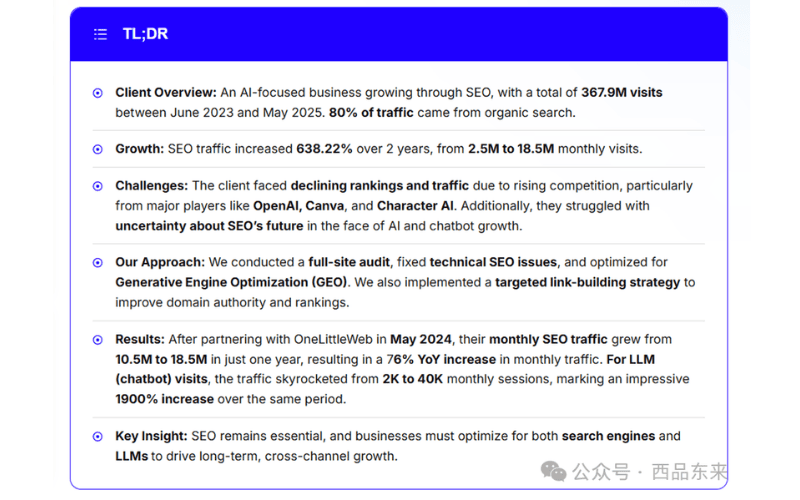
These structures often contain the passages most suitable for extraction into search and AI experiences.
Make the organization explicit rather than expecting a system or reader to infer it.
2. Answer Questions Directly
GEO content should address questions, not merely contain a search term.
Examples of questions that users may ask include:
• What is GEO? • How does GEO support generative search visibility? • How is GEO related to traditional SEO?
Anticipate relevant questions and answer them in clear, self-contained passages.
This improves clarity and can make a page easier to interpret; it does not confer authority by itself.
For readers, it resolves the question at the point where it arises.
That is a practical advantage of an answer-first structure.
3. Add Appropriate Schema Structured Data
Most brands cannot train a model, but websites can provide machine-readable structured data.
Schema can identify that a passage is an FAQ, a page describes a product, or an article has a named author and update date.
It is a standardized semantic signal used by search systems.
Relevant Schema types may include:
• FAQPage • Article • BreadcrumbList • Product • Person or author information
Implementation is a technical foundation that many sites still overlook.
Do not add every Schema type to every page.
Start with the homepage, core product pages and primary content where the markup accurately reflects visible information.
These pages often carry the information the brand most wants systems and users to understand.
Structure serves both readers and systems by making useful information easier to locate and extract.
That is the practical basis of this GEO approach.
4. Distribute GEO Content Deliberately
Producing good content is only part of GEO; relevant audiences and systems must also be able to find it.
AI-generated answers draw on accessible information. Content that cannot be crawled or accessed will not participate in retrieval.
Consider three questions: where to publish, who can credibly mention the brand and how to maintain an appropriate presence.
1. Publish on Platforms That Fit the Audience
Where appropriate, the source suggests adapting content for platforms such as:
• Medium • LinkedIn Articles • Quora • Reddit • Dev.to • Product Hunt
The source describes these as frequently used in generative search. Actual citation patterns vary by platform, query, language and time, so confirm relevance before investing.
Relying on a company blog alone may limit reach, although indiscriminate duplication is not a substitute for useful distribution.
2. Develop Genuine User-Generated Content
Independent user accounts can provide a different form of evidence from a brand's own description.
Potential sources include:
• Customer review pages with authentic quotations; • Brand references in social posts or blogs; • User-led reviews, Q&As and experience reports
When genuine and verifiable, this material can add multi-channel context that complements first-party content.
It can also become part of a brand's long-term trust record.
3. Participate in Relevant Social Discussions
Stay useful in the public spaces where the intended audience participates. This can improve legitimate visibility:
- Publish or comment on relevant industry material on LinkedIn, X or Reddit.
- Join discussions and include brand links only when they genuinely help answer the question.
- Earn secondary distribution when users choose to share, mention or cite the material.
The purpose of social participation is not merely follower growth; it is to create useful, accessible references in relevant contexts. It should not be framed as a way to manipulate model training data.
5. Establish Brand Credibility
The purpose of GEO is not simply to write for AI systems, but to improve the conditions under which a brand can be considered and accurately described.
Trust depends on evidence, consistency and context rather than a single content format.
When those signals are weak, a source may be less likely to be selected.
This can explain why structurally sound pages still fail to appear for relevant questions.
1. Seek Relevant Links and Credible Media References
Pages mentioned and linked by credible, relevant sources can be easier to discover and assess.
Possible activities include:
- Contributing to relevant industry lists or curated resources.
- Writing for specialist publications or professional communities.
- Publishing interviews or public-relations material with appropriate links and disclosure.
- Encouraging customers to cite useful pages, content or documented cases when they choose to do so.
Quality and relevance matter more than volume; the objective is a defensible network of references.
2. Make Information Transparent and Verifiable
Two commonly overlooked elements can help readers and systems evaluate a page:
• A named author and relevant role • A publication or update date, identified data sources and verifiable links
Many cited pages contain these basic details, although their presence alone does not cause a citation.
Without them, users and systems have less context for evaluating the content.
Transparency supports reader confidence and provides useful signals for content assessment.
3. Keep Core Descriptions Consistent
Systems identify a brand through more than its name. Repeated descriptions and topics also shape how the brand is interpreted.
If the website presents the company as an "AI marketing solution,"
LinkedIn presents it as a "brand enablement platform,"
and social profiles use vague or unrelated language,
it becomes harder to determine what the company does and where it fits.
Consistent core claims and terminology improve clarity. The tone can still be adapted for each platform.
Citation mechanisms vary across platforms, and content scale, language and industry also affect results.
Even so, complete and consistent trust signals remain a sensible GEO foundation.
6. Improve the Technical Foundation
Even strong content can be difficult to discover when the technical foundation prevents crawling, rendering or navigation.
The following checks come from the source team's project experience.
1. Keep the Site Fast
Performance can affect how efficiently users and crawlers access a page.
Check:
- Whether the homepage and core pages meet the site's performance target; the source uses 2.5 seconds as an example threshold.
- Whether redirect chains or multiple hops exist.
- Whether images are compressed and lazy loading is implemented appropriately.
- Whether CDN and browser caching are configured where useful.
Unresolved problems can prevent systems from reading the full page reliably.
2. Support Mobile Devices
Mobile rendering and performance are essential to modern search access.
Check:
- Whether pages adapt to relevant screen sizes.
- Whether type, controls and spacing support touch interaction.
- Whether content is hidden or fails to load.
- Whether scripts create mobile performance problems.
3. Keep the Information Architecture Clear
Systems use page structure and site relationships to interpret content.
Useful principles include:
- Keep important pages within a shallow, understandable path where possible.
- Use purposeful internal links that make page relationships clear.
- Include indexable canonical pages in the XML sitemap.
- Use stable, coherent structures for sections such as Blog, Solutions and FAQs.
4. Add Accurate Schema Markup
Schema can help identify a page's type and purpose; it does not guarantee citation.
Relevant types include:
• Article • FAQPage • Product • Organization • BreadcrumbList
JSON-LD is a practical format for implementing accurate markup on core pages.
5. Make Each Page Explainable
GEO should focus on semantic clarity, not a superficial score.
Review:
- Whether the page has a coherent context and central argument.
- Whether its role within the site is clear.
- Whether questions, answers, reasoning and sources are visible where applicable.
- Whether authors, dates and sources are identified.
The easier a page is to explain accurately, the easier it is to classify and reuse appropriately.
7. Test and Iterate
Why is content not cited by AI systems?
The issue may be the subject, evidence, availability or structure, so test the relevant variables rather than assuming one cause.
1. Test Multiple Structures for the Same Subject
GEO is not completed by a single publication.
Teams should continue to evaluate which presentation best serves the question and is easiest to interpret.
Consider controlled structural tests.
For the same subject, compare versions or modules such as:
• Explanatory article • FAQ • List or summary • Visual comparison • Video transcript or embedded video
Then observe:
- Citation behavior on relevant tools, including platforms the source calls Perplexity and SGE.
- Search crawling frequency and ranking where measurable.
- Whether citations include a link.
- Which passages or structures are extracted.
The source team reports that structure affected adoption in its tests; that is project experience rather than a universal causal finding.
2. Update the Evaluation Criteria
Traditional SEO commonly measures rankings, clicks and engagement.
GEO can add questions such as:
• Was the page cited? • Did the citation include a link? • Where and in what format did the reference appear?
These measures help show how content appears in an AI-generated answer.
Optimize the useful passages and modules, but assess the article as a complete reader experience as well.
3. Performance Requires Iteration
High-visibility content is often refined through repeated testing rather than completed in one draft.
Treat iteration as a method, not an exceptional rescue step.
Continuous review is a foundation of this GEO process.
4. Response Speed Can Affect the Result
Generative search products change frequently, creating both uncertainty and opportunities for learning.
Update cadence and response speed can influence whether content remains current.
If quarterly reviews are too slow for the subject, adopt a cadence aligned with the actual rate of change.
GEO should reward accurate judgment and timely maintenance, not content volume alone.
8. Conclusion
Content is written for readers, but it should also be structured so systems can interpret and relay it accurately.
GEO is not separate from SEO; it extends established search practices into generative search contexts.
Adapting requires a content team to understand changing search behavior and build a repeatable optimization process.
Teams that learn and adjust earlier may be better positioned in AI-mediated discovery, although outcomes are never guaranteed.
If you are considering how to build a brand presence in generative search, or need a content framework suited to AI-mediated discovery, we can help assess which actions fit the current situation.
We hope more Chinese brands can become visible to international audiences and offer useful options to global customers.
That is a goal GlobalBrandsDigital is working toward.
For further reading, explore our SEO Optimization Content Hub.