
On this pageTable of contents+
- 10 Common Problems With Outsourced GEO
- Pitfall 1: Guaranteeing an AI Recommendation
- Pitfall 2: Relabeling Conventional SEO as GEO
- Pitfall 3: Presenting GEO as Secret Technology
- Pitfall 4: Using Bulk AI Content to Fill a Quota
- Pitfall 5: Starting Without Baseline Data
- Pitfall 6: Black-Box Monitoring With Screenshots but No Method
- Pitfall 7: Distributing Externally Without Building the Website
- Pitfall 8: Applying Gray-Hat SEO Tactics to GEO
- Pitfall 9: Treating Schema as a Shortcut
- Pitfall 10: Leaving No Reusable Assets After the Engagement
- Why Outsourced GEO Engagements Go Wrong
- What a Responsible GEO Provider Should Do
- Questions to Ask Before Hiring a GEO Provider
- How Outsourced GEO Differs From Outsourced SEO
- Conclusion
- Frequently Asked Questions About Outsourced GEO
- How Long Does Outsourced GEO Take to Show Results?
- How Can a Company Evaluate Whether GEO Is Working?
- Can a Company Run GEO Internally?
- Can GEO and SEO Be Run Together?

The Chinese source attributes a 45% underperformance figure to a publication titled 2025 China Generative AI Search Ecosystem White Paper and says it tracked more than 1,200 companies. The source does not provide a link or methodology, so this figure has not been independently verified here.
The greatest risk in outsourced GEO is presenting long-term work as a certain short-term result. Examples include guaranteeing a recommendation, a place in an AI Overview or results within a set number of months. Such promises sound direct but carry substantial risk.
A responsible GEO provider should first answer three questions: Do AI systems understand the brand accurately today? Which content and entity signals remain incomplete? How will the work be monitored and refined?
This article explains ten common problems to help companies evaluate a provider before spending money.
10 Common Problems With Outsourced GEO
Pitfall 1: Guaranteeing an AI Recommendation
This is a clear warning sign.
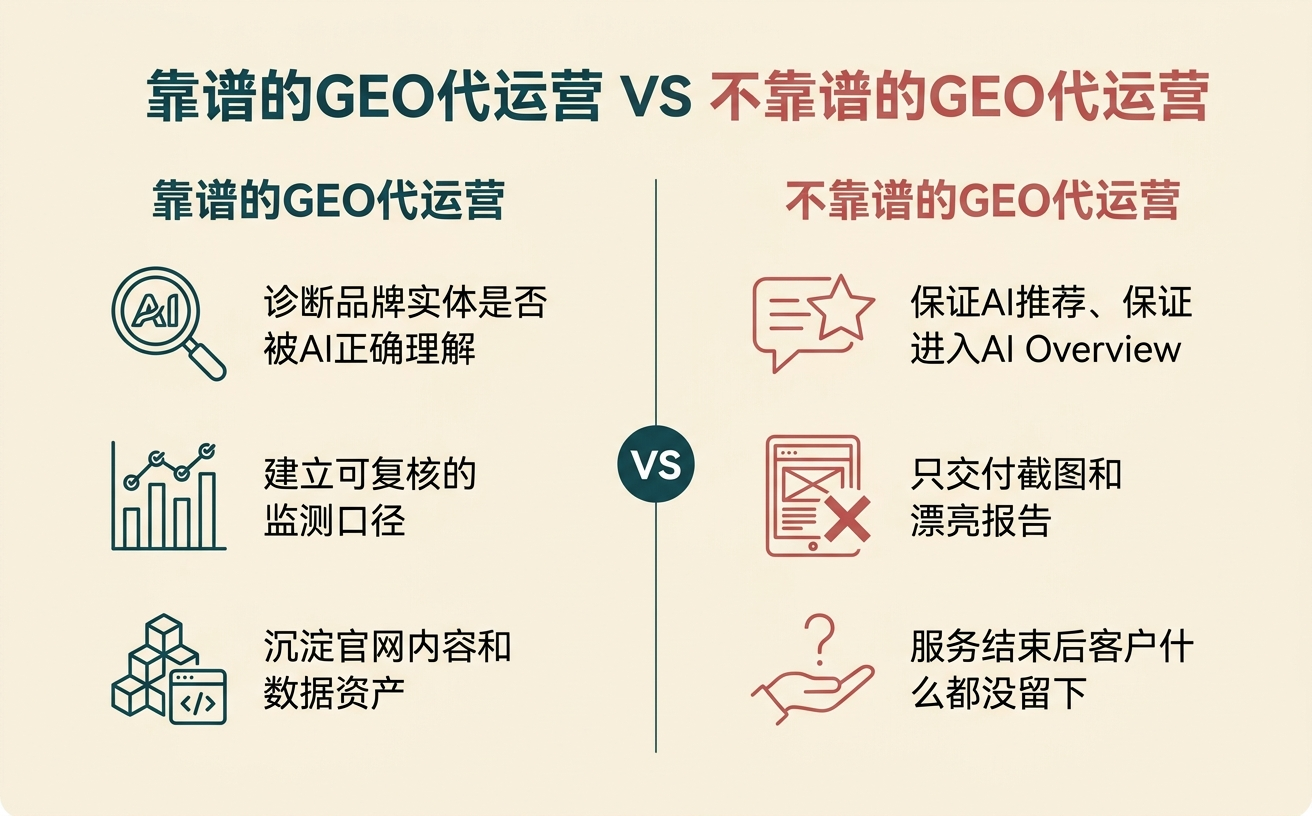
No provider can reliably guarantee that ChatGPT, Google AI Overviews or another generative search experience will recommend a particular brand. GEO can improve the conditions for understanding, retrieval and citation, but it cannot control the final answer generated by a platform.
A restaurant can improve its menu, location, reviews, service and setting so that more people may recommend it. It cannot guarantee that everyone will mention it in every conversation.
Remember: GEO can influence probabilities; it cannot purchase a specific answer.
A responsible provider will explain the work it can control. This includes diagnosing the baseline, improving content and developing entity signals. It also includes technical checks, monitoring and repeated review. Avoid anyone selling a "guaranteed recommendation."
Pitfall 2: Relabeling Conventional SEO as GEO
GEO is related to SEO, but it is not simply a new label.
SEO often focuses on discovery, indexing, rankings, clicks and page performance. GEO also examines whether generative systems can understand, mention, cite and accurately describe a brand.
If a provider discusses only keyword density, link counts and anchor-text ratios, test whether it can explain brand entities. It should also explain how it monitors prompts, visibility, favorable mentions and competitors. Otherwise, the offer may be conventional SEO in new packaging.
SEO still matters. Technical SEO and indexability form part of the foundation. Pages also need useful content and clear structure. If a page cannot be crawled and understood, discussion of AI recommendations is premature.
Pitfall 3: Presenting GEO as Secret Technology
Some providers use opaque phrases such as "AI indexing channel," "large-model recommendation protocol" or "exclusive GEO algorithm."
Treat such claims cautiously.
GEO usually starts by analyzing search intent, applying semantic SEO and defining the brand entity. Teams then improve content structure and technical access. First- and third-party trust signals also need ongoing monitoring.
Consider a person who wants others to introduce them accurately. A business card is not enough; their name, role, work, reviews and public profiles also need to agree. Clearer information makes an accurate introduction easier.
Brand representation in AI search follows a similar principle.
Pitfall 4: Using Bulk AI Content to Fill a Quota
Many GEO packages emphasize output: dozens of articles, hundreds of Q&As or thousands of long-tail terms every month.
Volume is not the issue; value is. The source attributes a 42% average organic-traffic decline after a March 2025 core update to a PikaSEO audit of more than 500 sites that had published over 50 unedited AI articles. No report link or methodology is supplied, so this figure is not independently verified here.
Useful GEO content should answer user questions and help explain the brand. Define terms and scenarios clearly; compare options and show the steps. State limits and provide credible evidence.
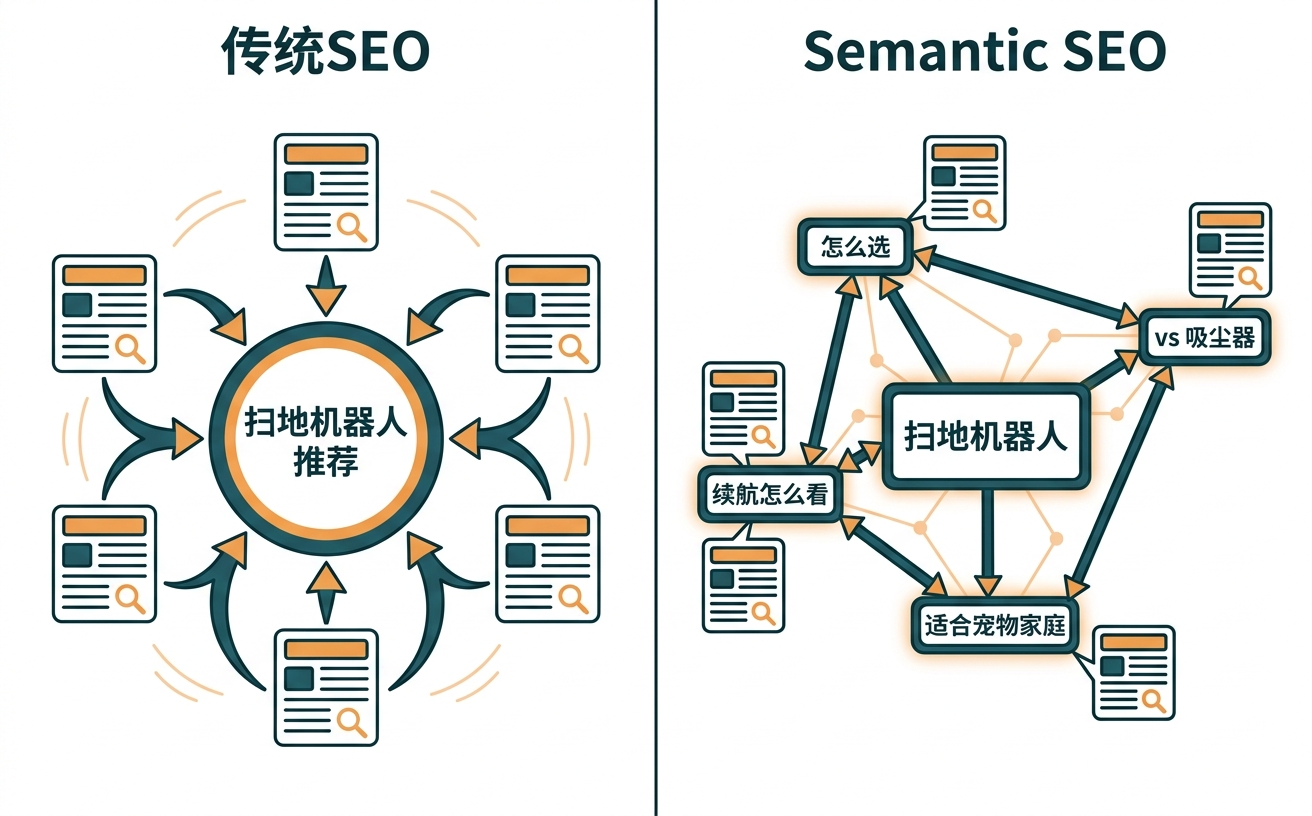
This is where semantic SEO can help. Instead of producing isolated pages around individual keywords, it organizes a set of mutually supporting pages around a topic. Each page answers a specific question. Internal links then connect the pages and clarify how entities relate.
For a robot-vacuum brand, a keyword-only approach might repeatedly target "best robot vacuum." A semantic approach could build connected pages on how to choose a robot vacuum, robot vacuums versus conventional vacuums, models for homes with pets and how to assess battery life. That gives readers and systems answers to several related questions.
Generating many similar articles, repeating keywords and FAQs, or adding the phrase "AI recommended" does not constitute GEO. It is simply low-quality content production.
Pitfall 5: Starting Without Baseline Data
This problem is easy to miss.
Some providers begin publishing, editing pages and arranging external placements without documenting the starting position. Does the brand appear in AI answers? Is the description favorable, neutral or inaccurate? How often do competitors appear? Without records, these questions remain unanswered.
Without a baseline, later change is difficult to assess.
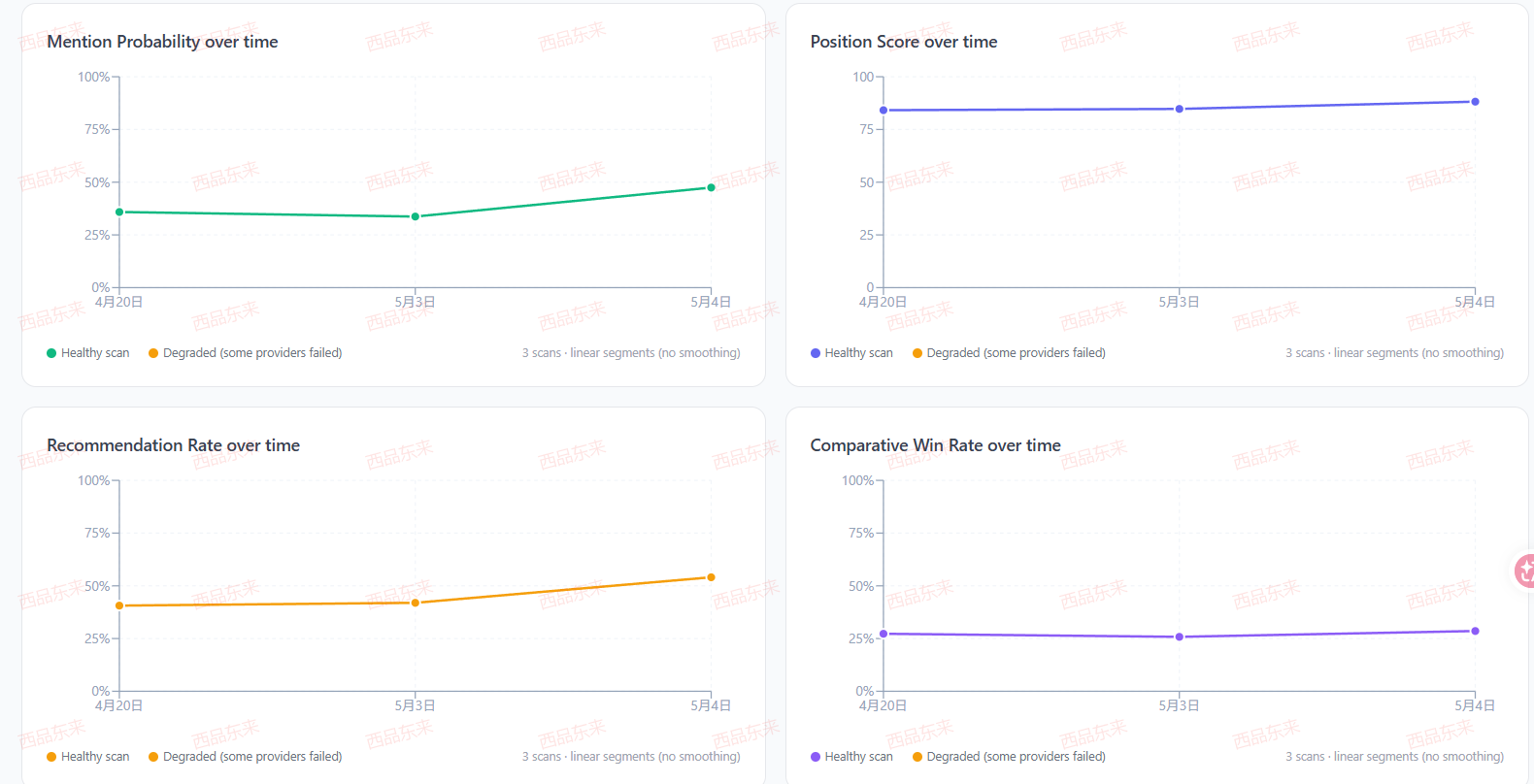
A sound GEO engagement should establish a baseline. Record how often the brand appears for a defined prompt set and classify those mentions. Where possible, record its position and how often relevant competitors appear. Also identify which question contexts deserve priority.
A prompt is the question or instruction a user enters into an AI system. Examples with commercial intent include "Which GEO providers serve international B2B companies?" and "How can a brand in this industry improve its AI search visibility?"
Brand mention rate is the share of a defined prompt set whose answers mention the brand. A favorable mention requires a separate classification: was the brand presented as a suitable or recommended option, rather than merely named?
GlobalBrandsDigital says its GEO service begins with commercially relevant industry prompts. It also tests prompts close to a purchase, including recommendations and comparisons. Other prompts cover procurement and problem solving.
The team then uses its own tracking platform to test mention rates and classify the results. The review considers not only whether the brand appears, but also whether the description is accurate, whether it is presented as an option and whether competitors appear.
The stated value of this platform is the ability to define company-specific prompts and track competitor referrals for the same questions. Custom tracking can align the measurement set more closely with a company's real decision contexts.
Pitfall 6: Black-Box Monitoring With Screenshots but No Method
A GEO report should not consist only of selected screenshots. One brand mention does not show that overall visibility improved. It also does not prove that GEO caused more enquiries.
Responsible monitoring should state at least:
- Which prompts were tested?
- Which platform was tested?
- Which language and region were used?
- When and how often were tests run?
- Was the brand mentioned, recommended or cited?
- Were branded and non-branded prompts separated?
- Were the original results retained?
- Were competitors monitored on the same basis?
The report can also examine the brand's share of appearances in the tested answer set, sometimes described as Share of Model.
Data without a defined method may look persuasive but is difficult to use for decisions.
The source describes a client whose previous monthly report contained many AI screenshots. When the same prompt set was retested under a consistent method, favorable brand mentions were reportedly below 8%, and the cited screenshots came from branded prompts where the user already knew the brand. This is a company account and has not been independently verified.
The source says GlobalBrandsDigital then rebuilt the baseline, separating branded, category, comparison and procurement prompts and updating the test weekly. It also says its platform can define client-specific prompts and monitor competitor referrals; the source's broader claim about most third-party platforms is not independently substantiated here.
Pitfall 7: Distributing Externally Without Building the Website
Some outsourced services focus heavily on third-party platforms. External mentions can be valuable, but they do not replace first-party assets.
The company's website is the most stable home for its own information. Service, case-study, FAQ, comparison, industry-solution, author, brand and knowledge-base pages should be developed systematically.
If external content proliferates but the website contains only vague claims such as "industry leading" and "committed to quality," systems still lack clear facts about the company and its offer. The site should also identify intended customers and relevant experience.
Third-party references can help when they are authentic, compliant and relevant. Examples include industry coverage, authoritative directories and partner pages. Genuine customer reviews, professional discussions and business databases may also help.
Credible, genuine and consistent references matter more than volume.
Pitfall 8: Applying Gray-Hat SEO Tactics to GEO
Some services sold as GEO are still gray-hat SEO.
Examples include spam links, private site networks, parasite pages, hidden text, keyword stuffing, low-quality AI rewriting, invented cases and fabricated media endorsements.
Renaming these tactics GEO does not make them safe. They may create short-term exposure but can damage site quality and brand credibility over time.
The objective of GEO is to make a brand more credible, not to deceive a system.
Pitfall 9: Treating Schema as a Shortcut
Schema is useful, but it is not a GEO switch.
Structured data can help search systems understand a page when it accurately describes visible content. Adding FAQ markup without a real FAQ, Rating markup without genuine ratings or author data without a clearly identified author creates risk.
Improve the page first, then use Schema to describe its real information.
Pitfall 10: Leaving No Reusable Assets After the Engagement
Companies often overlook this issue.
At the end of a GEO engagement, the company should retain reusable assets. These include a brand knowledge base, prompt set and semantic SEO content map. Keep a page-change record, structured-data inventory and monitoring sheet as well. The provider should also leave clear advice for the next cycle.
If only a few articles, screenshots and a monthly report remain, the engagement has little durable value.
Without retained assets, the team cannot build effectively on the work.
Why Outsourced GEO Engagements Go Wrong
There are three common reasons.
GEO is changing quickly. Platforms differ in how they generate answers, cite sources and access information, so traditional ranking measures do not describe the full result.
Companies want certainty. Questions such as "When will AI recommend us?" and "Can you guarantee an AI Overview?" are understandable, but a provider creates risk when it promises an outcome it cannot control.
GEO is difficult to attribute. AI answers can vary with region, language, account, prompt, time and context. Without a defined monitoring method, reporting can become a black box.
The restaurant analogy applies again: a restaurant can improve its menu, reputation, location, hygiene, reviews and service so that more people may recommend it. It cannot control every future conversation. GEO improves the conditions for consideration; it does not purchase every recommendation.
What a Responsible GEO Provider Should Do
A responsible GEO engagement should first decide whether the company is a fit and where to start. It should also identify the questions that deserve attention. A fixed package should not precede that work.
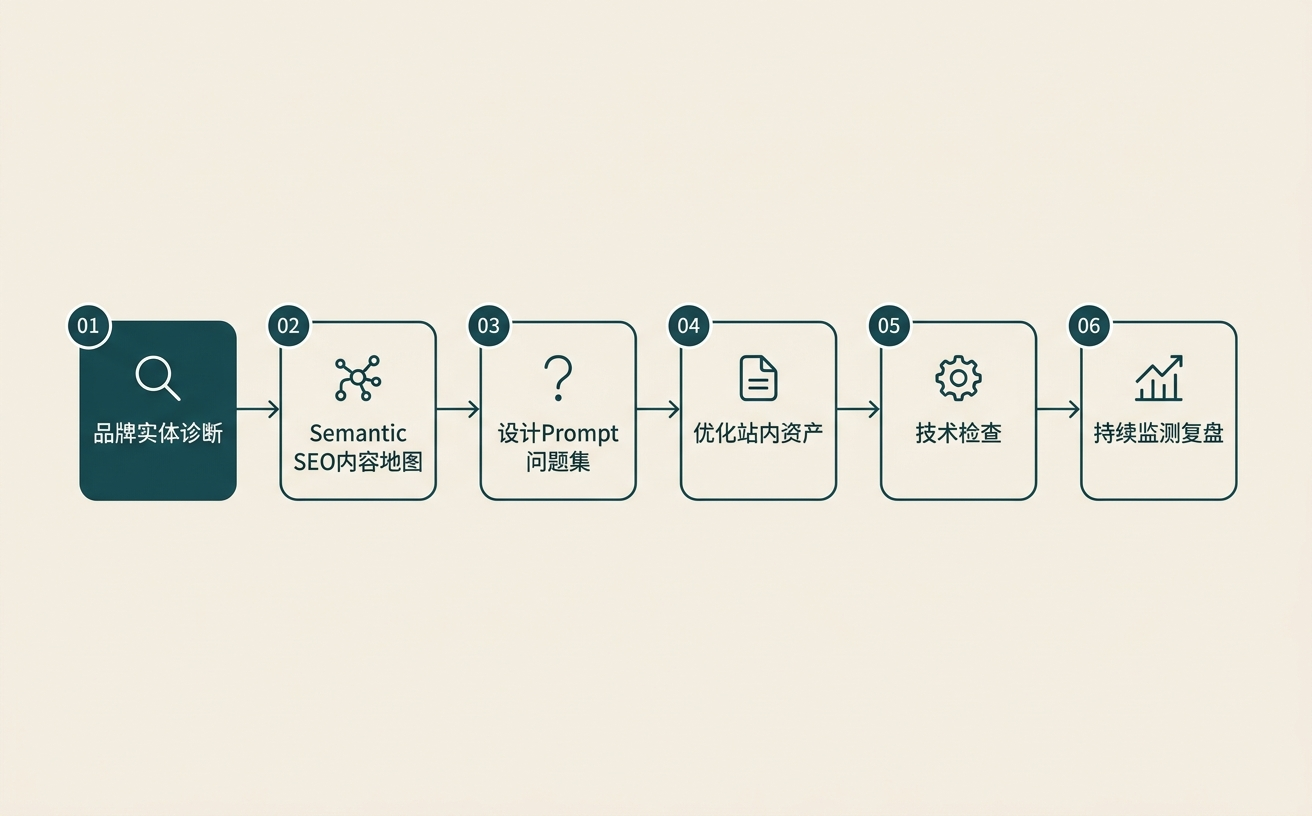
First, diagnose the brand entity. Define its market position, core business, target markets and products. Record differentiators and supporting evidence.
Second, develop a semantic SEO content map based on topics, entities, question paths and the user's decision process, not merely a keyword list.
Third, design a prompt set. Include branded and non-branded prompts. Add competitor comparisons and prompts that ask for a recommendation. Test problem-solving and procurement prompts as well.
Fourth, improve first-party assets. Service pages, articles, FAQs, case studies, the About page and industry pages can all affect how the brand is understood.
Fifth, run technical checks. Review robots.txt, indexability, blocked important pages, valid structured data and whether core information is available as text.
This is like checking a shop's sign, directions and entrance. If systems cannot enter or understand the site, even strong content may be difficult to identify reliably.
Sixth, monitor and review continuously. A GEO report should track changes and explain the method and likely drivers, rather than showing only favorable examples.
A simple test: a responsible provider sells diagnosis, execution and review; an irresponsible one sells promises, screenshots and packages.
Questions to Ask Before Hiring a GEO Provider
Ask these seven questions before signing:
- Do you guarantee a specific AI recommendation result?
- Do you assess the brand and website before execution?
- How is the prompt set designed?
- How do you separate branded and non-branded prompts?
- Will the engagement build durable assets on our website?
- Does the monitoring report disclose its full method?
- Will the company own the content and data assets after the engagement?
These questions are straightforward, but they quickly expose risky offers.
Be cautious if a provider avoids limitations and discusses only speed and results. A provider that explains diagnosis, process, risks and validation methods offers a more auditable basis for a decision.
How Outsourced GEO Differs From Outsourced SEO
SEO and GEO are complementary rather than mutually exclusive.
SEO addresses whether search systems can discover, crawl, understand and display a page. GEO further examines whether generative answers mention the brand, how they describe it and whether they present it as a credible option.
SEO commonly measures rankings, organic traffic, click-through rates and index coverage. GEO may add prompt coverage, brand mention rate, favorable mention rate, Share of Model, competitor referral share and traffic referred by AI services.
A capable GEO provider therefore needs more than article production or conventional SEO alone. The work brings together SEO foundations, semantic SEO, brand entities, content assets and AI-visibility monitoring.
Conclusion
The central risk in outsourced GEO is not a provider's vocabulary. It is presenting an uncontrollable result as a certain promise.
When selecting a provider, evaluate whether the method is clear, limitations are explicit, monitoring can be reproduced and reusable assets will remain with the company.
Responsible GEO is neither secret technology nor bulk publishing. It is a long-term system built around search intent, brand entities, content quality, technical access and credible evidence.
If you are assessing outsourced GEO, begin with a diagnosis of current AI-search mentions, competitor appearances and content gaps. Use that evidence to decide whether to invest in content, technical improvements or external trust signals, or review our GEO services.
Frequently Asked Questions About Outsourced GEO
How Long Does Outsourced GEO Take to Show Results?
It depends on the brand, the site, existing content, how competitive the market is and which platforms matter. The source offers three to six months as a rule of thumb. It treats months one and two as time to set a baseline and prepare content. It suggests that metrics may begin to move in month three and settle by month six. This is not a guarantee or a universal benchmark; results and measurement windows vary. Treat promises such as "results in one month" or "in AI answers within 30 days" with caution.
How Can a Company Evaluate Whether GEO Is Working?
The source proposes three measures: citation rate, defined as cited tracked pages divided by all tracked pages; Share of Model, defined as tested AI answers that include the brand divided by all tested prompts; and referral traffic from services such as ChatGPT and Perplexity. Use them only with stable definitions and repeatable tests. A change in any one measure does not prove what caused it or whether it helped the business.
Can a Company Run GEO Internally?
Yes, if the required capabilities are available. GEO can involve content strategy, SEO, semantic SEO, technical checks, structured data, brand-entity work and prompt monitoring. A mature internal content and SEO team can begin with a limited prompt test. A specialist may help when monitoring, content systems or execution capacity are missing.
Can GEO and SEO Be Run Together?
Yes, and they usually should be considered together. SEO provides part of the foundation: pages must be crawlable, indexable and understandable. GEO then tries to help generative systems understand and cite the brand, which may make them more likely to consider it.