
On this pageTable of contents+


This is an original article. Please credit the source when republishing it.
The original Chinese article contains 3,822 characters and had an estimated reading time of 10 minutes.
Start with this curve:
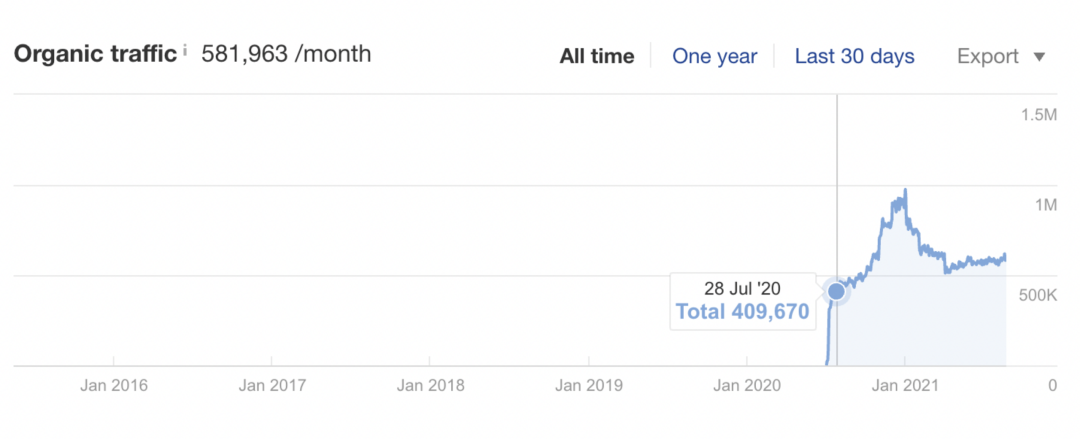
In this historical Ahrefs estimate, traffic appears to jump to roughly 400,000 and then keep rising, approaching one million at its peak.
You may be wondering whether that is real or whether black- or grey-hat methods were involved.
But if this were a Philips website, would you have the same suspicion?
A brand of this scale would be unlikely to accept the risk of relying on black- or grey-hat tactics.
So how did the site produce such an appealing curve through what appears to be a white-hat approach?
1. Website Overview
I do not know whether you also once assumed that Philips was a local Chinese brand. I did.
That impression shows how effectively the brand localized itself for the market.
That is one lesson worth learning: do localization well. The original article linked to a separate Chinese-language WeChat guide for readers who did not know how to approach localization.
For brief context, Philips has historically operated across fields including consumer electronics, home appliances, personal care, healthcare and lighting.
As of 2012, the source described Philips as the world's largest lighting manufacturer, citing Wikipedia. The corporate context later changed: Philips Lighting became Signify in 2018 after separating from Royal Philips in 2016, and it continued to use the Philips brand under license.
During some strategy work a few days before writing the original analysis, I came across the Philips Hue lighting website. I found it interesting.
Website type: ecommerce website.
Business model: DTC brand site.
Niche: smart lighting.
Historical revenue figure: the source wrote "USD 2.021 billion," but the chart below actually reports EUR 2,021 million in United States sales for Signify/Philips Lighting in 2020. It is not a companywide annual-revenue figure in US dollars.
Historical traffic estimate: 2.75 million visits per month in the captured Similarweb view.
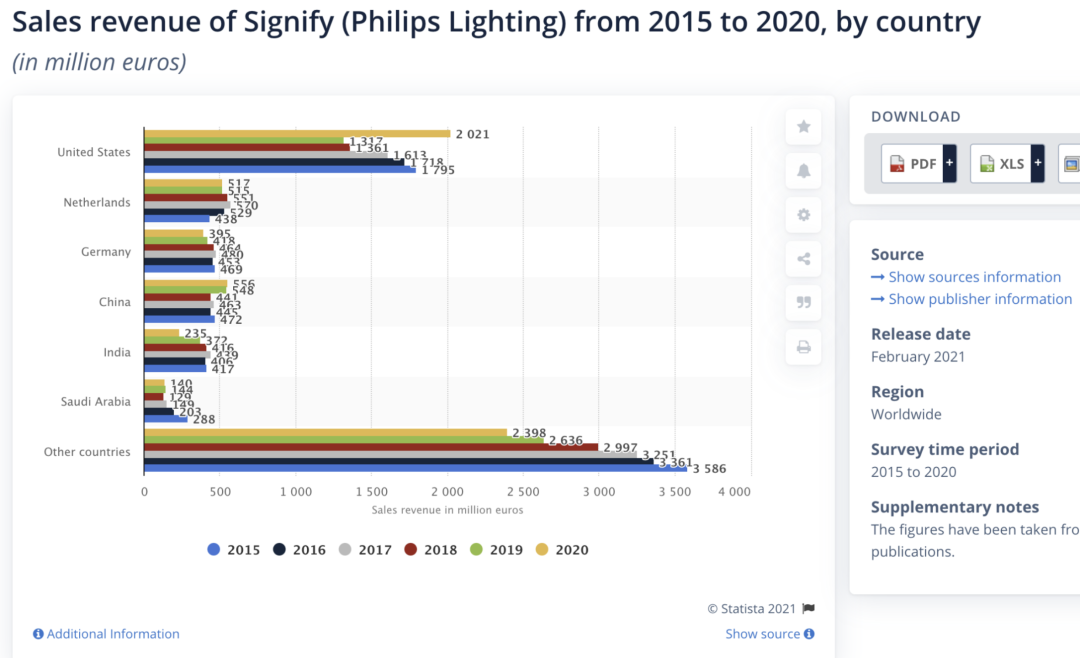
Source shown in the original screenshot: Statista.
The traffic mix is shown below. Search accounted for 72.8% in the captured Similarweb estimate, which the author interpreted as evidence of an SEO-oriented strategy. The screenshot says Search, however, and does not split that share into organic and paid search.
This contrast is worth considering because brands can take very different approaches to building demand.
The author argued that overseas brands tend to establish SEO first and consider other traffic sources later, because that creates a more durable base.
The corresponding criticism was that many Chinese companies seek speed and buy traffic directly. Some succeed, but paid acquisition alone may not remain stable.
Those market-wide claims are the author's opinion, not a representative study. The durable lesson is narrower: if you want long-term growth, avoid impatience, build an SEO foundation early and support the brand before trying to dominate a niche.
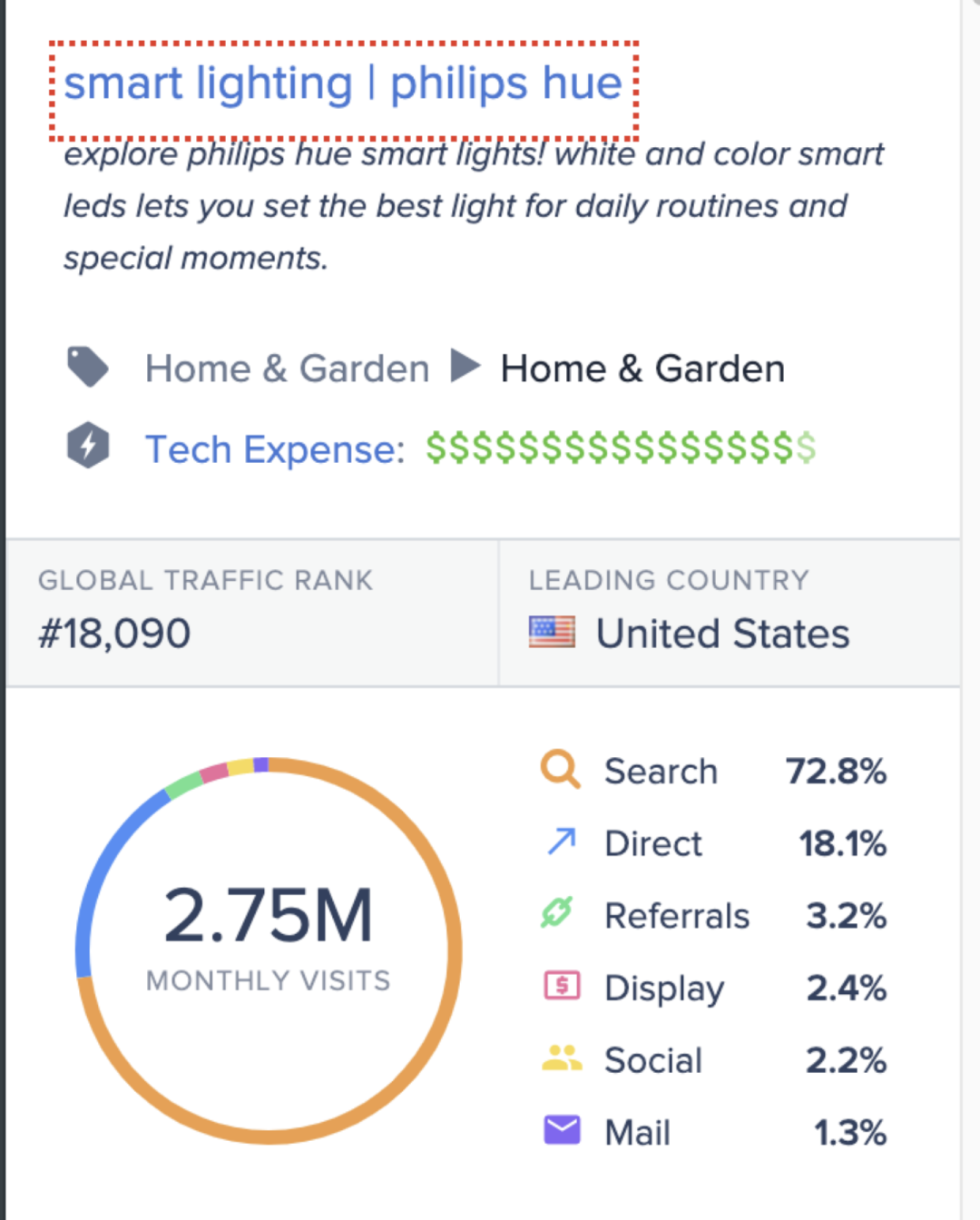
SimilarTech analysis.
The historical SEO profile recorded in the source was as follows:
DR: 80.
Referring domains: 13,000.
Ahrefs organic-traffic estimate: the source paragraph says 5,810,000, but the captured curve displays 581,963 per month. The screenshot value is used here because the paragraph appears to contain an extra zero.
Ranking keywords: 121,000.
Total pages: 5,620, of which the source said only 205 belonged to the US site.
2. Content Analysis
In my view, content analysis here has two parts: the quality of content marketing and the layout of product pages.
First, let us look at content marketing.
At the time of the analysis, the blog contained only 28 pages, and I thought they were poorly executed.
The one point worth praising was that every topic was closely related to smart lighting.
Although the topics were suitable, the brand had not invested much in the articles. Many were only a little over 100 words, so the historical Ahrefs view showed little ranking visibility.

Historical Philips content word counts.
Next, let us look at the product pages.
I considered the product pages very successful and worth studying.
The first strength was the user experience. After browsing the pages, even I wanted to buy the smart products: the presentation suggested that the products could make everyday life easier and the home feel warmer.
Let us break the experience down and see what can be learned.
First, look at the menu categories.
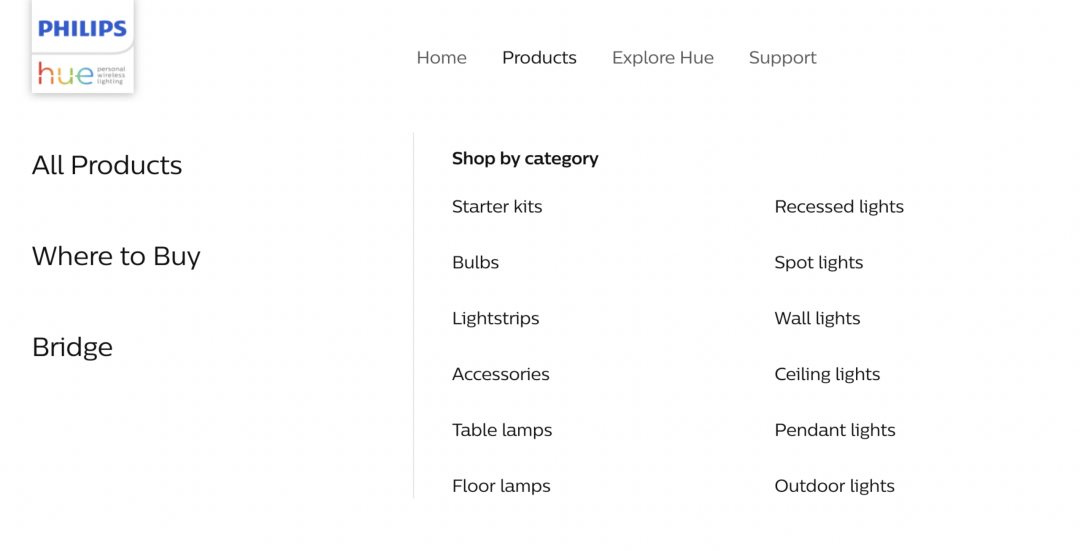
I know this industry reasonably well, and these categories covered nearly every major use case I expected to see.
That suggests a strong understanding of users. The organization also makes it easier for people to find the products they want.
Now go one level deeper and look at a product-category page.
The first SEO element is the descriptive copy on the category page.
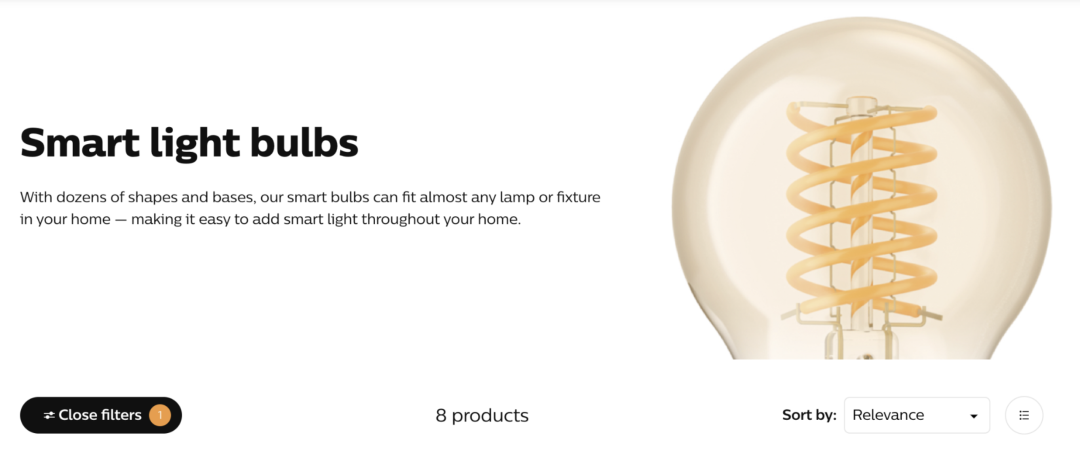
Above is the first screen of a historical Philips product-category page.
Next comes the sidebar filtering area.
This pattern is common, but a default WordPress filter normally exposes product attributes, represented by the yellow area in the screenshot below.
Adding the category controls shown in red can improve navigation beyond attribute-only filters.
A shopper interested in one smart-lighting product may also want to inspect other compatible products.
Category controls let that shopper move to other product groups without backing out of the browsing flow.
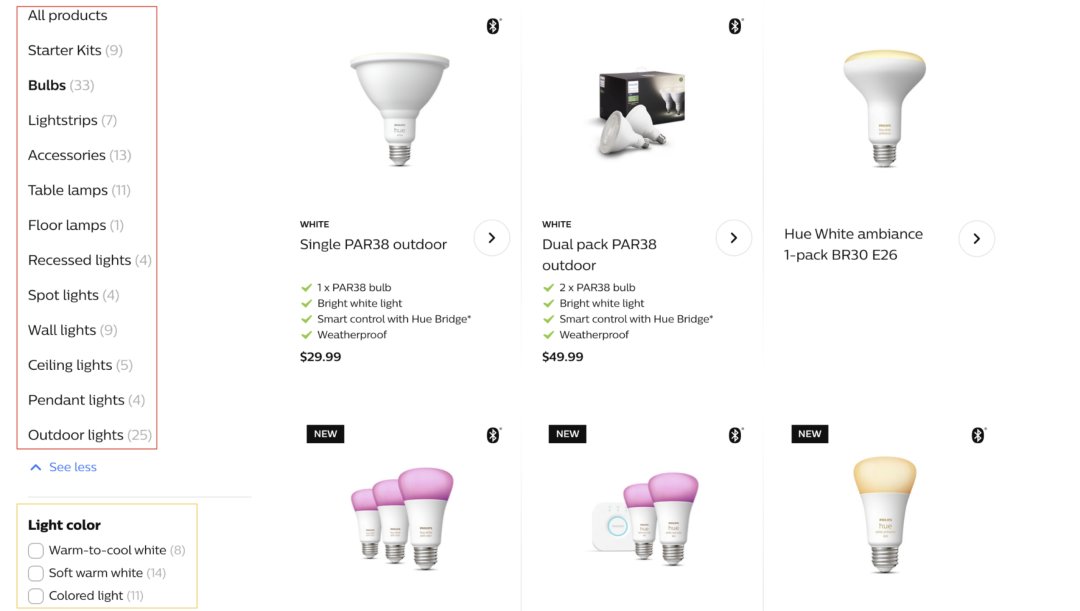
Historical Philips product-category page.
The category thumbnails also show deliberate design choices.
A concise title explains the use case.
A short bullet-style description makes the main parameters easy to scan.
The Bluetooth symbol on the main image addresses a common connection question at a glance.
The details are handled carefully.
An image-based FAQ answers common questions about smart bulbs.
Supporting blog resources help users understand the product and the category. They also create relevant internal links.
This is a useful reference when designing a product-category page and planning its on-page SEO.
Now move one level deeper to the individual product page.
Product Page Analysis
The team appears to have spent considerable time refining these pages.
The product pages did not all use one generic template. The presentation varied by scenario to place the product in an attractive setting.
Smaller sellers with limited time, people and budget can study these patterns, then adapt them to their own evidence and users rather than copying the page blindly.

Historical Philips product page.
The concise title tells users the scenario, quantity and model or shape designation.
The star rating supplies visible social proof and may support trust, although this case does not measure its effect.
The third yellow box combines a short scenario-based description with important notices.
The key point is to bring the most important information forward.
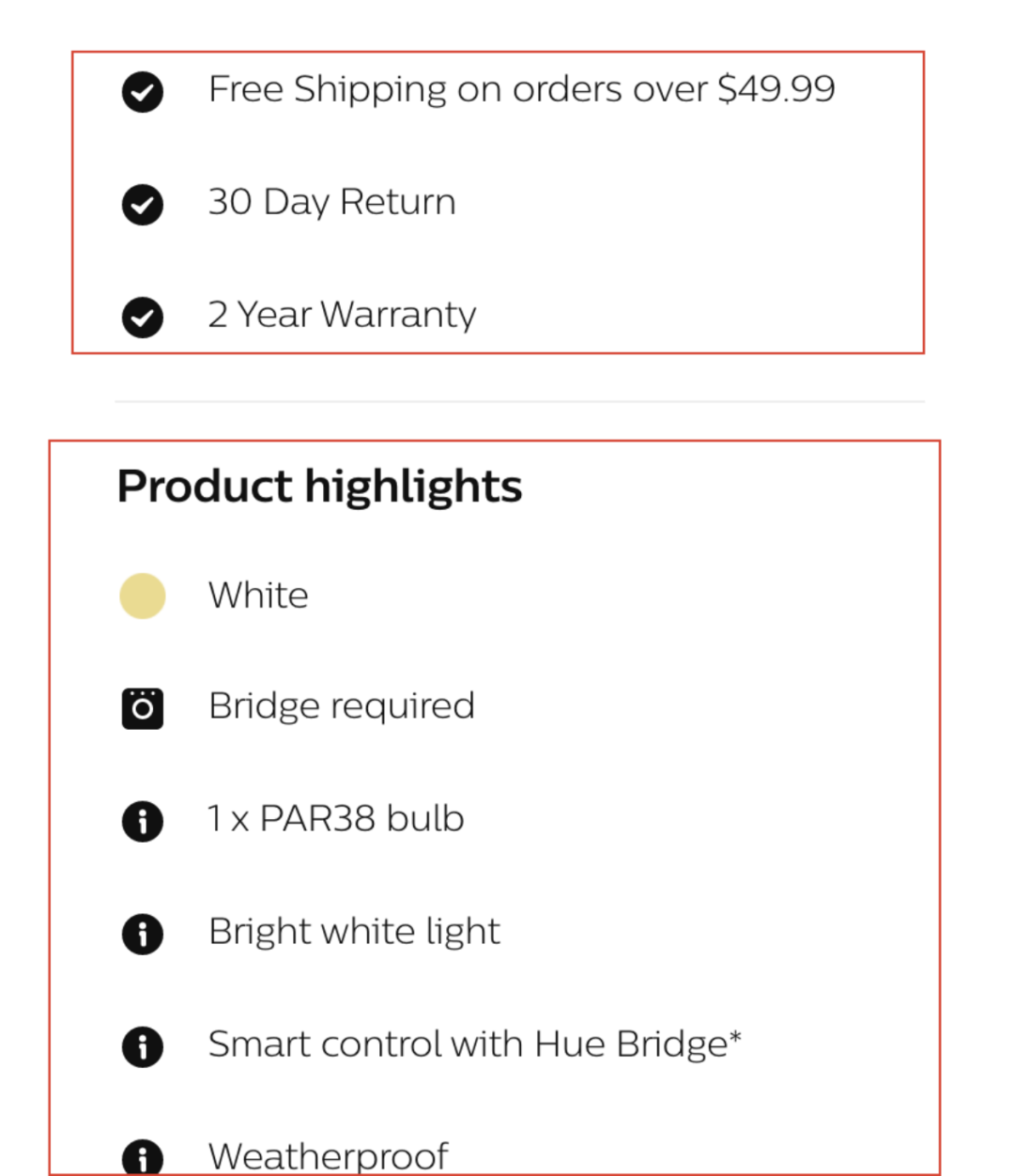
Historical Philips product page.
Warranty and product features appear early. I considered that likely to reduce uncertainty and support trust, but the source provides no conversion test proving an uplift.
For electronics, shoppers often need specifications. Philips therefore provided an in-page jump to the specifications so users did not have to hunt through the page or leave it.
If shoppers compare specific features or specifications before buying, let them jump directly to those details.

Historical Philips product page.
Postscript: I thought the mobile experience was even better. Teams with the required development capability can study how it worked.
Beyond the product pages, Philips also built useful content around application scenarios and commonly requested voice-control compatibility. Those pages attracted substantial search visibility in the historical tool view.
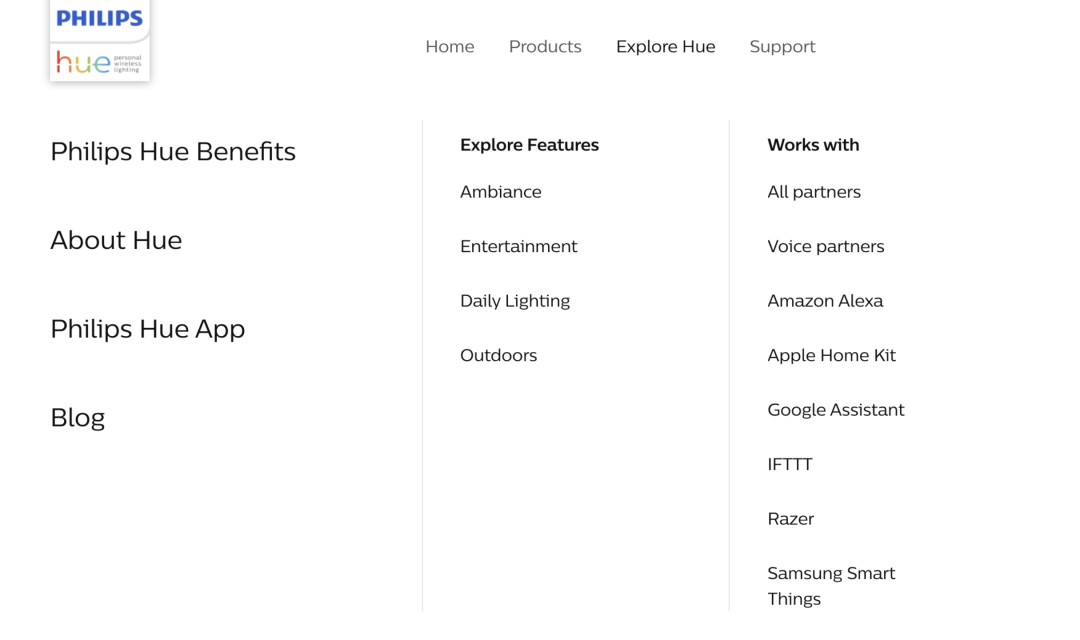
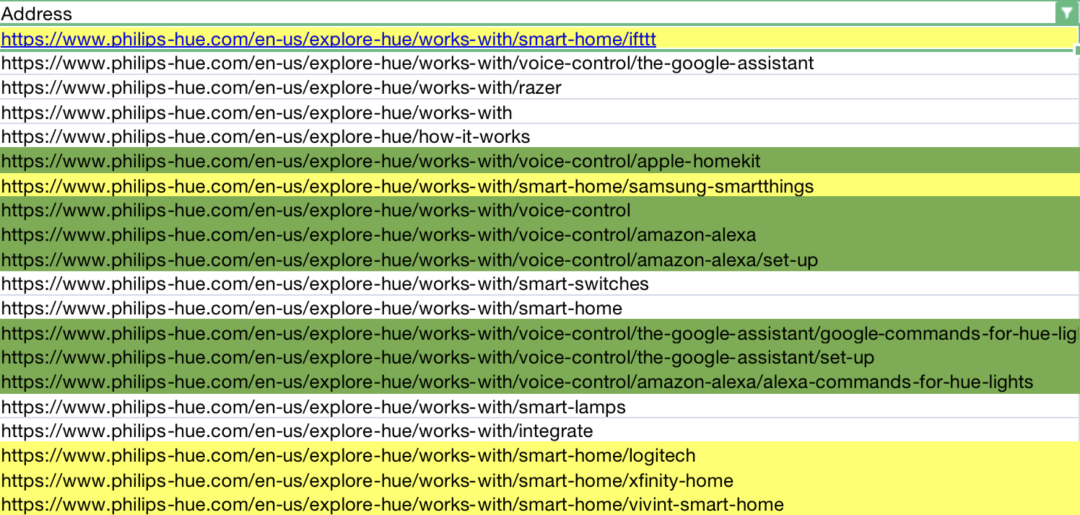
Examples of Philips' supporting content for product use cases and compatibility.
3. Backlink Analysis
Backlinks are often a strength for a brand site of this size. PR activity can earn editorial links from authoritative publications.
Philips was also a leading name in smart lighting, so writers covering the category or sharing relevant products frequently mentioned it.
That recognition can produce a strong link profile without the brand having to pursue every link individually.
In that sense, rapidly accumulating relevant, naturally earned references is an ideal outcome.
Let us still examine how strong the historical backlink profile appeared, both as a benchmark and as a realistic reminder of scale.
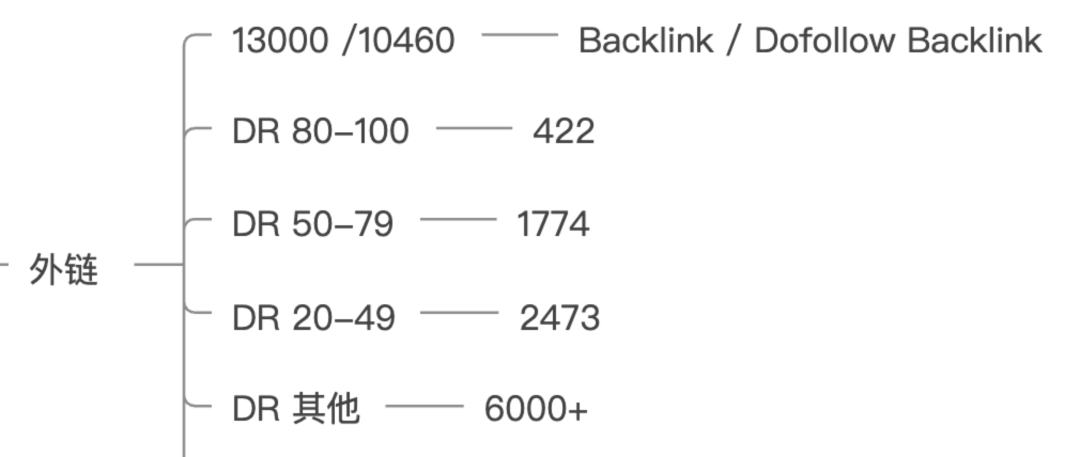
Historical composition of Philips' backlink profile.
The source said Ahrefs did not assign weight to nofollow links. More precisely, Ahrefs says its third-party Domain Rating metric ignores nofollow backlinks and referring domains; DR is not Google PageRank.
For that reason, the source's calculation focused on dofollow links.
The historical notes report 10,460 dofollow backlinks against roughly 13,000 referring domains and describe that as a share above 80%. The two figures are not directly interchangeable, so this should be read as the source's rough composition summary.
The author added that many ordinary brand profiles have a much lower dofollow share and treated this as another sign of strength.
The two most striking buckets in the screenshot were the counts of dofollow referring domains with DR 80–100 and DR 50–79.
The source described the value of those links as difficult to estimate.
To illustrate the scale, the author proposed a rough market price above USD 1,000 for one DR 80–100 dofollow link and noted that such placements were scarce.
The same rough estimate placed a DR 50–79 dofollow link above USD 300 on average.
The source therefore compared the profile with nearly USD 1 million in purchased links and suggested HARO as a more affordable 2021-era tactic. The comparison is rough; it does not show what editorial links are worth, and HARO is mentioned only in its 2021 context, not as a current recommendation.
How Could I Build Backlinks at This Scale?
Take content marketing seriously and use content to influence and help users.
Good content can attract links on its own, and its value can accumulate. That differs from a short campaign whose effects stop as soon as promotion stops.
Investing in content may therefore support two goals at once: traffic and authority.
I also had a case that, in my assessment, used content marketing alone to outperform major beauty brands such as L'Oréal. I planned to share it when time allowed.
4. E-A-T
I had discussed E-A-T many times before this article was written.
In simple terms, the source described it as giving Google reason to see the site as an expert in its field.
In practice, the author returned to links and content: links should be strong, content should be professional, and recognized subject-matter authors can add credibility.
On the link side, the source pointed to dofollow links from organizations such as Google, Apple and Amazon as evidence of an unusually strong profile.
On the content side, however, the source concluded that Philips had not done much explicit E-A-T work.
The original then claimed that a brand this large would receive the highest score in a human E-A-T review. Current Google guidance uses E-E-A-T, says it is not one specific ranking factor and makes clear that quality raters do not control page rankings. Brand recognition may contribute to trust signals, but there is no public "top score" for this page.
Smaller sellers should therefore not imitate the missing detail. Name authors clearly, show relevant first-hand experience, establish subject expertise and make the reasons to trust the page visible.
5. Social Media
Below are historical snapshots from three Philips social accounts. I did not consider the figures exceptional for a brand of this size.
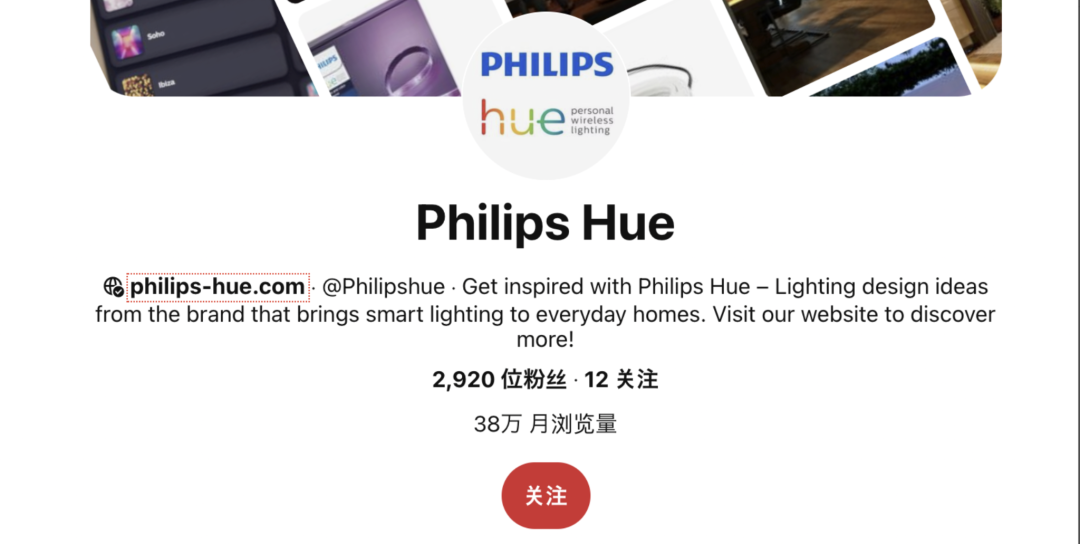
Historical Philips Pinterest account.

Historical Philips Twitter account.
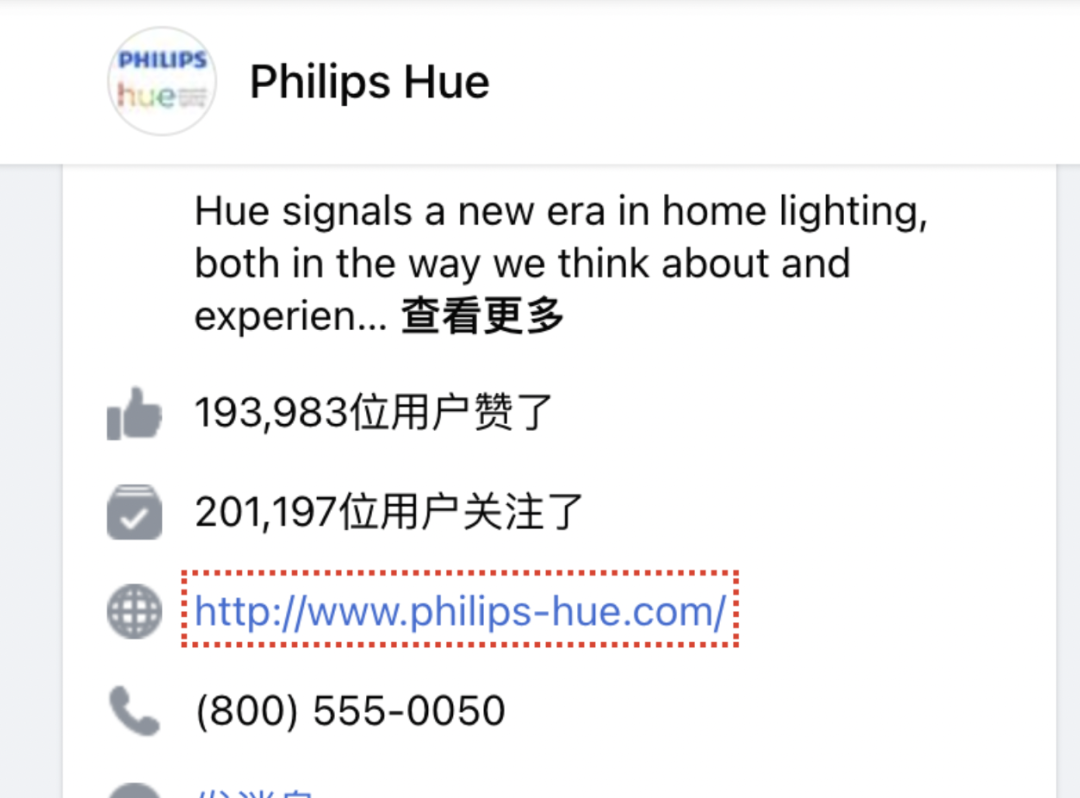
Historical Philips Facebook account.
At the time, the brand was mainly active on Facebook and Twitter.
Because the company was already widely known, the author did not think it needed to invest heavily in social media activity.
A new brand, by contrast, can regularly share new articles and products on social platforms to build a more active relationship with users.
On-site sharing controls can also make voluntary sharing easier.
Participating in relevant forums or building a community is another option.
6. Technical SEO
This part is harder to judge with the naked eye, yet it is one of the most important areas for a large ecommerce site.
If a large ecommerce site accumulates serious technical SEO problems, its organic-search performance is likely to suffer.
The Philips site appeared to be custom developed. Its code looked clean, and crawlers appeared to encounter relatively few dynamic URLs.
A filter URL such as https://domain.com/product-category/?filter_color=black can be discovered and indexed if the site does not define how it should be crawled and indexed.
You may ask why Amazon has so many parameterized pages in search and can still rank well.
The source speculated about a Google whitelist and pointed to Amazon's links and authority. There is no evidence for a whitelist; large sites are not exempt from crawl waste, duplicate URL spaces or indexing tradeoffs simply because some parameter pages rank.
WooCommerce may provide a workable starting point, but there is no universal instruction to bulk-apply both nofollow and noindex. Decide which filter combinations deserve search visibility, control unnecessary crawl paths, consolidate duplicates and verify the result. Google's current faceted-navigation documentation explains the crawl tradeoffs. Its separate noindex documentation notes that a crawler must access a page to see a noindex rule.
The source framed site authority as fixed and argued that adding more pages spreads it more thinly, especially when thin pages earn no external links. The useful point is less absolute: unnecessary URL spaces can consume crawl resources and weak internal-link structures can distribute attention poorly.
That can make it harder for important pages to be discovered, understood and supported, although page count alone does not determine ranking.
7. Why the Traffic Surged
Following the evidence further, I found meethue.com.
It appeared that Philips Hue had previously used the separate meethue domain.
The source concluded that the old site had then been redirected as a whole.
If someone shows you a curve like this, the author's joking first question was: "Did you implement a 301 redirect?"
The historical meethue curve looked like this:
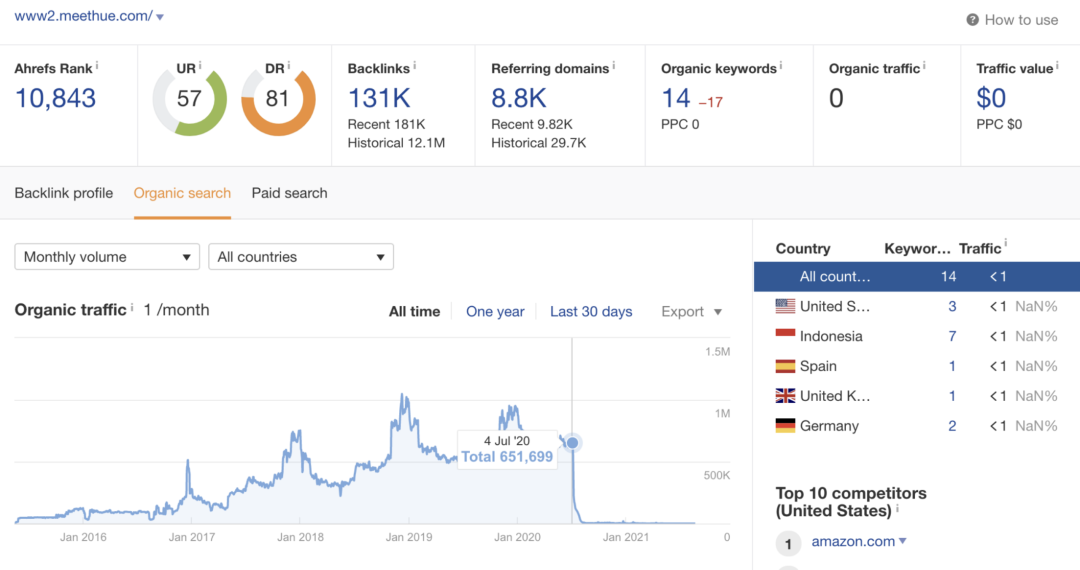
The former life of the Philips Hue site.
The Philips Hue curve looked like this:
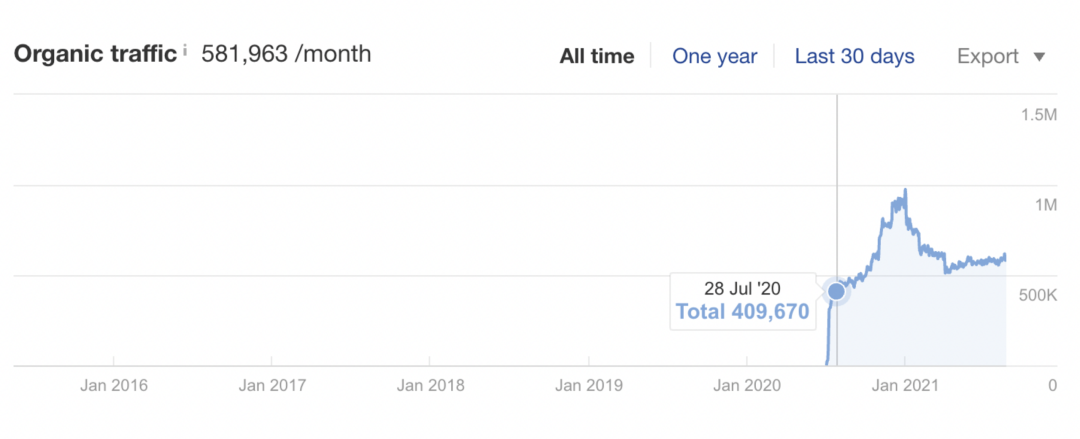
The site's current life at the time of the analysis.
A mapped 301 migration from an old brand domain to the relevant new destination is a legitimate use of redirects, not the same as redirecting an unrelated domain to harvest links. Google recommends server-side permanent redirects with old-to-new URL mapping, updated canonicals and internal links, testing and monitoring. The opposing curves support the author's migration hypothesis, but the screenshots alone do not prove the redirect map or show that migration was the only cause of the increase.
The source's 2021 warning remains sound in principle: be cautious about using 301 redirects as a link tactic rather than for a genuine, relevant move.
Final Thoughts
This case shows how much sustained effort it takes to build a brand. Before starting, prepare for a long-term workload.
A brand should not rely on black- or grey-hat SEO. A breach may remain undetected for a time, but if it is discovered, the site may lose search exposure, people may trust the brand less and the company may be harmed. The source's stronger claim that a company would probably go bankrupt is not established by this case.
SEO practitioners working on brand sites should maintain professional standards and respect the trust placed in them. White-hat work may be slower, more labor-intensive and sometimes hard for management to appreciate, but it is better aligned with durable growth and Google's spam policies.
Build steadily for results that last longer.