
GlobalBrandsDigital logoGlobalBrandsDigital
Search intelligence

User-Centered Internal Linking: Placement, Anchors and Measurement

Turn a historical visual example into a durable internal-link workflow based on reader intent, descriptive anchors, live targets and measured outcomes.

Explore
On this pageTable of contents
  1. Start from the reader’s next question
  2. Place links beside the decision they support
  3. Write descriptive anchors in natural language
  4. Keep destinations canonical, live and English
  5. Prevent duplicates and misleading fallbacks
  6. Audit hubs, spokes and orphan risk
  7. Measure usefulness and maintain the graph

The original 2021 post is a short visual example without formal headings. Its durable lesson is that an internal link should appear where a reader is likely to need the destination, not where a template can add the most links.

This localized guide retains all five source visuals in context and expands the method into a current, testable workflow. It does not treat link count, exact-match anchors or hidden interface elements as ranking shortcuts.

Continue through on-page optimization, technical SEO, authority development, content architecture, brand visibility across search results.

Current product and search boundaries were checked against Google guidance on crawlable links.

Start from the reader’s next question

Treat start from the reader’s next question as a documented decision inside an internal-link review. Preserve the useful principle from the source while rechecking product behavior, market context and evidence before implementation.

For implementation, connect each source context to one published destination that resolves the reader’s next task. Apply that rule specifically to start from the reader’s next question, assign an owner and define the condition that would stop or reverse the change.

Validate this section with rendered anchors, HTTP and canonical checks, click behavior, crawl paths, inbound-link counts and reversible diffs. Record the market, device, date and data source so another reviewer can reproduce the conclusion without relying on the original screenshot alone.

  • Decision: define the audience need and expected outcome for this section.
  • Implementation: make the smallest useful change under a named owner.
  • Evidence: preserve the dated input, comparison and review result.
  • Control: test edge cases and retain a safe rollback path.
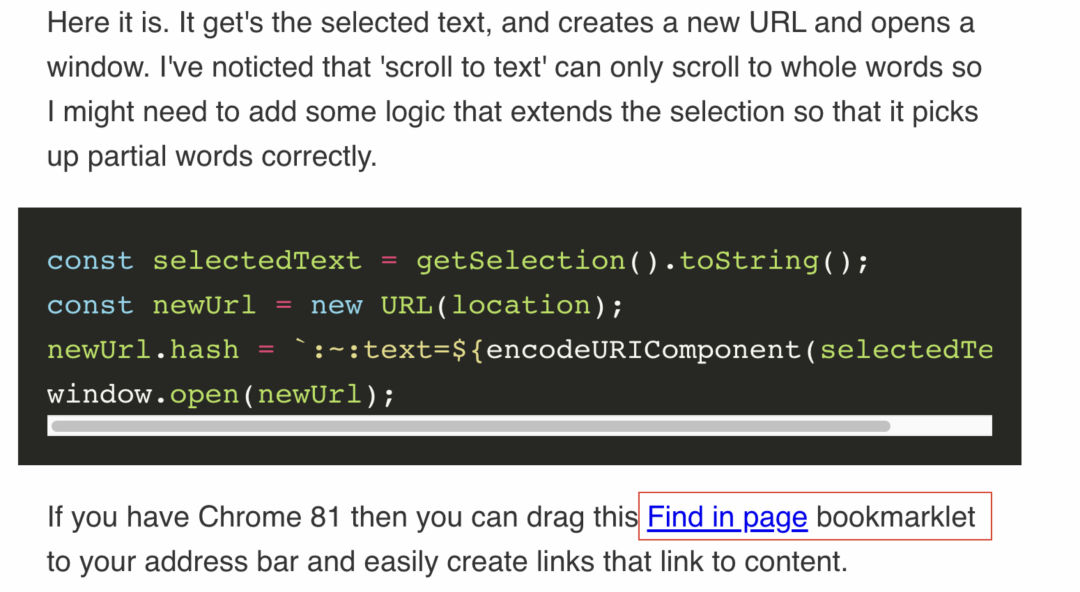
User-centered internal linking workflow: source visual 1 for Start from the reader’s next question
User-centered internal linking workflow: source visual 1 for Start from the reader’s next question. Interface and metrics reflect the source capture date.
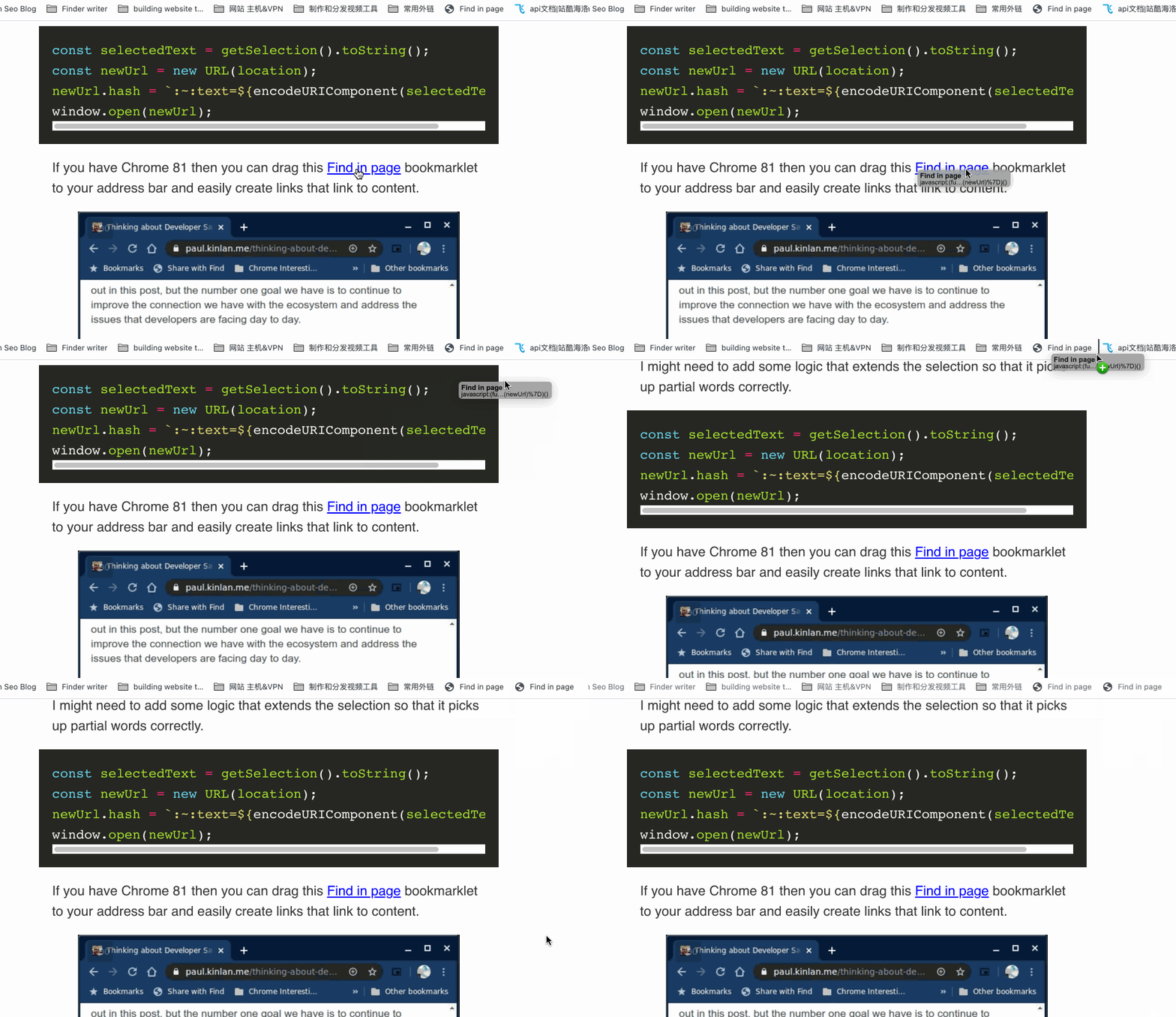
User-centered internal linking workflow: source visual 2 for Start from the reader’s next question
User-centered internal linking workflow: source visual 2 for Start from the reader’s next question. Interface and metrics reflect the source capture date.
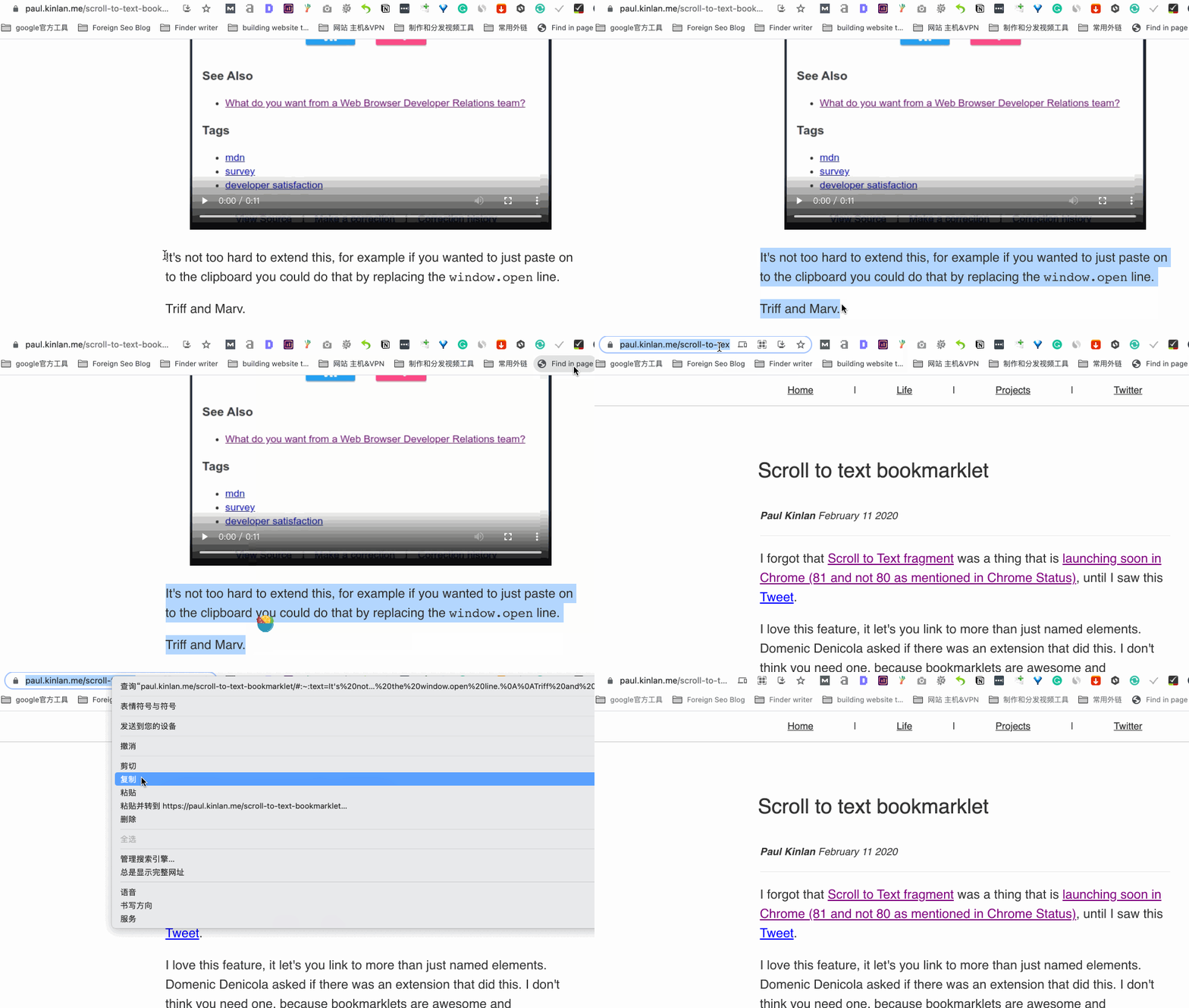
User-centered internal linking workflow: source visual 3 for Start from the reader’s next question
User-centered internal linking workflow: source visual 3 for Start from the reader’s next question. Interface and metrics reflect the source capture date.
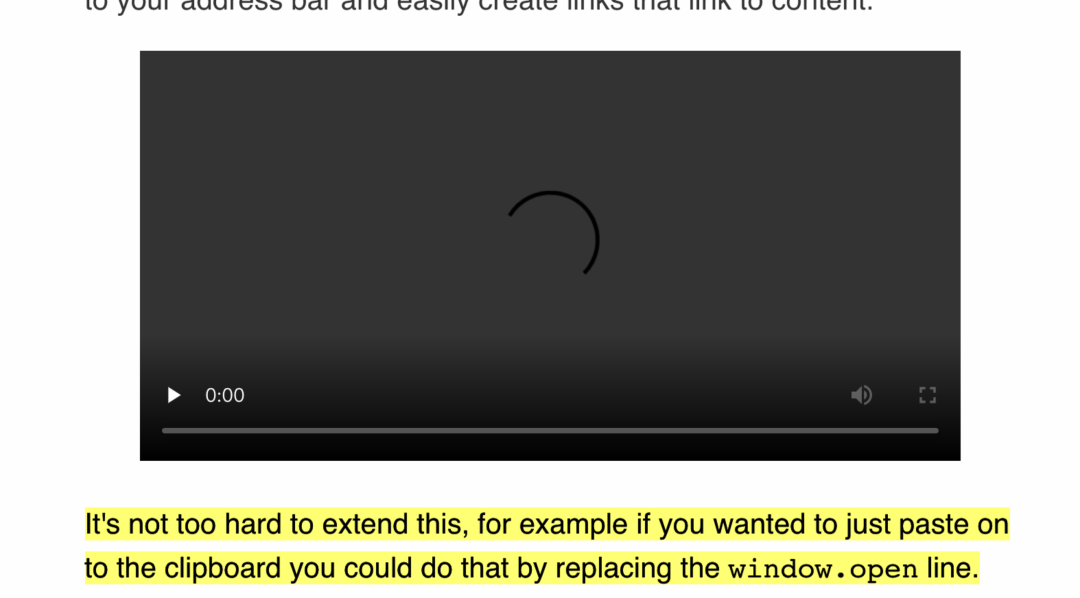
User-centered internal linking workflow: source visual 4 for Start from the reader’s next question
User-centered internal linking workflow: source visual 4 for Start from the reader’s next question. Interface and metrics reflect the source capture date.
User-centered internal linking workflow: source visual 5 for Start from the reader’s next question
User-centered internal linking workflow: source visual 5 for Start from the reader’s next question. Interface and metrics reflect the source capture date.

Treat place links beside the decision they support as a documented decision inside an internal-link review. Preserve the useful principle from the source while rechecking product behavior, market context and evidence before implementation.

For implementation, connect each source context to one published destination that resolves the reader’s next task. Apply that rule specifically to place links beside the decision they support, assign an owner and define the condition that would stop or reverse the change.

Validate this section with rendered anchors, HTTP and canonical checks, click behavior, crawl paths, inbound-link counts and reversible diffs. Record the market, device, date and data source so another reviewer can reproduce the conclusion without relying on the original screenshot alone.

  • Decision: define the audience need and expected outcome for this section.
  • Implementation: make the smallest useful change under a named owner.
  • Evidence: preserve the dated input, comparison and review result.
  • Control: test edge cases and retain a safe rollback path.

Write descriptive anchors in natural language

Place the link where it helps the reader take a logical next step, use anchor text that describes the destination and keep the target canonical and live. Decorative link density is not a substitute for information architecture.

For implementation, connect each source context to one published destination that resolves the reader’s next task. Apply that rule specifically to write descriptive anchors in natural language, assign an owner and define the condition that would stop or reverse the change.

Validate this section with rendered anchors, HTTP and canonical checks, click behavior, crawl paths, inbound-link counts and reversible diffs. Record the market, device, date and data source so another reviewer can reproduce the conclusion without relying on the original screenshot alone.

  • Decision: define the audience need and expected outcome for this section.
  • Implementation: make the smallest useful change under a named owner.
  • Evidence: preserve the dated input, comparison and review result.
  • Control: test edge cases and retain a safe rollback path.

Keep destinations canonical, live and English

Treat keep destinations canonical, live and english as a documented decision inside an internal-link review. Preserve the useful principle from the source while rechecking product behavior, market context and evidence before implementation.

For implementation, connect each source context to one published destination that resolves the reader’s next task. Apply that rule specifically to keep destinations canonical, live and english, assign an owner and define the condition that would stop or reverse the change.

Validate this section with rendered anchors, HTTP and canonical checks, click behavior, crawl paths, inbound-link counts and reversible diffs. Record the market, device, date and data source so another reviewer can reproduce the conclusion without relying on the original screenshot alone.

  • Decision: define the audience need and expected outcome for this section.
  • Implementation: make the smallest useful change under a named owner.
  • Evidence: preserve the dated input, comparison and review result.
  • Control: test edge cases and retain a safe rollback path.

Prevent duplicates and misleading fallbacks

Treat prevent duplicates and misleading fallbacks as a documented decision inside an internal-link review. Preserve the useful principle from the source while rechecking product behavior, market context and evidence before implementation.

For implementation, connect each source context to one published destination that resolves the reader’s next task. Apply that rule specifically to prevent duplicates and misleading fallbacks, assign an owner and define the condition that would stop or reverse the change.

Validate this section with rendered anchors, HTTP and canonical checks, click behavior, crawl paths, inbound-link counts and reversible diffs. Record the market, device, date and data source so another reviewer can reproduce the conclusion without relying on the original screenshot alone.

  • Decision: define the audience need and expected outcome for this section.
  • Implementation: make the smallest useful change under a named owner.
  • Evidence: preserve the dated input, comparison and review result.
  • Control: test edge cases and retain a safe rollback path.

Audit hubs, spokes and orphan risk

Treat audit hubs, spokes and orphan risk as a documented decision inside an internal-link review. Preserve the useful principle from the source while rechecking product behavior, market context and evidence before implementation.

For implementation, connect each source context to one published destination that resolves the reader’s next task. Apply that rule specifically to audit hubs, spokes and orphan risk, assign an owner and define the condition that would stop or reverse the change.

Validate this section with rendered anchors, HTTP and canonical checks, click behavior, crawl paths, inbound-link counts and reversible diffs. Record the market, device, date and data source so another reviewer can reproduce the conclusion without relying on the original screenshot alone.

  • Decision: define the audience need and expected outcome for this section.
  • Implementation: make the smallest useful change under a named owner.
  • Evidence: preserve the dated input, comparison and review result.
  • Control: test edge cases and retain a safe rollback path.

Measure usefulness and maintain the graph

Search visibility and inclusion as an AI supporting link are separate outcomes. Make the claim understandable in isolation, expose sources and limitations, and avoid treating any formatting tactic as a citation guarantee.

For implementation, connect each source context to one published destination that resolves the reader’s next task. Apply that rule specifically to measure usefulness and maintain the graph, assign an owner and define the condition that would stop or reverse the change.

Validate this section with rendered anchors, HTTP and canonical checks, click behavior, crawl paths, inbound-link counts and reversible diffs. Record the market, device, date and data source so another reviewer can reproduce the conclusion without relying on the original screenshot alone.

  • Decision: define the audience need and expected outcome for this section.
  • Implementation: make the smallest useful change under a named owner.
  • Evidence: preserve the dated input, comparison and review result.
  • Control: test edge cases and retain a safe rollback path.
Ready when you are

Build a search growth system that compounds.

Tell us about your market, website and growth target. We will identify the moves that matter first.

By submitting, you agree that we may use this information to respond to your request.