
On this pageTable of contents+
- What Is International SEO?
- The Essential Differences Between International and Traditional SEO
- The Business Value of International SEO
- Which Businesses Are Suited to International SEO?
- Is International SEO Right for Your Business? Three Required Assessments
- 1. Is There Genuine Market Demand?
- 2. Assess Compliance and Market-Entry Costs
- 3. Assess Market Competition
- International SEO Domain and Site-Structure Choices
- 1. Choose an Appropriate International Domain Structure
- 2. Implement Hreflang
- 3. Use a CDN and Suitable Hosting
- International SEO Keyword Research
- 1. Identify the Market and Language Behind a Query
- 2. Compare Search Intent Across Markets
- 3. Use Semrush, Ahrefs and Google Keyword Planner
- 4. Build an International Content Map
- International SEO Content Localization
- 1. Translation Is Not Localization
- 2. How to Localize Content
- Technical International SEO: Site Speed, CDN and Hosting
- How Can a CDN Speed Up an International Site?
- Does Server Location Affect SEO?
- Mobile Optimization
- International SEO Link-Building Strategy
- How to Earn International Media Coverage
- How to Use PR, Guest Posts and Local Citations
- How Regional Links Can Support Market Relevance
- Local Signals for International SEO
- Why Local Signals Matter
- Common International SEO Mistakes
- How to Measure International SEO
- GA4: Country, Language and Conversion Paths
- Search Console: International Visibility and Ranking Data
- Semrush Multi-Region Rank Tracking
- VPN and Real-Device Checks
- How to Tell Whether an International SEO Strategy Is Failing
- Choose GlobalBrandsDigital for International SEO Support

As global markets continue to expand, more businesses want to reach prospective customers in other countries. International SEO becomes especially important when a company wants its website to appear prominently in search results across those markets.
Unlike a domestic SEO program, international SEO must account for multiple languages, different cultural contexts and regional search preferences. Without that work, a business can miss genuine opportunities outside its home market.
This guide explains the foundations, practical steps and important safeguards of international SEO. Its purpose is to help you understand how a website can earn more relevant visibility and reach prospective customers across multiple markets.
What Is International SEO?
International SEO optimizes a website so that the appropriate pages can be discovered and understood in search results across multiple countries or regions, helping the business reach users in those markets.
The Essential Differences Between International and Traditional SEO
- Competitive environment: Domestic SEO usually focuses on local competitors, whereas an international program may compete with established businesses in several markets.
- Language differences: International SEO involves multilingual optimization, including differences in how the same language is written and used from one region to another.
- Domain structure: A domestic site often relies on one domain and one audience. An international site must choose a clear structure, such as country-code domains, subdomains or subdirectories, so that users and search systems can find the version intended for them.
- User behavior: Search habits and preferred search services vary by country and region. Depending on the market, a strategy may need to consider services such as Baidu, Yandex or Naver as well as Google.
- Laws and regulations: Regional requirements, including privacy rules such as the GDPR where applicable, can affect website design, content and promotion.
The Business Value of International SEO
Greater visibility: Relevant rankings in more than one country can broaden a brand's international exposure.
More enquiries: Reaching users in additional markets can create more qualified enquiry opportunities when the offer and customer journey fit those markets.
Potentially lower acquisition costs: Over time, organic search can reduce how much a business spends on paid advertising. Actual costs and results vary with the competitors, how well the plan is executed and how readily visits turn into customers.
International brand development: Market-specific search experiences can support a consistent brand as the business expands overseas.
Which Businesses Are Suited to International SEO?
- Businesses with export ambitions: Cross-border retailers and manufacturers that want to develop international demand.
- Businesses offering products or services in multiple languages: Organizations that can support customers through localized sites, products and service journeys.
- Businesses prepared to invest for the long term: International SEO usually takes sustained research, production and maintenance rather than a short campaign.
- Businesses with an established brand: Companies that have built recognition in their home market and are ready to test expansion abroad.
- Businesses preparing to market in several countries: Organizations that need content and offers designed for distinct national audiences.
Is International SEO Right for Your Business? Three Required Assessments
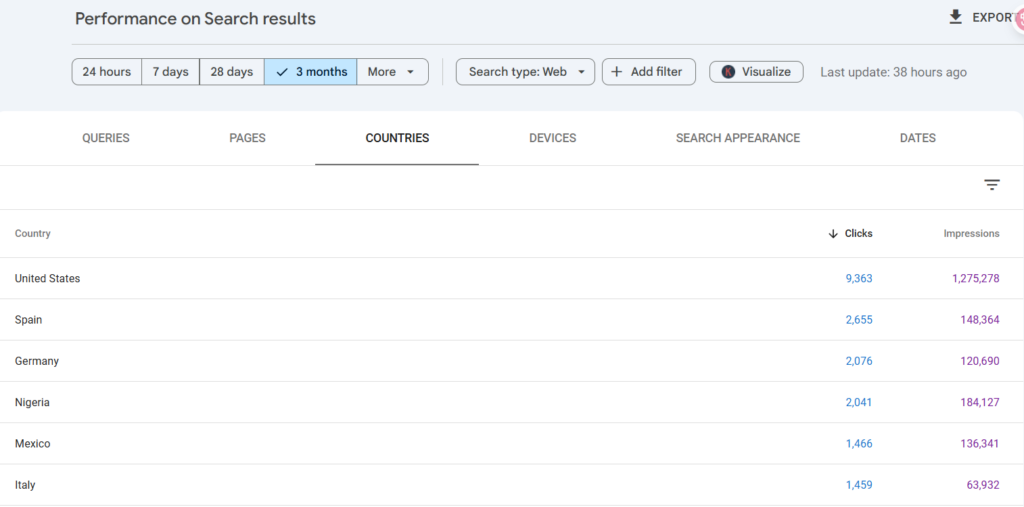
1. Is There Genuine Market Demand?
Before committing to international SEO, confirm that the target market contains genuine demand. Surface-level traffic is not enough; examine the search intent behind that traffic and the market's commercial potential.
Tools that can help assess market demand:
- GA4: Review visits from different countries to see where people are already reaching the site and what they do after arrival. Existing traffic can reveal an opportunity, but it does not prove demand by itself.
- Google Search Console: Compare query clicks, impressions and positions by country. This can show where people are already discovering the products or services through Google Search.
- Semrush: Use market-level keyword volume, trends and competitive results as research inputs. Compare the estimates with actual result pages and first-party data before deciding whether to invest.
Identify Genuine International User Intent
When assessing demand, determine whether users in the target market are expressing an intent that the business can actually serve. Two useful checks are:
- Keyword demand: Use sources such as Semrush or Google Keyword Planner to estimate searches for relevant terms in the target country. Treat higher estimated volume as a signal to investigate, not proof of profitable demand.
- Competitor performance: Established competitors with visible rankings may indicate an active market. A market without obvious competitors could be an open opportunity, but it could also lack demand, so deeper research is still necessary.
2. Assess Compliance and Market-Entry Costs
A country's rules may require local approval or certification before a product or service can be offered there. If the company cannot meet those rules, being visible in search has little commercial value. Ask a qualified legal or regulatory adviser to review the actual product, jurisdiction and route to market before investing heavily in SEO.
Examples of requirements that may need review include:
- GDPR in the European Union: Organizations handling personal data in scope of the GDPR need a lawful and properly governed approach to privacy and data processing. Applicability and obligations should be assessed by an appropriately qualified professional.
- FDA requirements in the United States: Medical, health and food products may fall within FDA rules. The exact obligations depend on the product and claims; do not assume that a general certificate alone establishes permission to sell.
- Halal requirements in markets such as Malaysia and Indonesia: Certification can be commercially or legally important for some foods, cosmetics and related products. Confirm the applicable authority, category and current market rules.
- TGA requirements in Australia: Therapeutic goods can be subject to Australian regulation. Businesses should confirm how the TGA classifies the goods, what evidence it requires and what they must do to enter the market before promoting them.
Regulatory compliance affects more than market entry. When proof is missing, claims are unclear or the purchase path does not suit the market, users may lose confidence and fewer visits may lead to sales. Plan SEO only after assessing whether the product can enter the market.
3. Assess Market Competition
Understanding competition is essential to an international SEO plan. A crowded market may take longer and demand stronger content and links from trusted sites, whereas a less contested market may be easier to enter. Neither condition guarantees a return.
Ways to examine market competition include:
- Keyword Difficulty: Ahrefs and Semrush provide difficulty estimates for individual queries. A high score can indicate strong ranking competition, but the result page, ranking domains and content quality still need manual review.
- Existing content volume: Examine how many relevant, credible pages already serve the intent. A large number of capable competitors can increase the work needed to enter the result set.
- Ahrefs and Semrush: Use competitor keywords, backlinks and visibility patterns to estimate the resources and time a market may require. Tool metrics are comparative evidence, not guaranteed forecasts.
Illustrative Comparison: One Product in the United States and Australia
The source uses Cubo AI, a baby-monitor brand, to illustrate how the same product can face very different search conditions. It describes the United States as a crowded market with established brands and more difficult keywords; in contrast, Australia has fewer visible competitors and lower estimated difficulty. The example helps compare the markets, but supplies no dated KD scores, verified results or proof that Cubo AI was a client.
International SEO Domain and Site-Structure Choices
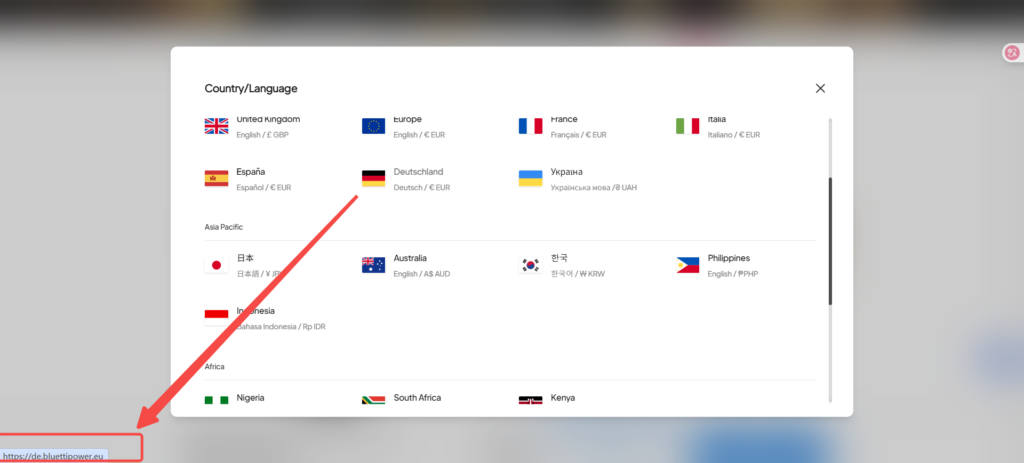
Choosing an appropriate domain and URL structure is a core international SEO decision. A clear structure helps search systems identify and index the intended pages and helps users recognize which version serves them.
1. Choose an Appropriate International Domain Structure
The structure affects how a site communicates language and country scope. Common options include country-code top-level domains, generic top-level domains, subdomains and subdirectories.
Country-Code Top-Level Domains
A country-code top-level domain, such as .cn, .us or .de, is associated with a particular country or territory. It gives users and search systems a clear geographic signal.
The advantage of a ccTLD is a strong local association that may support user trust where buyers expect a national domain.
The disadvantage is higher operating cost. Registering, governing and optimizing a separate domain for every market creates additional technical and editorial work, and some ccTLDs have eligibility rules.
Generic Top-Level Domains
A generic top-level domain such as .com or .org can support several markets under one domain. This approach is often suitable for a company that wants centralized governance.
A gTLD can reduce the effort of maintaining separate country domains. It does not identify a country as directly as a ccTLD, so the site should use explicit locale-specific URLs, hreflang and visible market cues where appropriate.
Subdomains and Subdirectories
Subdomains and subdirectories divide market or language content within a generic domain. A US subdomain might use us.example.com; a US subdirectory might instead use example.com/us/.
Subdomains keep operations separate and give teams flexibility, but each one may need to be configured, monitored and governed separately.
Subdirectories are usually simpler to manage and keep international sections within the same site structure. They can be a practical choice for companies that want centralized technical ownership and authority signals.
2. Implement Hreflang
Hreflang is an important international SEO annotation. It tells supported search engines which language or language-region version of a page is intended for a particular audience.
How to Annotate Language and Region Correctly
Hreflang annotations can be placed in the HTML head, HTTP headers for appropriate non-HTML files, or an XML sitemap. Use one consistent, valid implementation for the alternate set.

For example, hreflang="en-US" identifies English content intended for users in the United States, and the href value points to that page's absolute URL. Each alternate should reference itself and the other eligible alternates, and the relationships should be reciprocal.
Common Hreflang Errors and Corrections
- Missing annotations: If language or regional alternatives exist without a valid map, a search engine may show a less suitable version. Add complete annotations to every eligible page in the set.
- Annotations pointing to the wrong URL: Each entry must point to the equivalent canonical, indexable page for that audience, not an unrelated page or redirect.
- Confusing language and region: Use a language code and add a region only when the page genuinely targets it. US English and British English can be distinguished as en-US and en-GB; a general English page may simply use en.
3. Use a CDN and Suitable Hosting
A content delivery network distributes cached assets through multiple locations so that many users can retrieve them from a nearby edge. For a site serving several countries, this can reduce latency, use bandwidth more efficiently and improve the consistency of content delivery.
Faster, stable delivery makes the site easier to use and can improve how visitors experience the page. Speed alone does not guarantee rankings. It should be treated as one part of a usable, technically sound site.
How to Use a CDN for Faster International Delivery
Choose a CDN with suitable coverage in the intended markets. Configure caching for static assets such as images, CSS and JavaScript, and set deliberate cache and invalidation rules. If the application needs dynamic delivery, test how the CDN handles updates, personalized content, private data and security rather than assuming it will work.
International SEO Keyword Research
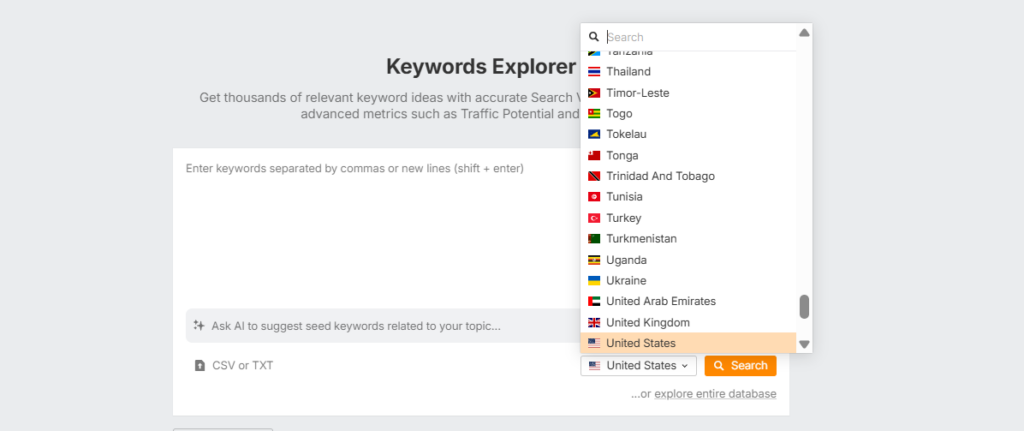
International keyword research is a foundation of an effective market strategy. Selecting terms that match local language and intent helps the site compete for relevant visibility rather than merely translating a domestic keyword list.
1. Identify the Market and Language Behind a Query
To determine which language and market a query belongs to, begin with spelling, terminology and usage differences.
The source uses chiller as an example: the term can be interpreted or used differently across languages and industries, including industrial cooling contexts in Vietnamese- and Spanish-speaking markets. English usage can be broader.
Keyword research should therefore test the language people actually use in the target market rather than assume that an English term can be carried across unchanged.
2. Compare Search Intent Across Markets
Even when users type the same term, their intent can differ by market. The source suggests that smartphone searches in the United States may emphasize premium brands such as Apple or Samsung; value-oriented devices may be more prominent in some Indian journeys. Treat this as a hypothesis to verify in current local result pages and customer data.
International research must therefore examine local needs, purchasing behavior and result-page composition alongside language. Content and page type should match the market's observable intent.
3. Use Semrush, Ahrefs and Google Keyword Planner
Keyword platforms can make international research more efficient, provided their estimates are reviewed rather than accepted uncritically.
- Semrush: Compare country databases, estimated volume and competition to identify candidate terms in a target market.
- Ahrefs: Examine competitor keywords and backlink patterns to find potential gaps and understand the strength of current results.
- Google Keyword Planner: Use location and language settings for initial demand exploration and related-query discovery.
These tools can reveal estimated demand and regional trends, but the most promising terms still require manual result-page analysis, business-fit review and local-language validation.
4. Build an International Content Map
An international content map defines how topics and pages relate across markets and language versions. Start by identifying each market's core needs and verified terms, then plan content around those needs.
- Primary market pages: Create a dedicated version for each supported market and optimize it for relevant local intent.
- Supporting pages: Address specific local needs, such as different product details or terminology, facts needed for regulatory review, and the conditions under which the service is offered.
- Connections across markets: Link equivalent language versions through appropriate navigation and hreflang, and keep ordinary internal links useful for the user.
A carefully governed content map keeps market coverage coherent and makes the relationship between pages easier for editors, users and search systems to understand.
International SEO Content Localization

Content localization is one of the factors that can determine whether an international page succeeds. Search systems and users need a page that genuinely serves the local audience, not one whose words have merely been converted into another language.
Effective localization adapts language, cultural context and user needs. This can make a page more useful and relevant and can improve the customer experience, but it does not guarantee rankings or conversions.
1. Translation Is Not Localization
Many businesses mistakenly treat translation as the whole of localization.
Translation transfers meaning between languages. To localize that meaning, adapt usage, cultural references, what customers expect and the details they need to act in the target market.
Why Translated Content May Fail to Rank
- It does not follow local usage: A grammatically translated page can still sound stiff or unfamiliar. That makes the content harder for users to trust and use.
- It ignores cultural differences: Copy, examples or imagery that do not fit the local context can cause confusion or a negative reaction.
- It overlooks local search terms: Direct translation often misses the phrases and intent that people use in the target market, limiting the page's relevance.
How to Reduce the Risks of Machine Translation
Machine translation is fast but cannot reliably interpret every context or account for cultural and local usage. It should support, not replace, an accountable editorial process.
- Human editing: Have an editor with appropriate language and market knowledge review accuracy, meaning and naturalness.
- Specialist localization support: Work with people who understand the audience's language, culture and product context.
- Iterative feedback: Use feedback from local stakeholders and users to improve terminology and the experience over time.
2. How to Localize Content
Localization means adapting content to local language habits, cultural context and user needs. Important areas include:
Language conventions: Usage varies by region. American and British English, for example, differ in spelling and vocabulary. Use the form that the intended audience expects.
Cultural differences: A marketing approach that works in one country may be unwelcome in another. Review wording, references and imagery for local fit and avoid material likely to mislead or offend.
Images and visual treatment: Visual symbols and aesthetics can carry different meanings. Review whether an image suits the target market rather than assuming that a popular visual in one region will transfer safely to another.
Examples, currency and units: Adapt examples and display the units and currency users expect. For instance, US audiences may encounter inches and pounds; many European markets use centimeters and kilograms. Label any conversions clearly.
Calls to action: CTA wording should match local language and decision-making norms. The source contrasts concise US copy with a potentially more expressive French style; use this as a prompt for local testing, not a stereotype or fixed rule.
Technical International SEO: Site Speed, CDN and Hosting
Loading performance matters in international SEO, particularly where users face slower networks or high mobile-data costs. A slow page can damage the experience and impede efficient crawling. Performance work is therefore an important part of cross-border delivery.
How Can a CDN Speed Up an International Site?
A CDN stores or delivers site assets through distributed nodes and selects an appropriate edge for the request. This can reduce latency and make international access more consistent, especially when users are far from the origin server.
Does Server Location Affect SEO?
Google's current international-site guidance lists server location as one possible locale signal, but says it is not definitive, particularly because many sites use CDNs or host where infrastructure is stronger. Do not rely on an IP address as the main targeting method. Use locale-specific URLs, hreflang, visible local language and currency, local business information where genuine, and relevant links to communicate the intended market.
Mobile Optimization
Google primarily indexes sites using their mobile content. On mobile, retain the same essential content, metadata and structured data; make sure users can navigate, view images, submit forms and load the page reliably on devices common in each target market. A good mobile experience supports users but does not guarantee a ranking increase.
International SEO Link-Building Strategy
Relevant external links can help people and search systems discover a site and understand its relationship to a market. International link building should focus on legitimate local relevance and editorial value, not manufactured links or promised ranking gains.
How to Earn International Media Coverage
Overseas media may cover a business when it releases useful news, publishes sound industry research, attends events, supplies case material or shares credible data. Build genuine ties with relevant editors, and give them material their readers can verify and use.
How to Use PR, Guest Posts and Local Citations
- PR: Share genuine industry news, events or partnerships that may earn coverage and increase brand awareness.
- Guest posts: Offer relevant editors useful, non-promotional expertise that they may publish under a legitimate arrangement. Avoid paid or scaled guest-post schemes created to manipulate rankings.
- Local citations: List the company in appropriate local business or industry directories, and keep its name, address and phone details accurate and consistent only where it has a genuine local office.
How Regional Links Can Support Market Relevance
The source describes national backlinks as links from authoritative sites in a target country. Relevant local media and industry links can reinforce discovery, reputation and market context, but country of origin alone does not make a link valuable and no backlink guarantees a ranking. Favor editorial links that fit the topic, reach real readers and comply with search-engine spam policies.
Local Signals for International SEO
Visible, accurate local signals can help users and search systems understand which market a business serves. They should reflect real operations rather than being created only for SEO.
Why Local Signals Matter
The source uses local signals to describe links and other signs that tie a site to a specific region. Together with the page's language and URL structure, these signs can help users and search systems recognize the intended market, but only when the company's details and offer are genuine.
Local address, telephone number and NAP consistency: Where the business has a genuine local presence, keep its name, address and telephone number accurate and consistent across the website and reputable directories. This is particularly important for local search and customer trust.
Eligible local branch on Google: An overseas branch that meets Google's rules can create and verify a Business Profile with correct contact details and opening hours. Online-only brands and ineligible branches should not invent a profile.
Local social accounts: A market-specific account can support local-language communication and customer feedback when the business has the resources to maintain it. Social activity should serve the audience rather than act as a fabricated geographic signal.
Local reviews: Genuine reviews can help prospective customers and can contribute to prominence in Google's local results. Ask for honest feedback without incentives, follow platform policy and never manufacture reviews.
Local commerce platforms and events: Running a well-maintained store page on a relevant marketplace, or legitimately taking part in a local trade event, can expose the brand and show that it is active in the market.
Common International SEO Mistakes
International SEO contains many interdependent details. The following source-listed mistakes commonly weaken implementation:
- Automatic IP redirects: Forcing visitors to a version based on IP can prevent crawlers and users from accessing other variants. Google advises against using IP analysis to adapt content; offer explicit language or region links and use hreflang instead.
- Mixing languages on one page: Substantial mixed-language content can make the intended audience unclear. Keep the main content in one language and map alternate versions appropriately.
- Translating without local rewriting: A literal translation may miss local terminology, culture and intent. Preserve meaning, then edit the page for the target market.
- Ignoring legal or compliance risk: Privacy, advertising, ecommerce and product rules differ across jurisdictions. Obtain appropriate professional review before entering the market.
- Disordered URL structure: Inconsistent subdirectories, subdomains or parameters make a site harder to govern and interpret. Choose a clear model that matches the intended language and region.
- Incorrect hreflang: Duplicated, missing, non-reciprocal or mismatched annotations can break the alternate map. Validate the codes, page equivalence, canonicals and 200 responses.
- Ignoring payment, currency and buying habits: A localized page can still fail if checkout lacks expected payment methods, local currency or an appropriate purchase journey. Test the complete experience with the market in mind.
How to Measure International SEO
Measure whether the strategy reaches the intended markets and where to adjust it. Define metrics consistently and compare qualified outcomes by market rather than treating all international visits as equivalent.
GA4: Country, Language and Conversion Paths
GA4 can report traffic, behavior and conversion paths by dimensions such as country, language and device. Compare which markets visit, which language versions they use and where important journeys succeed or fail.
Search Console: International Visibility and Ranking Data
Google Search Console provides query, page, country, click, impression, click-through-rate and average-position data for Google Search. Use these views to identify which market pages earn visibility and where queries or landing pages do not match the intended audience.
Semrush Multi-Region Rank Tracking
Semrush can track selected keywords in different geographic databases or locations. Use the results as one view of competitive movement and verify important changes with Search Console and the live result environment.
VPN and Real-Device Checks
A VPN and physical devices can help reviewers inspect regional user journeys, but they do not perfectly reproduce every person's search results. Use them to check page access, localization, redirects and the search experience alongside platform data.
How to Tell Whether an International SEO Strategy Is Failing
Possible warning signs include:
- Stalled target-market traffic: This may indicate weak demand, unsuitable keywords, poor execution or insufficient authority.
- High disengagement in a target market: The content or offer may not meet local needs, although the metric requires context and should not be diagnosed from bounce rate alone.
- Unstable regional rankings: Check hreflang and canonical tags, review the content and competing pages, and look for technical problems rather than assuming one cause.
- Traffic without improved conversions: The purchase path, payment methods, pricing, supporting proof or how well the page serves local users may not help arriving visitors buy.
Reviewing these signals together helps a business find problems early and adjust its international strategy. No single metric proves success or failure.
Choose GlobalBrandsDigital for International SEO Support
Effective international SEO is not a stack of isolated technical tactics. It requires a disciplined choice for each market and a team that can maintain what it builds.
As an international SEO service provider, GlobalBrandsDigital works across keyword research, content localization, technical SEO and link building. The scope and expected outcomes should be defined for the business and market rather than presented as guaranteed results.
Every market has distinct demand, competition, language and customer behavior. An international SEO strategy should therefore combine localization with a clear technical structure and a user journey the organization can actually support.
If you want to expand into additional markets, contact our SEO consultants for an initial discussion and website diagnostic. Any recommendation should follow evidence about the intended markets, current site and operating constraints.
For related guidance, continue with our English international SEO and multilingual resources as they become available.