
On this pageTable of contents+
- Major Search Engines in Japan
- Google Japan
- Yahoo! JAPAN
- Bing Japan
- Other Japanese Search Engines and Portals: Excite, Goo, livedoor, Nifty and MSN Japan
- How to Optimize for Japanese Search
- Understand the Search Systems You Target
- Keyword Research and Localization
- Site Structure and Content Optimization
- Link Building and Brand Promotion
- Local SEO Tactics for Japan
- Monitor and Adjust
- Japan SEO Tools: What Is Still Verifiable?
- What Is the Most-Used Search Engine in Japan?
- Which Browsers Are Common in Japan?
- What Is Japan's Largest Website?
- Do People in Japan Use Google?
- Looking for Professional Japan SEO Services?

When entering the Japanese market, it is important to understand the search services people use locally and how to optimize for them. This guide localizes an August 2025 Chinese article about Google Japan, Yahoo! JAPAN, Bing and several smaller portals, then checks its tools and market claims against current evidence. Search products and market shares change, so date every measurement before you invest.
Major Search Engines in Japan
Before planning search engine optimization for Japan, identify the services the intended audience actually uses. Differences between their products and audiences can affect the strategy. The original percentages and demographic descriptions below record the article's 2025 framing; they are not current market measurements.
Google Japan
The source estimates that Google held about 70% of the Japanese search market and describes it as a powerful global search engine capable of returning accurate results. It also says Google's systems were designed primarily for Western markets and therefore require adjustment for Japanese search habits and culture. Treat the percentage as an undated source-era estimate; use a current, device-specific dataset and live Japanese result review before allocating channels.
The source says Japanese users favor concise, precise queries and place particular value on reliable information. It therefore says teams should choose keywords carefully for Google Japan, make pages load quickly and ensure they work well on mobile devices. Those factors can help people find and use a page, but none directly guarantees a ranking.
Yahoo! JAPAN
The source estimates Yahoo! JAPAN's share at about 20% and notes that the portal combines web search with news, shopping and other services. The number must be treated as a source-era estimate. Portal context may shape the audience and journey, but it should not be confused with proof that Yahoo! JAPAN currently operates an independent web-ranking algorithm.
The source characterizes Yahoo! JAPAN users as predominantly local and especially strong among middle-aged and older people who follow Japanese news and social topics. This may be a useful research hypothesis, not an established current demographic fact. Test it against first-party audience data, then use relevant local culture and current affairs only where they genuinely help the reader.
Bing Japan
The source puts Bing's share at roughly 5% and says some Windows experiences use Bing by default, which helps the service reach Windows users. Both claims can vary by date, device and configuration. A brand interested in these users should check current usage and referral data before prioritizing Bing.
The source says Bing personalizes results using a person's search history and preferences. Personalization is not unique to Bing, and an SEO team cannot optimize a separate page for every individual's history. Focus on useful content, clear intent and pages that search systems can access, then test how well the experience works for the intended users.
Other Japanese Search Engines and Portals: Excite, Goo, livedoor, Nifty and MSN Japan
Besides Google, Yahoo! JAPAN and Bing, the source names several smaller Japanese portals and search services. It argues that, despite smaller shares, they may still matter within particular interest or age groups. Before including any one of them in a plan, confirm that the service, search function and relevant audience still exist.
Excite: The source associates Excite with users interested in Japanese news, entertainment and culture. It says content in those fields may gain exposure there. Treat this as a source-era portal description and inspect the current product, editorial rules and referral opportunity before acting on it.
Goo: The source describes Goo's users as older and says pages aimed at them should emphasize simplicity and usability, particularly for localized content. Do not infer a current demographic profile from this assertion alone; use audience research and accessible design for the people the page actually serves.
livedoor: The source says livedoor was once a major portal, now holds less search-market share, and still attracts users around blogs and online content. It recommends original, frequently updated material. Current portal features and distribution opportunities should be verified rather than assumed.
Nifty: The source presents Nifty as a long-established internet service provider used mainly by middle-aged and older people, with an emphasis on local news and community interaction. It recommends highly localized content and a simple interface. Validate both the audience and the current service before designing around those claims.
MSN Japan: The source describes MSN Japan as Microsoft's former online portal for Japan and suggests that Windows- and Microsoft Office-related content might attract a particular audience there. Confirm the current portal, search provider and actual referral opportunity before investing in channel-specific work.
How to Optimize for Japanese Search
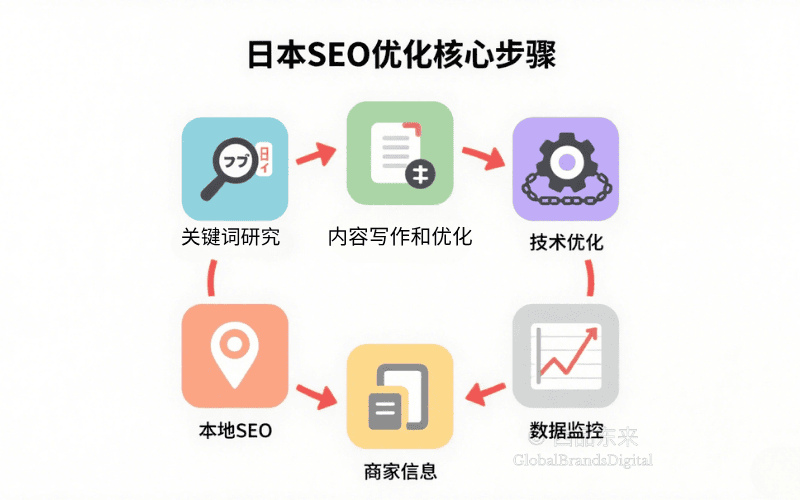
Success in Japanese search requires an understanding of how the intended users search. The source organizes the work around search-system research, keywords, site structure, links, local visibility and continuing measurement.
Understand the Search Systems You Target
The source says Google and Yahoo! JAPAN emphasize different ranking factors:
- Google: The source emphasizes content quality and technical work such as loading performance and mobile support.
- Yahoo! JAPAN: The source emphasizes localized content, particularly for news and shopping.
The source therefore recommends a separate optimization approach for each service. Do not turn that recommendation into a current algorithm claim. Official Yahoo! JAPAN material says the company adopted Google's search technology in 2010; check how the product works today. Review each live service, result set and user journey before deciding what truly differs.
Keyword Research and Localization
Keyword selection: The source first says Japanese users tend to prefer short, precise queries, then says long-tail queries are especially important. These ideas are not necessarily opposites: research concise head terms and more specific multiword needs, then validate both against Japanese search suggestions, Google Keyword Planner and live results instead of relying on translation alone.
Localization: Japanese language and culture require more than direct translation. Adapt the material to social context, consumer behavior, natural expressions and appropriate levels of politeness. These details can materially affect whether a reader accepts and trusts the content.
Search intent: The source says Japanese users may place different weight on new trends, price comparisons and product quality. Treat these as questions to research. Understanding what the local audience needs helps a team choose better target queries and shape a page that answers them.
Site Structure and Content Optimization
Site structure: The source recommends a clean, intuitive design for Japanese users, with clear navigation and a coherent internal-link structure that helps both readers and search crawlers reach the content. Avoid unnecessary complexity, but do not flatten information users need.
Loading performance and mobile optimization: A slow site can drive visitors away. Test how quickly the page loads and whether the full journey works on devices and connections used by the target audience. A faster, easier page helps users but does not by itself guarantee a higher position.
Localized content: Adapt more than the language. Where relevant, incorporate Japanese holidays, cultural interests or current social topics so that the page feels grounded in the audience's context. The source says this can encourage people to stay and engage, although that effect must be measured. Do not add topical references merely for keywords or make cultural assumptions without local review.
Link Building and Brand Promotion
Earn relevant local links: The source recommends working with Japanese industry sites, media and blogs to earn links and brand exposure. Pursue editorially justified coverage that can reach real readers. Links created mainly to manipulate rankings breach Google's spam policies and should not be part of the program.
Social and local-platform promotion: The source names Twitter, now X, as well as Instagram and LINE as active channels in Japan, and recommends publishing useful content there and working with Japanese opinion leaders and bloggers. Verify current platform use and disclose commercial relationships; attention on a platform is not proof of search-ranking impact.
Work with local businesses: Genuine partnerships or local events can produce news coverage and appropriate references. The source specifically mentions press releases and cooperative advertising. Any paid or advertorial link must be properly qualified, and a search system does not automatically favor a partnership link. The relationship, coverage and link should serve real readers.
Local SEO Tactics for Japan
Local SEO is an important part of the source's Japan strategy, especially for a brand that serves customers at a real location or within an eligible service area.
Create eligible local profiles: The source refers to Google My Business, now called Google Business Profile, and to a Yahoo! JAPAN local listing. Add accurate information only for a real, eligible business, verify current Yahoo! JAPAN listing options, and do not create a location merely to influence search results.
Directories and reviews: Keep accurate details in reputable Japanese directories and invite honest customer feedback in ways allowed by each platform. Reviews can support trust and may contribute to prominence in Google's local results, but manufactured, gated or incentivized praise is not acceptable and no review guarantees a ranking.
Local queries: Where the business genuinely serves a place, research how people combine the service or product with Japanese place names and regional descriptions. Use those terms naturally on pages that contain useful details about the place; do not create a thin page for every variation of the place name.
Monitor and Adjust
SEO is not a one-time task. The source recommends regular monitoring so that the team can understand whether the work continues to serve its intended audience.
Analyze SEO data: Use Google Analytics and Google Search Console to review appropriate signals such as query position trends, pages, traffic sources and on-site behavior. Search Console reports Google Search performance; analytics observes configured site activity. Neither is a complete measure of every search service.
Adjust the strategy: Search behavior and trends in Japan change over time. Review how target queries and pages perform, what the content provides and which legitimate links the site earns. Revise the work when the evidence shows that users or search results have changed.
Japan SEO Tools: What Is Still Verifiable?
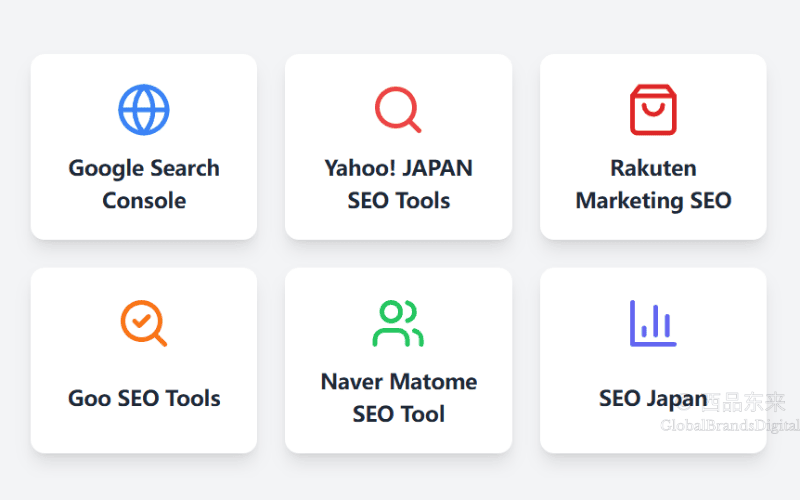
1. Google Search Console: Search Console can be used for a site serving Japan just as it can elsewhere. It reports how a verified property performs in Google Search, including queries, clicks, impressions and indexing information. There is no separate product edition required simply because the target market is Japan.
2. Yahoo! JAPAN SEO Tools: The 2025 article described keyword suggestions and site diagnostics under this generic name. Current official material did not confirm a public product with that exact name and feature set. Identify the product owner, access path and documentation before relying on it.
3. Rakuten Marketing SEO Tool: The article described keyword, competitor and advertising features for ecommerce brands. Current Rakuten material instead documents store analysis through R-Karte, including traffic and search-query views. Rakuten merchants should use the tools available in their accounts and distinguish marketplace search from general web SEO.
4. Goo SEO Tools: The article attributed keyword research, page diagnostics and site analysis to this name. No current official product matching the name and full feature list was verified. Treat it as a historical entry until exact documentation and access are confirmed.
5. Naver Matome SEO Tool: NAVER Matome was a Japanese content-aggregation service, not a current SEO suite. Its official blog states that the service ended on September 30, 2020, so it must not appear in a present-day tool recommendation.
6. SEO Japan: The article described SEO Japan as a source of market research, trend analysis and competitive intelligence. Check its current editorial scope, data provenance and commercial offering before treating it as a tool or relying on its material.
What Is the Most-Used Search Engine in Japan?
The 2025 article answered Google Japan, followed by Yahoo! JAPAN. A dated Statcounter observation for July 2026 still placed Google first, but put Bing second and Yahoo third. Because methodology and device mix affect the result, compare current market data with first-party referrals before allocating budget.
Which Browsers Are Common in Japan?
The article answered Google Chrome, followed by Safari and Microsoft Edge. A July 2026 Statcounter observation reported the same ordering. Shares still vary by date and device, so test the browsers shown by current market data and first-party analytics.
What Is Japan's Largest Website?
The article named Yahoo! JAPAN because it combines search, news, shopping and community functions. The word largest is undefined without a metric and date, so the defensible conclusion is simply that Yahoo! JAPAN remains a major Japanese portal.
Do People in Japan Use Google?
Yes. Google is widely used in Japan and appeared first in the dated July 2026 Statcounter observation cited above. Its exact share and audience mix still require current, method-aware evidence.
Looking for Professional Japan SEO Services?
The source says that choosing suitable strategies and tools is essential for SEO in Japan, and presents GlobalBrandsDigital as an international SEO company with experience helping businesses improve visibility, site traffic and sales. Those are service objectives, not assured outcomes; the appropriate scope should follow research into the particular brand, site and market.
The source says the company provided customized SEO services to Beyourlover, an adult-products brand operating a Japanese-language site in a competitive category. It also calls adult products one of Amazon's top three categories, but does not define the ranking or provide evidence for it. The listed service scope includes technical repairs, site-speed work, keyword research and content marketing. The named engagement and category assertions require an approved case record before they can be treated as verified proof.
The Chinese source claims that after one year the engagement produced 400% traffic growth, more than 1,000 core keywords on Google's first page, more than 300 keywords in the top three, and a tenfold increase in sales. These figures have not been independently verified here. Before anyone relies on or republishes them, the company must show when and where it began measuring, define each metric, provide analytics and ranking exports, explain how it linked SEO to the results, supply commercial records, and confirm that it may publish the case.
If your brand plans to enter Japan, first confirm what people search for, how Japanese readers describe it, which sites already serve them, whether your site works properly, and whether customers can complete the journey. GlobalBrandsDigital can define a tailored SEO program, but it cannot promise the same traffic, ranking or sales outcome as an unverified source case claim.