
On this pageTable of contents+
- What Should an SEO Analysis Cover? Core Dimensions
- 1. Keyword Analysis: Is the Site Attracting the Right Demand?
- 2. Content Audit: Does the Existing Content Support Growth?
- 3. Technical SEO: Diagnose Problems and Set Priorities
- 4. Off-Page Analysis: Links, Mentions and Brand Demand
- Useful Tools for SEO Analysis
- Frequently Asked Questions About SEO Analysis
- 1. What Should I Do If Rankings Suddenly Drop?
- 2. What If a Content Update Does Not Increase Traffic?
- 3. Why Can Traffic Grow Without Better Average Rankings?
- 4. Why Might Rankings Fall After a Content Update?

Many websites invest in SEO without seeing a clear return. The problem is often not a lack of activity but the absence of a systematic SEO analysis. Without analysis, a team cannot tell whether it is targeting the right queries, publishing effective content or carrying technical and structural problems. It also struggles to see competitors' strategies and open opportunities, so traffic stalls, rankings fluctuate and optimisation becomes guesswork.
SEO analysis uses data to set direction and give each change a reason. In our experience, sites that sustain organic growth rely on a stable, repeatable analysis process rather than isolated fixes.
This guide explains what to examine, how to run the analysis and how to turn findings into actions. You can use the same framework to conduct a clear, practical diagnostic review of your own site.
What Should an SEO Analysis Cover? Core Dimensions
SEO analysis is more than checking rankings or reading tool dashboards. It should explain the site's current position, its plausible growth opportunities and the problems holding it back. The following core dimensions cover the checks teams need most often.
1. Keyword Analysis: Is the Site Attracting the Right Demand?
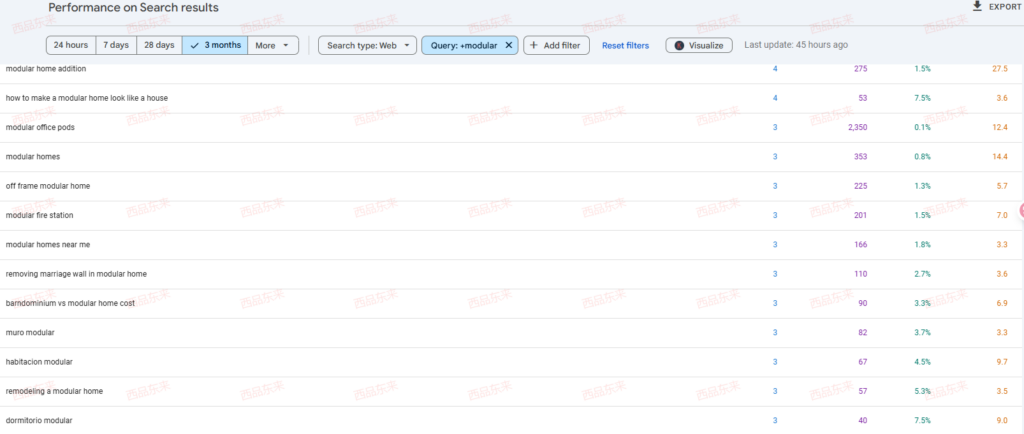
Once a site has operating history, keyword selection should answer three questions: are we ranking for the right queries, can those queries support conversions, and which topics deserve priority next?
(1) Decide Whether the Queries You Already Rank For Have Business Value
Start by comparing the site's ranking queries with its commercial goals. A site can have rankings and traffic but still convert poorly because the query portfolio, rather than the page execution, is misaligned with the business.
Google Search Console can show impressions, clicks and average position ranges for the site's current queries.
- High impressions with lower positions can identify pages with room to improve, although position alone does not guarantee an opportunity.
- Impressions and clicks from queries with little business relevance can reveal a mismatch in content direction.
- Queries around positions 8–20 are often useful candidates for review because they are already visible, but any prioritisation should also consider intent, competition and business value.
Many sites publish continuously without meaningful results because too little of the work supports the business. Rankings for loosely related queries produce traffic that is less likely to convert.
(2) Assess Keyword Quality: How Close Is the Intent to Conversion?
Two useful dimensions of keyword quality are search intent and audience fit.
A simple model groups intent into transactional, informational and navigational queries.
- Transactional queries are closer to a purchase or enquiry, such as “xxx supplier” or “xxx price”.
- Informational queries focus on learning or research, such as “how to choose xxx”.
- Navigational queries seek a brand, organisation or specific destination.
If a lead-generation site receives most of its traffic from broad informational queries, its keyword mix may be too far from the commercial objective.
Next, assess whether the visitors are genuinely relevant.
Some queries create a large volume of visits from people who are unlikely to become customers. This impressive-looking but low-value traffic can distort reporting and future decisions. Keyword analysis should identify it and redirect resources towards queries more likely to create qualified opportunities.
(3) Find Keyword Gaps: What Should the Site Cover Next?
A content-gap analysis can reveal topics competitors cover but you do not, themes where thin coverage leaves pages stuck around positions 10–30, and result sets where a useful new page may have room to compete.
This step normally combines a comparison tool such as Ahrefs with manual review of the search results. Assess which themes are essential to the market, which match the business and where the current results leave a genuine information gap. The output should be a prioritised content backlog for the coming months, not an instruction to copy competitors.
(4) Check for Keyword Cannibalisation
As a site grows, several pages can begin competing for the same primary intent. Google may alternate between URLs or struggle to identify the best destination, and none of the pages performs consistently.
Look for several pages on the same topic ranking in similar ranges, such as positions 20–50, and use Search Console to check whether multiple URLs receive impressions for the same query set. Confirm the intent and page purpose before calling it cannibalisation.
Common responses include consolidating overlapping pages, defining a primary page and improving internal-link signals. Results are not guaranteed, but a clearer page map can reduce unnecessary competition.
(5) Turn the Findings Into a Keyword Plan
The purpose of keyword analysis is an executable plan, not a collection of charts. The plan usually has three workstreams.
First, improve relevant queries with potential. These may already rank around positions 10–20 and show meaningful demand. Content updates, missing concepts, better page experience and more useful internal links may help them compete, but measure the outcome instead of assuming a quick win.
Second, strengthen high-intent queries. These sit close to an enquiry or purchase and can justify sustained investment despite stronger competition. Improve subject expertise, first-hand evidence, page structure and legitimate third-party references where they help users.
Third, fill business-relevant content gaps. Cover important topics the market expects but the site does not yet address. Useful additions can broaden topical coverage; publishing a page does not automatically create site authority.
2. Content Audit: Does the Existing Content Support Growth?
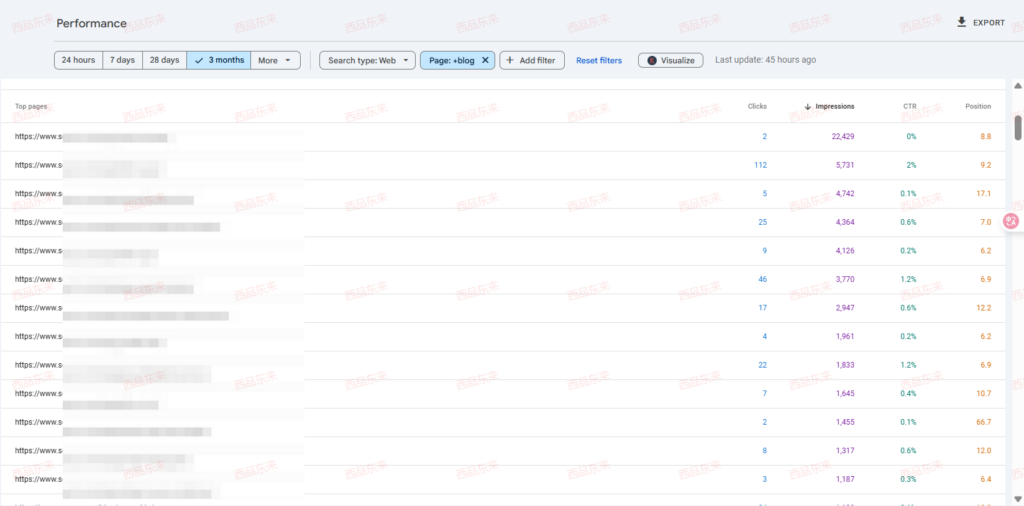
After a site accumulates articles, product pages and topic hubs, review whether they still work. Do they earn impressions, attract the right users, have room to improve and leave important themes uncovered?
Those answers are the basis for a content strategy that raises quality across the site.
(1) Evaluate Performance: Does the Content Meet a Real User Need?
Do not judge a page merely by whether it exists. Examine whether search engines can discover and understand it, whether visitors engage with it and whether it contributes to the business objective.
Start with Search Console and GA4 to compare search visibility with on-site behaviour.
- A page with no impressions for a long period may target little demand, fail to meet the intended query or have discovery and indexing problems.
- A page with impressions but few clicks may have an uncompetitive title, snippet or angle, although SERP features and query position also matter.
- A page that attracts clicks but does not help users continue may be too shallow, omit critical information or fail to solve the task. Choose behaviour metrics that match the page's purpose rather than relying on one generic engagement number.
Then assess commercial value.
Even strong traffic may be ineffective if it attracts no plausible customers. Such content may need a clearer connection to a real product, application or expert analysis so that it moves from traffic for its own sake to useful business content.
(2) Review Structure, Depth and the Standard Set by the Results
Search systems and users need clear, complete content that satisfies the query. Many unstable pages are not aimed at the wrong subject; they are organised without regard to the user's task.
- Informational content generally needs to answer the basic question and provide the explanation, steps, examples or limitations a user needs. A one-line definition rarely competes with a genuinely useful guide.
- Transactional content should make product differences, applications, specifications, constraints and comparisons easy to understand so that the user can make a decision.
Depth matters when it means completeness, not length for its own sake. Compare the page with leading results and ask whether important sections, common questions, diagrams, evidence or practical examples are missing. Adding the right missing information can materially improve usefulness.
Use related concepts naturally where they help cover the topic. Do not treat “NLP optimisation” as a keyword-density exercise or claim that one model checks a fixed list of terms. For a topic such as “LED strip installation”, for example, users may also need tools, common mistakes and safety notes. Covering those needs helps create a more complete page.
(3) Address Cannibalised, Duplicate, Outdated and Incomplete Content
Some sites underperform not because they have too little content, but because the library is fragmented. Common problems include competing pages, duplication, outdated facts and incomplete answers.
Cannibalisation occurs when several pages serve substantially the same intent. Consolidation, a clearly designated primary page and purposeful internal links can focus the experience and reduce conflicting signals.
Duplicate content is common on product sites that reuse nearly identical copy across models. Depending on the case, consolidate pages, rewrite meaningful differences, redirect obsolete URLs or use a canonical URL as a hint about the preferred version.
Outdated content reduces trust. Prices, technical specifications and market trends can change quickly, so flag time-sensitive claims and assign an owner and review date.
Incomplete content leaves important user questions unanswered, such as applications, trade-offs, cautions and common problems. Search-result features and competing pages can suggest gaps, but first-party support questions and sales conversations are often better evidence of what users actually need.
3. Technical SEO: Diagnose Problems and Set Priorities
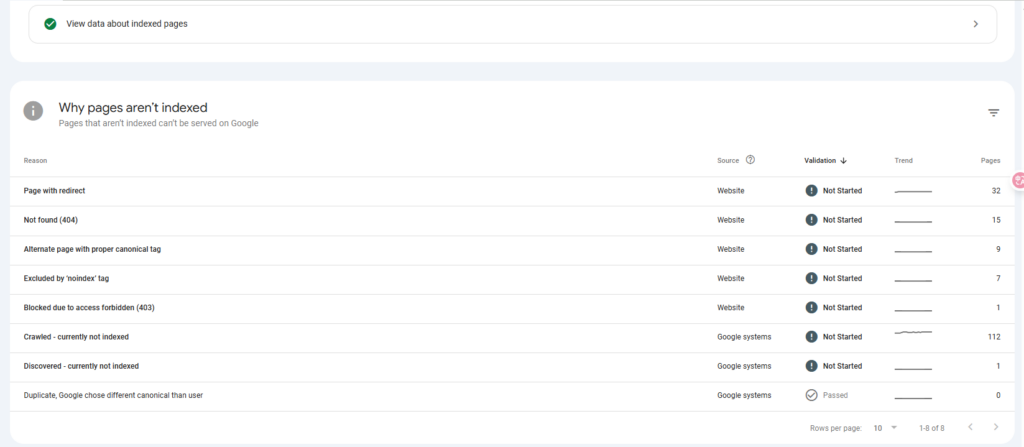
Technical SEO is easy to overlook, yet hidden technical faults can materially affect discovery, indexing, rendering and user experience.
Crawling and indexing: use Google Search Console to review indexing reports, URL inspection data and errors such as broken URLs. Confirm that important pages are not accidentally blocked or marked noindex. Repair critical access problems; redirect an obsolete URL only when there is a relevant replacement, otherwise an appropriate 404 or 410 may be clearer.
Page performance and Core Web Vitals: the current Core Web Vitals are LCP, INP and CLS, replacing the source article's outdated reference to FID. Measure field data at the 75th percentile for mobile and desktop. Compress and size images, load non-critical resources carefully and improve server response where evidence identifies a bottleneck. Page experience matters, but no single score guarantees rankings.
Duplication and canonicalisation: crawl the site to find duplicate or near-duplicate URLs. Consolidate where appropriate and use rel=canonical to indicate a preferred version; Google treats canonicalisation signals as hints and may select a different canonical. Use noindex or removal only after considering internal links and user needs.
Site structure and internal links: keep important pages reasonably accessible, link to them from relevant context and remove accidental dead ends. Internal links help users and crawlers understand relationships, but “link equity” should not be used as a reason to strip useful navigation.
Robots.txt and sitemaps: review robots.txt before changes so that important resources are not blocked. Keep XML sitemaps accurate and submit them through Search Console. A sitemap supports discovery but does not guarantee immediate crawling or indexing.
4. Off-Page Analysis: Links, Mentions and Brand Demand
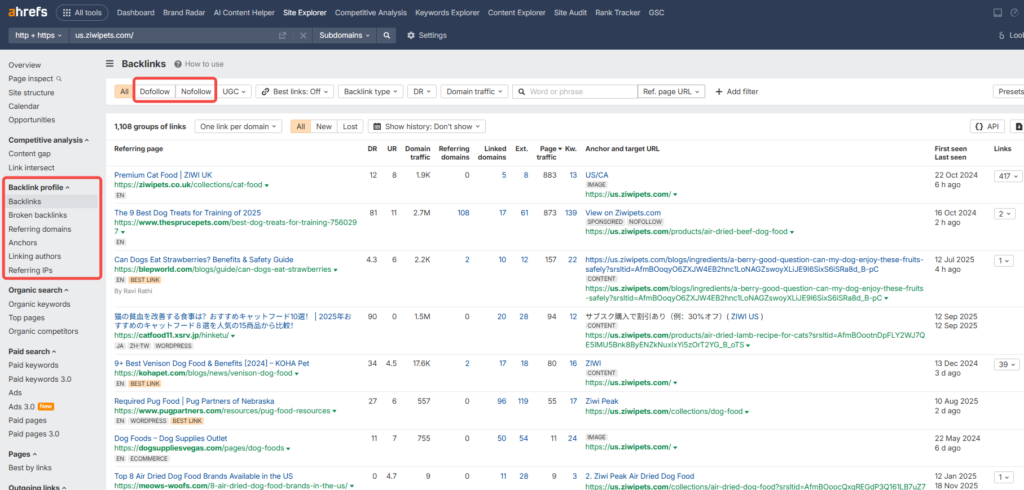
For a site with established SEO foundations, off-page analysis should identify credible editorial references, brand demand and gaps in how the market discovers and trusts the organisation.
(1) Review Existing Links: Relevance and Editorial Quality Before Volume
Older SEO practices often focused on link counts. A more useful review examines whether links are editorially earned, relevant, trustworthy and helpful to users rather than pursuing a third-party score or raw volume.
Tools such as Ahrefs and Semrush can help inventory links, but their metrics and crawls are third-party estimates rather than Google data.
- Domain Rating and URL Rating: these Ahrefs metrics can support comparison inside the same tool. A high score does not by itself make a link valuable; relevance, editorial context and the actual site's quality matter more.
- Link attributes: ordinary editorial links need no special “dofollow” attribute. Google asks sites to mark paid links with rel=sponsored and user-generated links with rel=ugc; rel=nofollow remains available when the other values do not fit. These attributes are hints, not a simple switch that proves ranking value.
- Link distribution: review whether references come from varied, relevant sources and whether anchors and destination pages look editorially natural. An artificial pattern may signal a manipulative campaign, but diversity should emerge from real coverage rather than a quota.
If the site has far fewer legitimate references than credible competitors, investigate why the market has little reason to cite it. If it has many low-quality links, focus on future quality and actual spam risks instead of chasing a headline count.
(2) Brand Indicators: What Do Links and Mentions Reveal?
Links and independent mentions can show how visible and credible a brand is in its market. Treat the following as business and research indicators; do not present them as confirmed direct ranking factors.
- Branded search demand: growth in searches for a brand or a brand-plus-category query, such as “XYZ LED supplier”, can indicate rising awareness. Use Search Console, Trends and first-party data to understand the pattern rather than assuming a direct ranking boost.
- Independent media mentions: coverage by trade publications, industry blogs and partners can indicate external recognition. Relevant editorial links can also help users discover and evaluate the brand.
- Social visibility: links and mentions on LinkedIn, Weibo, Zhihu and other platforms can generate discovery, referrals and conversation. There is no need to claim that social links are a direct Google ranking signal; measure their audience and business contribution instead.
The practical goal is to earn useful recognition from credible industry publications, associations, partners and communities, not to manufacture links that merely look authoritative.
(3) Link-Earning Strategy
Useful original research, technical guides, case studies with permission and transparent methodology, and well-designed industry resources can earn editorial citations. Partnerships with relevant publishers can also work when disclosure and editorial independence are clear.
Media relations and participation in genuine industry activity can increase awareness and references. A press release or influencer collaboration is not automatically a high-quality link; judge the audience, disclosure, relevance and outcome.
(4) Avoid Manipulative Links
Avoid buying links for ranking purposes, joining link farms or creating irrelevant placements. Google may ignore many low-quality links, while manipulative patterns can violate spam policies. Audit suspicious campaigns and use the disavow tool only for the narrow cases in Google's guidance, not as routine maintenance.
Useful Tools for SEO Analysis
| Tool | Primary Use |
| Google Search Console (GSC) | Query impressions, clicks and average position, plus indexing and crawling diagnostics. |
| Ahrefs | Third-party keyword, content and link research, including competitor comparisons. |
| Semrush | Third-party keyword data, competitor research and site-audit workflows. |
| Google Keyword Planner | Google Ads keyword planning data, demand ranges and competition for advertising. |
| Screaming Frog SEO Spider | Site crawling, broken-link discovery and duplicate-pattern analysis. |
| GTmetrix | Laboratory page-performance analysis and waterfall diagnostics. |
| PageSpeed Insights | Field and laboratory performance data, including Core Web Vitals where available. |
| Clearscope | Content research and optimisation suggestions based on competing pages. |
| Surfer SEO | Content comparison and on-page recommendations, including headings and terms. |
| Grammarly | English grammar and style assistance; editorial review remains necessary. |
| Hemingway Editor | Readability review that highlights dense sentences and difficult wording. |
| Majestic | Third-party link analysis using Trust Flow and Citation Flow metrics. |
| BuzzSumo | Content-discovery and media-research workflows for topics and earned coverage. |
Frequently Asked Questions About SEO Analysis
1. What Should I Do If Rankings Suddenly Drop?
Possible causes include a reporting change, technical problem, seasonality, stronger competitors, a ranking-system update or content and link issues. Start with Search Console and analytics, annotate the timing and segment the loss by query, page, device and country. Check the Google Search Status Dashboard and site changes before choosing a remedy. Update content or address links only when the evidence supports that diagnosis.
2. What If a Content Update Does Not Increase Traffic?
Check whether the page satisfies the intended query and whether demand exists. Tools such as Clearscope or Surfer can suggest topics used by competing pages, but do not follow their recommendations blindly. Review the title, snippet, internal links, indexing, page experience and conversion path, then measure the change over a suitable period.
3. Why Can Traffic Grow Without Better Average Rankings?
The site may be appearing for more queries, countries or SERP features while a broad average position remains flat. Segment the data before assuming a problem. Also verify that the new traffic matches the intended audience and that the pages fulfil the search task.
4. Why Might Rankings Fall After a Content Update?
A revision can change the query intent, remove useful sections, alter internal links, weaken evidence or coincide with unrelated market movement. Compare the old and new page, inspect affected queries and avoid rolling back automatically without a clear causal signal.
SEO is long-term work and depends on a system, not one isolated tactic. Keyword research, content improvement, technical SEO and legitimate link earning all need precise, measurable execution.
If you want to improve rankings and attract more qualified traffic, XPDL provides tailored Google SEO services. We help teams select business-relevant queries and improve their sites through continuing analysis and evidence-led changes.
If you have questions about SEO or want to understand how organic search could support growth, speak with our consultants for a detailed analysis and an actionable plan.
Contact us to plan for the site's long-term success.
Explore our SEO knowledge centre for more practical guidance.