
On this pageTable of contents+
- The Starting Point: A Repeating Headline Pattern
- How Does This Support SEO?
- When Is This Method a Good Fit?
- Three Actions That Make the Method Operational
- 1. Turn the Query Into a Monthly Content Radar
- 2. Prepare Charts, Tables and Downloadable Data
- 3. Make the Research Relevant to a Region or Industry
- Try the Research Method Today
- Final Thoughts

This guide shares a method our team uses repeatedly.
It is simple, but when applied to the right subject it can make content easier for established media outlets to cite and therefore more likely to earn editorial links. This is not a one-off PR tactic whose value ends when an article is published. It is a link-earning method that can support a wider SEO programme.
Over years of Google SEO work, we have seen several traditional link-building methods lose effectiveness:
• paid placements are increasingly easy to identify as low quality; • reciprocal linking often becomes an inefficient transaction; • research may be published without attracting citations, leaving only weak or irrelevant links.
We therefore asked whether content itself could be designed to deserve links.
The answer is yes.
This article explains the method, why it can work and how it connects digital PR with SEO.
The Starting Point: A Repeating Headline Pattern
When we analysed pages that had earned editorial links from financial, travel and international publishers, we noticed recurring headline structures:
• Revealed: The most X... • New data shows... • Ranking of Y...
At first the pattern appeared coincidental. After several rounds of research, however, it became clear that publishers often use these structures for data-led stories. This format is easier to understand, package and cite than a conventional promotional article.
We then used Google search operators to test the pattern in reverse and found dozens of pages with similar headlines.
This was one of the first searches we used:
site:cnn.com intitle:revealed intitle:most
It looks for pages on CNN whose titles contain both 'revealed' and 'most'.
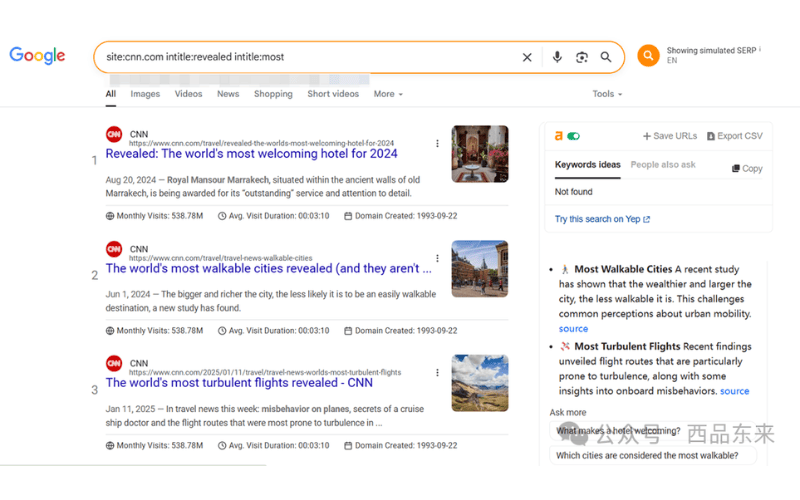
We expanded that query into a reusable template for research across publishers:
site:{publisher_domain} (intitle:{headline_keyword_1} OR intitle:{headline_keyword_2} OR intitle:{headline_keyword_3} OR ...) "{content_topic}" inurl:{url_channel} after:{start_date}
Replace {publisher_domain} with the publication you want to study. Add a topic, section path and starting date when they help narrow the results. Over time, the searches can become a practical radar for the subjects and formats that each publisher tends to use.
The method is primarily a way to guide topic selection: what evidence, structure and presentation will make a story genuinely useful to a publisher?
How Does This Support SEO?
The method can improve SEO when well-structured research earns relevant editorial links to a useful page.
Its main potential benefits are:
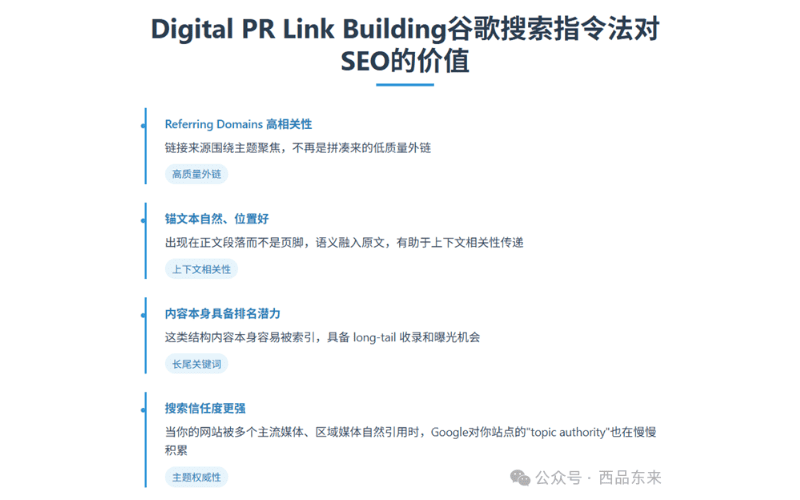
• relevant referring domains: links come from publishers covering the subject rather than unrelated placements; • natural anchors in context: citations sit in the body of an article where readers can understand their purpose; • ranking potential for the asset itself: a useful data page can answer long-tail queries and earn continuing visibility; • stronger topical signals: repeated citations from relevant national and regional publishers can help users and search systems recognise the site's subject expertise.
The objective is neither PR for its own sake nor links added only to influence rankings. The content structure creates a legitimate reason to cite the work, and those citations can support longer-term discovery.
When Is This Method a Good Fit?
Consider this approach when any of the following applies:


• you have original research or useful data, but strong work is rarely cited; • an international brand needs editorial links from national or regional publications; • you want a durable content asset rather than a campaign that disappears after launch; • content output is growing even as relevant links become harder to earn.
This method does not replace technical SEO, page quality or internal linking. It gives content teams a defensible route to earning signals that can support those foundations.
Three Actions That Make the Method Operational
The search query is only the beginning. Three operating habits turn the idea into a repeatable process.
1. Turn the Query Into a Monthly Content Radar
A common mistake is to run the search once and never maintain the findings.
Instead:
• review 10–15 priority publishers each month; • record recurring headline phrases, formats and data types; • maintain a table of structural preferences; • connect the findings to the team's content briefs and idea library.
With consistent use, that table becomes a working list of link-earning opportunities.
2. Prepare Charts, Tables and Downloadable Data
Whether research is cited often depends less on how impressive the number sounds than on whether the publisher can verify and use the supporting material.
Prepare each asset with:
• PNG charts in useful editorial dimensions, such as 1200×628, 1600×900 and 1080×1080; • an embeddable chart when appropriate; • a downloadable CSV; • methodology covering the date, sample, variables and scoring logic; • a concise explanation of every important data point.
Reducing the work required to verify and present the findings lowers the practical barrier to citation.
3. Make the Research Relevant to a Region or Industry
Many digital PR ideas fail because a publisher cannot see a clear connection with its own audience.
Whether the subject is global travel demand or growth in AI jobs, create usable local angles:
• break the results into country, city or industry views; • add a plain-language note to each row, such as 'Among ASEAN cities, Ho Chi Minh City ranks second for affordability'; • provide tables, quotable paragraphs and embeddable charts as a local package.
This local relevance is often why research earns links from regional publications.
Try the Research Method Today
Copy this query:
site:nytimes.com intitle:ranking OR intitle:data "housing"
Then review the results:
Which structures appear repeatedly? Which subjects could you investigate with your own evidence?
Are they rankings, trends or data analyses? Could your organisation produce a credible version?
You do not have to publish immediately, but you can start observing content opportunities more systematically today.
Final Thoughts
The central idea is simple:
Use structure to make content easier to cite; use legitimate citations to connect that content with an SEO growth system.
Digital PR is more than publicity.
Link building is more than acquiring a URL.
Content is more than distribution.
Make structured, evidence-led topics part of routine planning and, over time, you can build stronger search visibility, relevant links and more valuable content assets.