On this pageTable of contents+
- What Does SEO Mean?
- What Does SEO Include?
- What Is Search Engine Marketing?
- How Do You Run SEM?
- How Do You Analyse SEM?
- How Do You Launch Search Ads?
- How Do SEO and SEM Differ?
- 1. Cost Structure: Long-Term Investment vs Paid Distribution
- 2. Time to Impact: SEO Compounds, SEM Starts Faster
- 3. Traffic Quality Depends on Intent and Execution
- 4. Continuity: Earned Visibility vs Budget-Dependent Delivery
- 5. Control: Indirect Influence vs Direct Campaign Settings
- 6. Targeting and Content
- 7. Competition and Share of Results
- 8. Best-Fit Scenarios
- Should You Choose SEO or SEM?
- Selection Criteria
- When Should You Prioritise SEO?
- When Should You Prioritise SEM?
- Practical Ways to Improve SEO and SEM
- SEO Practices
- SEM Practices
- Important Details About SEO and SEM
- Can SEO and SEM Run Together?
- Does SEM Help SEO?
- Can SEM Lower Organic Rankings?
- What Is PPC?
- What Is Amazon SEM?
- Does SEO Cost Money?
- Build a Search Strategy With XPDL

When a brand needs more search traffic, SEO and paid search are two obvious options. The right choice depends on timing, economics and the job the channel must do. SEO is generally suited to building discoverability and reusable content over time. Paid search can start collecting demand and market feedback quickly, provided the unit economics support continuing spend. Neither channel is a shortcut around a weak proposition or a poor landing experience. Before comparing tactics, define the audience, conversion action, acceptable acquisition cost and time horizon. Those constraints turn a vague channel debate into an operating decision.
This guide compares the two approaches by cost, speed, control and use case so that you can choose a practical mix rather than treating them as opposing camps.
What Does SEO Mean?
SEO stands for search engine optimisation. Its purpose is to help search engines understand a website and show the most relevant pages when prospective customers search for related information, products or services.
SEO does not buy each visit. It improves content, site structure, technical access and authority signals to compete in organic results. Its value can compound, but rankings are never permanent and continued maintenance is still required.
In simple terms, SEO helps people discover a brand when they actively look for an answer. Many international businesses treat that discoverability as a long-term acquisition capability.
What Does SEO Include?
SEO is a coordinated system rather than one isolated action. Three broad areas work together: on-page content, external credibility and technical foundations. Measurement connects them. Search Console can show how pages appear for queries, analytics can show what visitors do next, and commercial data can show whether those journeys create qualified leads or sales. The useful question is not whether one metric increased, but whether the right pages became easier to discover and more effective for the intended audience.
1. On-page SEO covers the content and structure of the site: titles, intent alignment, readable sections, internal links, descriptive image alt text and duplicate-page control. The goal is clarity for both people and search systems.
2. Off-page SEO covers legitimate external references, recommendations and links. Quality, relevance and editorial context matter more than raw link volume.
3. Technical SEO helps search engines crawl, render and index the site. It includes performance, mobile usability, information architecture, URL consistency and broken-link management. Strong technical foundations enable good content; they do not replace it.
These areas reinforce one another. Content cannot perform fully when crawling is blocked, and technically perfect pages will still struggle if they do not satisfy the search task or earn trust.
What Is Search Engine Marketing?
Search engine marketing, or SEM, historically referred to both organic and paid search. In current marketing practice, however, SEM commonly means paid search advertising. This guide therefore uses SEM for paid campaigns and distinguishes it from SEO.
Paid search is usually delivered through a pay-per-click model:
- PPC advertising: advertisers bid in an auction for eligible queries, but placement is not determined by bid alone. Google Ads also considers ad and landing-page quality, expected impact and other Ad Rank signals.
- SEO: organic visibility is earned through useful content, technical access and credible signals rather than paying for every click.
Paid search combines speed with measurable controls, which makes it useful for launches, demand tests and campaigns that need near-term visibility.
How Do You Run SEM?
Create an account on a platform such as Google Ads or Microsoft Advertising, define conversion measurement, select queries and match types, and build ads and landing pages for a clear audience and offer. Set budgets and bidding around business value, then monitor search terms, exclusions, creative and conversion quality rather than optimising for clicks alone.
How Do You Analyse SEM?
Core measures include click-through rate, conversion rate, cost per click, cost per acquisition and return on ad spend. Segment results by query, match type, device, location, audience and landing page. Attribution limits and profit margins should be part of the analysis before budgets are increased.
How Do You Launch Search Ads?
Start with tightly related query groups, a defined audience and an explicit conversion action. Choose a budget and bidding approach that matches the amount and quality of available data. Write specific ads, connect them to relevant landing pages and review search-term reports regularly. Add negative keywords and revise offers, copy and bids as the evidence develops.
How Do SEO and SEM Differ?
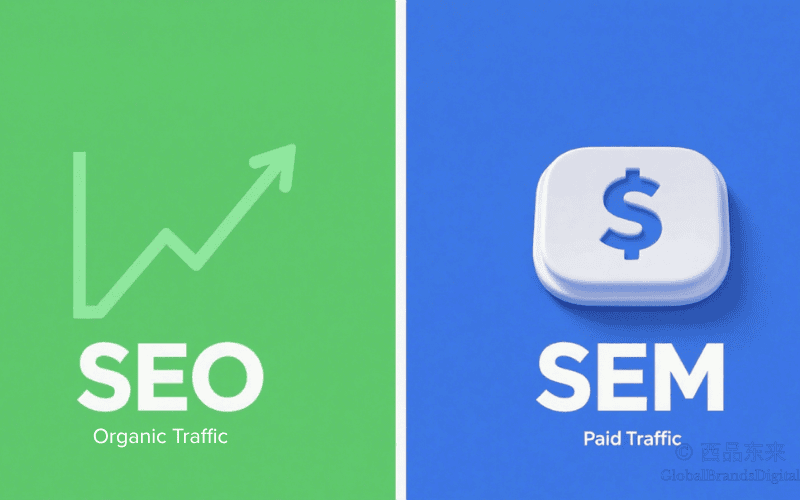
Both channels can capture search demand, but they allocate cost, time and control differently. Those differences affect traffic quality and long-term value. They also create different learning cycles. Paid campaigns can test a message or query set quickly, whereas organic performance reflects a slower interaction among content usefulness, site quality, competition and search-system changes. A fair comparison therefore uses a suitable observation window and counts the full cost of production, media, management and maintenance.
1. Cost Structure: Long-Term Investment vs Paid Distribution
- SEO: costs are concentrated in research, content, technical work, site experience and legitimate authority building. There is no platform charge for each organic click, but the work and maintenance are not free.
- SEM: costs include media spend and campaign management. Each eligible click or outcome consumes budget, so traffic normally declines when delivery stops. Spend is adjustable, but profitable scale depends on conversion economics.
2. Time to Impact: SEO Compounds, SEM Starts Faster
- SEO: new sites often need months to build reliable visibility. Timing varies with competition, site history, implementation quality and the search task.
- SEM: approved campaigns can begin receiving impressions and clicks quickly. That speed is valuable for launches and tests, although learning and profitable optimisation still take time.
3. Traffic Quality Depends on Intent and Execution
- SEO: organic visits can be highly qualified when the page matches a specific query. Organic placement alone does not guarantee intent or conversion.
- SEM: paid search can also capture strong intent. Traffic quality depends on keyword selection, match types, targeting, ad promises and landing-page relevance; whether the click was paid does not decide its quality.
4. Continuity: Earned Visibility vs Budget-Dependent Delivery
- SEO: established pages may continue attracting visits, but rankings can change because of competitors, content decay, technical issues and ranking-system updates.
- SEM: traffic normally stops when the campaign or budget stops. Continued delivery requires continued spend and healthy campaign economics.
5. Control: Indirect Influence vs Direct Campaign Settings
- SEO: teams can improve pages and signals but cannot control organic rankings. Results depend on search systems and competing pages.
- SEM: teams can directly control budgets, schedules, geography, queries, audiences and creative within platform rules. Auctions and user response still determine actual delivery and performance.
6. Targeting and Content
- SEO: keyword research and content design match pages to recurring search intent. The asset must remain useful enough to deserve discovery.
- SEM: paid platforms support location, device, audience and query controls. Ads and landing pages can be adapted rapidly for a specific offer or test.
7. Competition and Share of Results
- SEO: competition is cumulative. Strong pages, sites and brands usually require sustained work to displace, particularly for valuable queries.
- SEM: auctions respond quickly to competition. Bid matters, but Ad Rank, creative relevance and landing-page experience also influence eligibility and position. Higher spend alone does not guarantee profitable share.
8. Best-Fit Scenarios
- SEO: suitable for organisations that can invest in durable content, product discovery and brand visibility over time.
- SEM: suitable for time-sensitive offers, demand validation, new-market tests and campaigns that need measurable near-term distribution.
Should You Choose SEO or SEM?
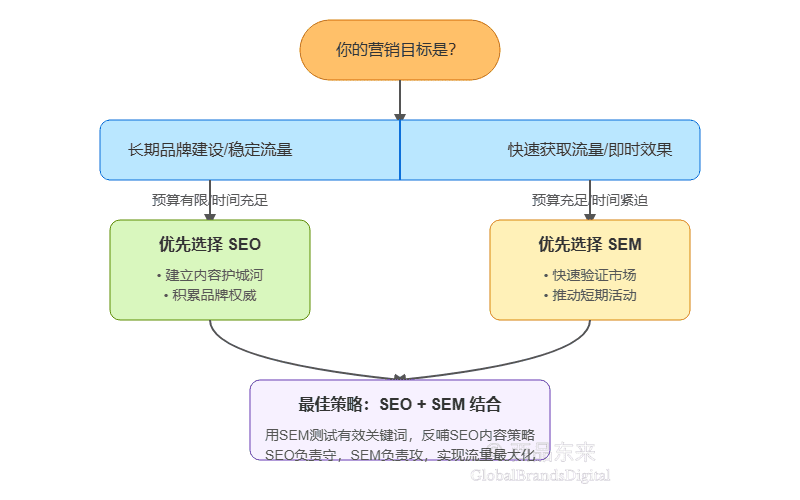
Start with the commercial objective. SEO and paid search both reach people through search, but they differ in speed, cost model and controllability. Many businesses need a deliberate mix rather than a single winner. Separate demand capture from demand creation as well: search works best when people already express a need, whereas a new category may also require education through other channels. Then map each query group to an appropriate page, conversion action and measurement plan so that channel performance is judged against the same business outcome.
Selection Criteria
Answer four questions:
- What is the objective? Choose SEO for durable discovery and reusable assets; choose SEM when rapid distribution or a controlled test is the immediate need.
- How is the budget structured? SEM requires continuing media spend. SEO requires continuing investment in people, content and the site, even though each organic click has no platform fee.
- How competitive is the result set? Lower-competition opportunities may be accessible organically, whereas paid search can provide immediate coverage in difficult markets if the economics work.
- How quickly is feedback required? Paid campaigns can provide fast query and conversion data. SEO usually needs a longer observation period.
When Should You Prioritise SEO?
SEO is a strong starting point when the business can wait for results and wants durable visibility. It is especially relevant when:
- The business can fund consistent work but wants to reduce long-term dependence on paid clicks.
- The market offers realistic opportunities that useful content and technical improvements can address.
- The brand needs to develop recognition and trust across a longer decision journey.
Choosing SEO means investing in future discoverability and accepting uncertainty and a slower feedback cycle.
When Should You Prioritise SEM?
SEM is a stronger starting point when speed and controlled testing matter. It is especially useful when:
- A launch, promotion or seasonal window needs immediate visibility.
- The team wants fast evidence about queries, offers or creative before making a larger commitment.
- The business has enough budget and margin to manage campaigns and optimise them with live performance data.
Choosing SEM means prioritising near-term distribution and measurement, with traffic tied to continuing delivery.
Practical Ways to Improve SEO and SEM
The two channels require different operating details. The following practices provide a useful starting point.
SEO Practices
1. Use data to improve content: combine Search Console and analytics to diagnose query intent, declining pages and weak conversion paths. Do not treat bounce rate alone as a quality verdict.
2. Earn differentiated links: create useful assets and pursue relevant editorial coverage. Avoid bulk placements, link schemes and unrelated forum drops.
3. Maintain the system: update content when facts change, monitor rankings and indexing, and address technical regressions before they spread.
SEM Practices
1. Bid around value: test long-tail and lower-competition queries, but judge them by qualified conversions and contribution margin rather than cheap clicks.
2. Improve ads and assets: make the promise specific and use relevant sitelinks, callouts and other eligible assets to give users useful choices.
3. Monitor and adjust: review search terms, click-through rate, conversions and acquisition cost. Refine queries, exclusions, creative, landing pages and bids when the data supports a change.
Important Details About SEO and SEM
Can SEO and SEM Run Together?
Yes. Paid search can provide near-term coverage and fast learning as SEO builds reusable assets. Shared query, creative and landing-page evidence can improve decisions across both channels.
Does SEM Help SEO?
Paid ads do not buy organic rankings. Campaign data can still reveal high-value queries, offers and landing-page weaknesses that inform SEO work.
Can SEM Lower Organic Rankings?
No direct ranking mechanism penalises a site for running search ads. SEO and ad auctions are separate systems. Evaluate any traffic change with evidence rather than assuming paid activity caused it.
What Is PPC?
Pay per click is an advertising model in which the advertiser pays when a user clicks. Search platforms such as Google Ads and Microsoft Advertising use auctions to determine eligibility and placement. PPC can generate traffic quickly, but it requires budget, measurement and ongoing optimisation.
What Is Amazon SEM?
Amazon search marketing uses formats such as Sponsored Products, Sponsored Brands and Sponsored Display to increase product visibility on Amazon. Sellers manage queries or audiences, bids, product detail pages and creative to improve qualified clicks and sales.
Does SEO Cost Money?
Organic clicks do not carry a search-platform fee, but SEO requires research, content, design, development, measurement and maintenance. 'Free traffic' is therefore a misleading description of the investment.
Build a Search Strategy With XPDL
Understanding the difference is only the first step. The right mix depends on the market, margins, budget, timeline and quality of the destination experience.
Whether the goal is durable organic discovery or a rapid market test, SEO and SEM can each contribute. XPDL helps teams diagnose the opportunity, design the channel mix and connect short-term learning with long-term search assets.