
On this pageTable of contents+
- 1. Shopify SEO: Built-In Strengths and Structural Limits
- Benefits: Shopify's Built-In SEO Foundations
- Limits: Where Shopify Constrains SEO
- 2. Technical Optimisation in Shopify Admin and Themes
- 1. Complete the Essential Store Settings
- 2. Configure Page-Level SEO for Products, Collections and Articles
- 3. Make SEO Adjustments at Theme Level
- 3. Keyword Strategy and Page Mapping
- 1. Separate Informational, Navigational and Transactional Intent
- 2. Validate Keywords With Tools and Live Results
- 3. Assign Keywords to the Right Page Type
- 4. Place Terms Where They Help People Understand the Page
- 5. Build a Clear Site Hierarchy
- 4. Content and Links: Building Durable Shopify Authority
- 1. Create Content People Can Use
- 2. Earn Relevant External References
- 5. International and Multilingual SEO With Shopify Markets
- 1. Understand Shopify Markets URL Options
- 2. Verify Hreflang Instead of Assuming It Works
- 3. Select Translation Apps for Editorial Control
- 4. Localise Metadata, Currency and Policies
- 5. Prevent Duplicate and Low-Value Variants
- 6. Using Shopify Apps Without Creating New SEO Problems
- 1. Metadata Automation
- 2. Structured Data
- 3. Image Compression and Optimisation
- 4. Broken-Link Monitoring and Redirects
- 5. AI-Assisted Content
- 7. Measurement and Continuous Improvement
- 1. Build a Three-Source Measurement System
- 2. Monitor a Balanced KPI Set
- 3. Diagnose Problems Before Applying a Tactic
- 4. Maintain a Data-to-Action Cycle

Many teams transfer a familiar SEO checklist to Shopify and then wonder why the store does not perform as expected. Shopify has its own routing, theme and market-management rules. It handles several technical foundations automatically, whereas other parts remain constrained by the platform.
This guide is for operators who want organic search to support a Shopify store rather than become a disconnected publishing exercise.
It explains which SEO foundations Shopify manages, where the structural limits are, and how to work with keywords, content, international markets, apps and measurement.
The objective is practical: use the editable parts of the platform well, protect crawlability and turn qualified search visits into useful commercial journeys.
1. Shopify SEO: Built-In Strengths and Structural Limits
Shopify is a managed commerce platform. That reduces the amount of infrastructure a merchant must maintain, but it also means that some URL and rendering decisions are controlled by the platform.
Good Shopify SEO starts with an accurate model of those boundaries. Custom code should solve a real problem rather than recreate features that the platform already provides.
Features and admin labels change over time, so verify each instruction against the store's current theme, Markets configuration and Shopify documentation.
Benefits: Shopify's Built-In SEO Foundations
Shopify supplies several useful defaults for crawlable storefronts. These defaults create a baseline, not a complete SEO strategy.
1. Core technical files and tags
The platform generates a sitemap, uses canonical tags on standard resources and supports redirects when store URLs change.
A default robots file is also provided. Advanced stores can extend it through Shopify's supported theme mechanism, but a careless rule can block products, collections or assets.
- sitemap.xml lists standard products, collections, pages and blog content.
- Canonical tags help consolidate duplicate URL variants.
- URL redirects preserve user journeys when a handle changes.
- HTTPS is provided for connected storefront domains.
2. Image delivery and performance
Shopify's CDN can resize images and serve efficient formats when the browser and theme support them. The merchant still controls source quality, dimensions, alt text and whether the page loads too many large assets.
Use descriptive filenames where practical, but write alt text for the image's purpose and accessibility. Do not turn alt text into a keyword list.
3. Languages and international markets
Shopify Markets and compatible translation features can publish language or market variants on domains, subdomains or subfolders.
Shopify normally outputs hreflang for correctly published market and language URLs. Verify that every version is live, indexable and reciprocally referenced; do not assume a plugin has configured the system correctly.
/may serve the default English market./zh-cncan identify a Simplified Chinese subfolder./frcan identify a French subfolder.
4. A clear, editable theme hierarchy
Online Store 2.0 themes organise presentation through layout, template, section and block layers. This makes many content decisions editable without rebuilding the storefront.
- Layouts define site-wide wrappers and shared assets.
- Templates define the structure of products, collections, pages and articles.
- Sections provide reusable page modules.
- Blocks provide smaller text, image, product and action components.
Use that hierarchy to keep headings, content order and internal links consistent across a page type.
Limits: Where Shopify Constrains SEO
1. Fixed URL prefixes
Shopify reserves prefixes such as /collections/, /products/ and /blogs/. Standard storefronts cannot remove those directories completely.
Use short, readable handles and stable naming. A clean collection or product name matters more than forcing every possible keyword into the path.
2. Tag and filter URLs need governance
Tags help users filter products, but thin combinations and faceted URLs can create many near-duplicate states. They should not automatically become landing pages for every keyword variation.
Choose a canonical collection page for each important commercial intent. Control internal links and indexability based on whether a filtered page offers unique, durable value.
3. The platform is managed, not fully open
Merchants do not control Shopify's infrastructure in the same way they control a self-hosted application. Most gains therefore come from theme quality, content, navigation, media, apps and disciplined data.
Custom Liquid and apps should be reviewed for performance and duplication. More code is not automatically more control.
4. Localisation still requires editorial work
Publishing another language does not guarantee that the title, description, product terms, sizing, policies and calls to action fit that market.
Translate the meaning, then localise terminology, search demand and commercial details. Machine translation can assist a first pass, but key pages require human review.
2. Technical Optimisation in Shopify Admin and Themes
Technical SEO on Shopify begins with configuration that keeps one preferred domain, measurable journeys and crawlable pages.
Make changes in a duplicate theme first, document app dependencies and test structured data after every major theme release.
1. Complete the Essential Store Settings
Set the primary domain
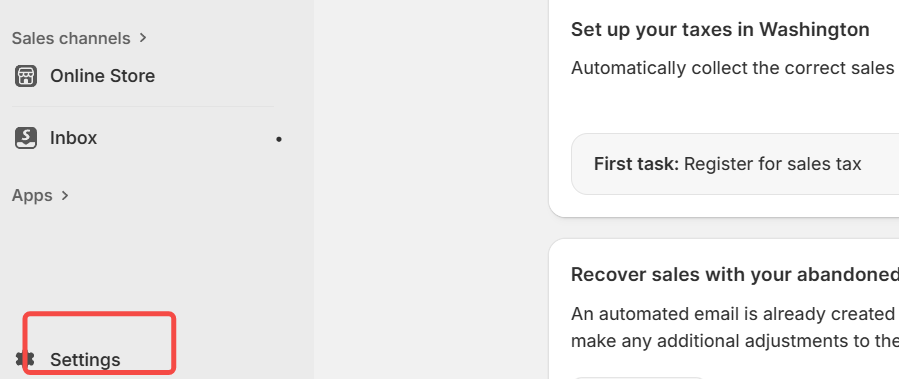
A store may be reachable through its myshopify.com address and one or more connected domains. Select the customer-facing primary domain and keep redirects enabled for the alternatives.
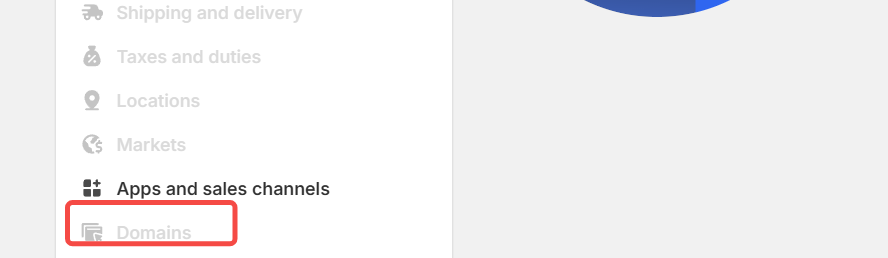
Confirm that HTTP, HTTPS, apex and www variants resolve consistently. The canonical in rendered HTML should agree with the preferred public URL.
Connect search and analytics tools
Use Search Console to inspect crawling, indexing, queries and pages. Use GA4 or another analytics system to examine journeys and conversions. Shopify reports add order and product context.
- Verify the correct domain property in Search Console.
- Submit the XML sitemap and monitor processing errors.
- Configure ecommerce events and test them before trusting reports.
- Document consent settings and regional privacy requirements.
Confirm HTTPS
Shopify provisions certificates for supported connected domains. Check that the certificate is active and that themes and apps do not request insecure assets.
2. Configure Page-Level SEO for Products, Collections and Articles
Write titles and descriptions for the search task
Use the search listing preview as an editing aid. A concise title and useful description are more important than a rigid character formula because result presentation varies by device and query.
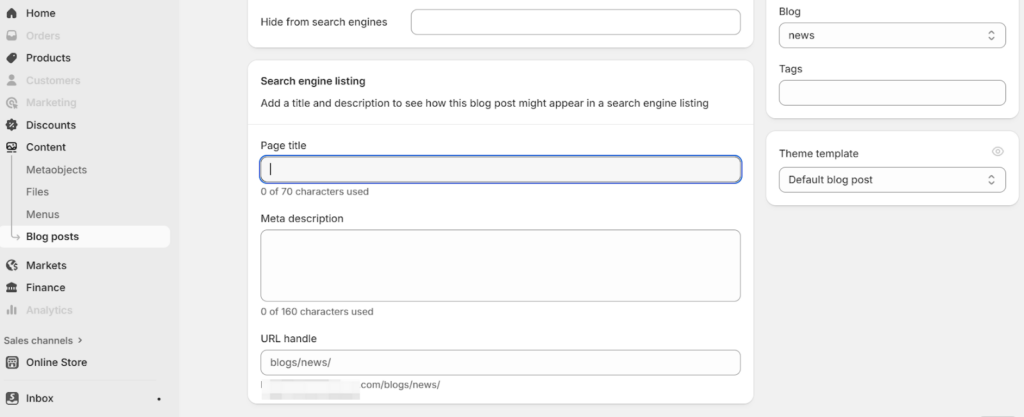
- Put the page's main subject in the title naturally.
- Explain the offer or answer instead of repeating the title.
- Keep the handle readable and avoid unnecessary changes after launch.
- Review how Google actually rewrites the snippet for important queries.
Improve product and collection descriptions
Supplier copy rarely answers every buyer question and can be duplicated across many stores. Write original information about fit, materials, compatibility, care, shipping and selection.
Collections need enough context to explain the category without pushing products far below the fold. Product pages need evidence that supports a decision.
Optimise images
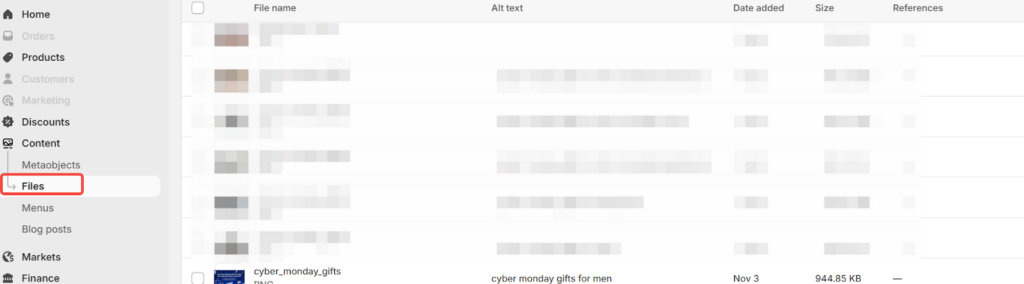
Use sharp source assets, suitable dimensions and descriptive alt text. Decorative images should use empty alt attributes, whereas informative images should describe the information a visitor would otherwise miss.
Test mobile loading after adding galleries, review widgets or video. CDN delivery cannot compensate for an overloaded template.
3. Make SEO Adjustments at Theme Level
Layout: shared site framework
Layouts usually contain shared navigation, footer content and global scripts. Keep menus concise, expose important categories and avoid site-wide links that exist only to repeat keywords.
Template: page-type control
Each template should render one clear H1, a logical content order and the structured data appropriate to the visible page.
- Do not create duplicate H1 elements in hidden mobile and desktop components.
- Keep product facts consistent between visible content and Product schema.
- Allow collection descriptions where they help users choose.
- Test template changes across representative products and markets.
Sections and blocks: reusable content
Sections and blocks can add comparison tables, buying guidance, related products and internal links. Reuse the component, not identical boilerplate, when the information should vary by category.
3. Keyword Strategy and Page Mapping
Keywords identify a search task; they are not decorations to add after the page has been designed.
A Shopify keyword map should decide which intent belongs to the homepage, a collection, a product, an article or no new page at all.
1. Separate Informational, Navigational and Transactional Intent
The same product category can support research, brand and purchase tasks. Match each task to the page type capable of satisfying it.
| Intent | Example query | User's task | Best-fit page |
|---|---|---|---|
| Informational | How to choose running shoes | Learn and compare | Guide or blog article |
| Navigational | Nike running shoes official site | Find a particular brand | Brand or collection page |
| Transactional | Lightweight women's running shoes | Evaluate or buy a product | Product or collection page |
Commerce sites normally need strong transactional collection and product pages, supported by genuinely useful informational content.
2. Validate Keywords With Tools and Live Results
Platforms such as Ahrefs, Semrush, Google Ads Keyword Planner and other research tools can estimate demand and competition. Their numbers are inputs, not facts about your revenue opportunity.
- Prioritise relevance to the product and market.
- Compare tool difficulty with the pages that actually rank.
- Use long-tail queries when they reveal a specific need.
- Inspect the result type to determine the expected page format.
- Check terminology independently in every language and country.
A low-volume term may be commercially important, whereas a high-volume term may be ambiguous or unrealistic.
3. Assign Keywords to the Right Page Type
Homepage: brand and core proposition
Use the homepage to explain the brand, primary category and reason to choose the store. Do not force it to rank for every product variation.
Collection pages: category demand
Collections often fit broad transactional searches such as women's running shoes or waterproof hiking boots. Add filters for users, but control which filter states become crawlable landing pages.
Product pages: specific long-tail demand
Product pages should combine the item, brand and differentiating attributes. Include dimensions, materials, compatibility, care, delivery and comparison information when relevant.
Blog articles: informational demand
Use guides, comparisons and use-case articles to answer questions that precede a purchase. Link readers to relevant collections or products without turning the article into a thin advertisement.
- Buying guide: how to choose running shoes that fit.
- Comparison: mesh running shoes versus leather running shoes.
- Use case: shoes for running in hot weather.
- Care guide: how to clean and store the product.
4. Place Terms Where They Help People Understand the Page
There is no universal keyword-density target. Use the language naturally in the places that define the page.
| Location | Practical guidance |
|---|---|
| Title | State the main subject clearly and distinguish the page. |
| Meta description | Summarise the useful offer and next step without stuffing. |
| H1 | Give the page one visible, descriptive primary heading. |
| H2 and H3 headings | Organise subtopics in language readers understand. |
| Body copy | Answer the task completely; repeat terminology only when clarity requires it. |
| Image alt text | Describe informative images accurately for accessibility. |
| Internal-link text | Explain what the destination offers. |
Give each important intent a primary page and use supporting pages to add depth rather than compete with it.
5. Build a Clear Site Hierarchy
A shallow, predictable hierarchy helps customers browse and helps crawlers discover important resources.
- Connect the homepage to priority collections.
- Connect collections to their products and buying guides.
- Connect articles back to the most relevant commercial destination.
- Keep priority pages within a short, logical navigation path.
- Repair broken links and redirect retired products to the closest useful alternative only when one exists.
Do not redirect every removed product to the homepage. An honest 404 or 410 can be more useful when there is no replacement.
4. Content and Links: Building Durable Shopify Authority
Once the technical foundation and page map are sound, useful content and credible references can broaden discovery.
Neither content volume nor link volume is a reliable goal on its own. The work must help a defined audience make progress.
1. Create Content People Can Use
Solve a problem instead of filling a word count
Explain the product decision, answer the question and support claims with evidence. Search systems do not need inflated prose, and customers do not want it.
- Answer the main question early.
- Include original product knowledge and first-hand evidence.
- Use headings, lists, images and tables when they improve comprehension.
- Give the reader a relevant next step.
Use the right content format
| Content type | Purpose | Example |
|---|---|---|
| Product guide or tutorial | Solve a use or selection problem | How to choose running shoes that fit |
| Buying comparison | Help a customer decide | Mesh running shoes vs leather running shoes |
| Brand story or design explanation | Build understanding and trust | How our shoes move from factory to customer |
| Industry trend or list | Address recurring research demand | Running-shoe trends for 2026 |
Dates should reflect the actual evidence period. Updating a year in the headline without updating the research misleads readers.
Connect articles with products
A guide about lightweight running shoes can explain the selection criteria and then present two or three relevant products. The link should help the reader act on the advice.
Also link commercial pages back to useful care, sizing or comparison guidance where it reduces uncertainty.
Maintain the library
Review content periodically and update facts, availability, screenshots and policies when they change.
- Merge pages that serve the same intent.
- Retire thin or obsolete material responsibly.
- Update product and market facts.
- Add internal links where a genuine relationship exists.
2. Earn Relevant External References
Links can help search systems discover and evaluate pages, but schemes designed primarily to manipulate ranking create risk. Editorial relevance matters more than a numerical target.
Active outreach
- Editorial contributions: provide useful expertise to relevant publications; disclose commercial relationships and qualify links when required.
- Digital PR: give journalists a verifiable story, data set or product development rather than distributing duplicate press releases.
- Creator partnerships: choose reviewers for audience fit and mark paid or gifted relationships transparently.
- Industry relationships: collaborate where there is a real shared resource; avoid reciprocal-link exchanges at scale.
A hundred unrelated placements do not outweigh one useful citation from a trusted specialist source.
Passive link earning
- Publish original research, tested guides, templates or tools.
- Create clear charts and comparison tables that others can cite.
- Monitor unlinked brand mentions and request attribution politely when it benefits the reader.
- Keep the original source page available and easy to reference.
Pace and principles
Natural acquisition does not follow a fixed weekly quota. Monitor relevance, editorial context, destination quality and patterns that could indicate a scheme.
- Prefer quality and relevance to volume.
- Use diverse, legitimate sources.
- Connect earned authority to useful internal paths.
- Measure referral value and assisted conversions as well as link counts.
5. International and Multilingual SEO With Shopify Markets
International expansion requires more than currency conversion. The store must publish a stable URL for each intended audience and localise the information needed to buy confidently.
Before opening another market, confirm inventory, delivery, returns, tax, support and legal obligations as well as search demand.
1. Understand Shopify Markets URL Options
Depending on the plan and configuration, markets can use separate domains, subdomains or subfolders such as example.com/en-gb and example.com/fr.
- Keep one permanent URL for each published language-market combination.
- Do not use automatic IP redirection in a way that prevents crawlers or users from reaching alternatives.
- Link visibly between available markets and languages.
- Use local currency and policy information consistently.
Search engines treat the variants as separate URLs. Each one needs accessible content, a self-canonical and accurate language signals.
2. Verify Hreflang Instead of Assuming It Works
A correct Shopify configuration can output hreflang automatically. Custom themes, apps and unpublished markets can still introduce missing or conflicting tags.
- Every alternate should return HTTP 200 and be indexable.
- Alternates should reference one another reciprocally.
- Language and region codes must use supported formats.
x-defaultcan identify a neutral selector or default page where appropriate.
Inspect rendered HTML and crawl a representative set of product, collection and article variants after changes.
3. Select Translation Apps for Editorial Control
The Chinese source compares Langify with Shopify's Translate & Adapt. App availability, pricing and capabilities can change, so validate them in the current App Store and test them on a duplicate theme.
| App | Source-listed capability | Best-fit use in the source |
|---|---|---|
| Langify | Translation management with language SEO controls | Teams that want manual control over each language version |
| Translate & Adapt | Shopify translation and market adaptation tools | Smaller teams deploying and then reviewing localised content |
Whichever tool is selected, confirm that titles, descriptions, handles, product options, media and policies can be reviewed by market.
4. Localise Metadata, Currency and Policies
Rewrite the title and description in the target language instead of translating them literally. Validate the phrases people use in that market.
- Show the intended currency and explain taxes or duties clearly.
- Localise delivery estimates and return terms.
- Use local measurements, sizing and product terminology.
- Keep visible content and structured data consistent.
A language version that cannot complete the promised transaction is not ready to index.
5. Prevent Duplicate and Low-Value Variants
Similar pages for different markets are not automatically a duplicate-content penalty. Problems arise when variants are empty, inaccessible, canonicalised incorrectly or created without a distinct audience.
- Use unique, stable URLs.
- Publish accurate reciprocal hreflang.
- Use self-canonicals for genuine alternates.
- Keep test and incomplete translations out of the index.
The old Search Console International Targeting report is no longer available. Use URL Inspection, rendered-source checks, indexing reports and a crawler to validate the implementation.
6. Using Shopify Apps Without Creating New SEO Problems
Apps can automate repetitive work, but each one adds code, data access and a maintenance dependency. Start with the problem, then decide whether an app is the safest solution.
The products below are source-listed examples rather than permanent endorsements. Check current reviews, permissions, support and storefront impact.
1. Metadata Automation
The source lists Smart SEO and SEO Manager for metadata templates and audits. Templates can help large catalogues, but generic output should not overwrite carefully written category pages.
- Optimise a representative set manually first.
- Define fallbacks for missing brand, type or attribute fields.
- Review duplicates and truncation before publishing at scale.
- Keep a record of generated changes.
2. Structured Data
The source lists JSON-LD for SEO as an app that can add product, review and FAQ markup. Before installing it, inspect what the theme and existing apps already produce.
Duplicate Product graphs or ratings that are not visible to users can invalidate the result. Structured data describes the page; it does not guarantee a rich result.
- Validate representative pages with Google's Rich Results Test.
- Check the final rendered HTML, not only an app preview.
- Keep price and availability aligned with the visible product.
- Remove obsolete markup when an app is uninstalled.
3. Image Compression and Optimisation
The source lists TinyIMG and Crush.pics for image workflows. Shopify already provides CDN transformations, so measure whether another app improves the actual theme.
- Preserve an adequate source resolution.
- Avoid compressing the same asset twice.
- Review automatically generated alt text.
- Measure LCP and layout stability on real product pages.
4. Broken-Link Monitoring and Redirects
The source lists Broken Link Manager for finding 404s and creating redirects. Automated matching should be reviewed because an irrelevant redirect can confuse both visitors and search engines.
- Redirect a retired product to a close replacement or parent collection when useful.
- Keep a 404 when no relevant destination exists.
- Update internal links instead of relying permanently on redirects.
- Review redirect chains after catalogue migrations.
5. AI-Assisted Content
The source lists Shopify Magic and Bloggle for drafting product and article copy. Generation speed does not remove the need for product accuracy, originality and editorial responsibility.
- Supply verified product facts and the intended audience.
- Review claims, measurements, compatibility and safety information.
- Add first-hand evidence, examples and brand-specific guidance.
- Reject repetitive copy created only to expand the index.
7. Measurement and Continuous Improvement
Shopify SEO is an operating cycle: observe, diagnose, change and verify. Reporting should connect search visibility with qualified journeys and orders.
Agree on definitions before comparing tools. Search Console clicks, analytics sessions and Shopify orders measure different parts of the journey.
1. Build a Three-Source Measurement System
Use search, behaviour and commerce data together.
| Source | Primary role | Decision supported |
|---|---|---|
| Google Search Console | Queries, clicks, impressions and indexing | Understand organic search visibility |
| Google Analytics 4 | Sessions, events and conversion journeys | Improve the on-site experience |
| Shopify reports | Orders, products, devices and sales attribution | Evaluate commercial outcomes |
- Search Console explains how people find eligible pages.
- Analytics explains what measured visitors do next.
- Shopify explains which journeys result in recorded commerce.
- None of the systems provides perfect attribution by itself.
2. Monitor a Balanced KPI Set
Review indicators monthly, but use a longer comparison window when demand is seasonal or data is sparse.
| Category | Indicator | Interpretation |
|---|---|---|
| Indexing | Indexed, excluded and discovered page counts | Check whether important URLs are eligible and unnecessary states are controlled. |
| Query performance | Impressions, clicks and average position | Identify demand and page-level changes in Search Console. |
| Traffic quality | Organic sessions and engaged-session measures | Assess whether landing pages attract the intended audience. |
| User behaviour | Product views, navigation and checkout events | Find friction in the commercial journey. |
| Conversion | Organic-assisted orders, revenue and margin | Estimate business contribution with attribution caveats. |
| External references | New relevant referring domains and referral visits | Evaluate authority and audience reach, not volume alone. |
Stable growth is useful, but an unchanged metric is not automatically healthy. Compare performance with demand, releases and commercial targets.
3. Diagnose Problems Before Applying a Tactic
Pages are not indexed
Use Page Indexing and URL Inspection in Search Console. Check crawl access, canonical selection, duplication, content value and internal discovery.
- Confirm the page returns HTTP 200.
- Confirm robots and meta directives allow indexing.
- Check the canonical and hreflang cluster.
- Improve thin content and internal links before requesting another crawl.
Impressions are high but clicks are weak
Segment by query and device. Rewrite a title or description only when the snippet does not represent the page or match the search task.
Numbers, prices and promises should be accurate and maintained. A higher click-through rate built on a misleading claim is not an improvement.
Visits do not convert
Check intent, load performance, availability, price presentation, trust information and the path to a relevant product. GA4's engagement measures are more useful than treating the old Universal Analytics bounce-rate definition as a universal verdict.
- Clarify the first-screen proposition.
- Reduce unnecessary scripts and layout shifts.
- Show delivery, returns and compatibility information early enough.
- Recommend genuinely related products or guides.
4. Maintain a Data-to-Action Cycle
A mature programme records the hypothesis, change date and expected signal before editing the store.
| Stage | Action |
|---|---|
| Data collection | Export and segment priority Search Console queries and landing pages. |
| Problem discovery | Flag meaningful ranking, click-through, indexing or conversion changes. |
| Implementation | Update the relevant title, content, media, links or template. |
| Verification | Review technical output immediately and performance after a suitable interval. |
| Iteration | Keep supported practices, reverse harmful changes and document the learning. |
One to two weeks may be enough for a technical verification, but it is often too short to judge organic business impact. Choose the review window according to crawl frequency, demand and sample size.
Shopify SEO succeeds through disciplined operations: understand the platform, use the editable areas carefully, protect a clear site structure and keep improving the customer journey.
If you want a structured plan, XPDL provides Shopify website development and SEO services for international stores.
Explore the SEO learning hub or speak with an SEO consultant about priorities, implementation and measurement.