
On this pageTable of contents+
- 1. Introduction to Maytronics
- 2. Technology Stack
- 1. Commerce Platform
- 2. Multilingual Deployment
- 3. Traffic Analysis
- 1. Organic Traffic Trend
- 2. Brand and Non-Brand Traffic Mix
- 3. Geographic Distribution of Traffic
- 4. Google Ads
- 5. Facebook Advertising
- 1. Campaign Timing
- 2. Campaign Content
- 3. Targeting Method
- 6. Social Media
- 1. Separate Content for Each Market
- 2. Visual Content Wins
- 3. The North American Channel Breaks the Journey
- 4. Influencers and Shorts Have Not Yet Found a Formula
- 7. On-Site Experience
- 1. Purchase Journeys Across Sites
- 2. Page Content Structure
- 3. Payment Methods
- 8. Email and Subscriptions
- 9. SEO Analysis
- 1. Crawling and Indexation
- 2. On-Page SEO
- 3. Content SEO
- 4. Technical SEO
- 10. Bonus Finding
- 11. Conclusion

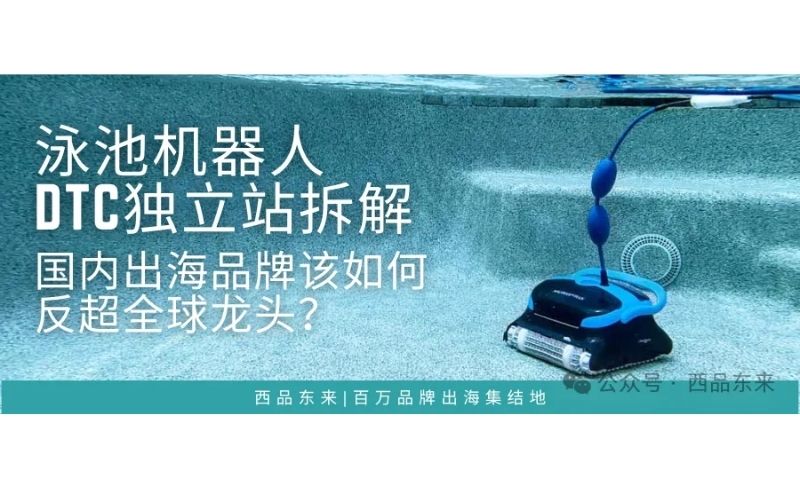
Robotic pool cleaners have become increasingly popular over the past two years. The leading brand has reached roughly 50% global market share and ranks first in several markets.
Is demand really that large?
Let us start with a set of figures.
The United States has more than 10.7 million pools, over 90% of which are residential. In Arizona, there is one household pool for roughly every 13 residents.
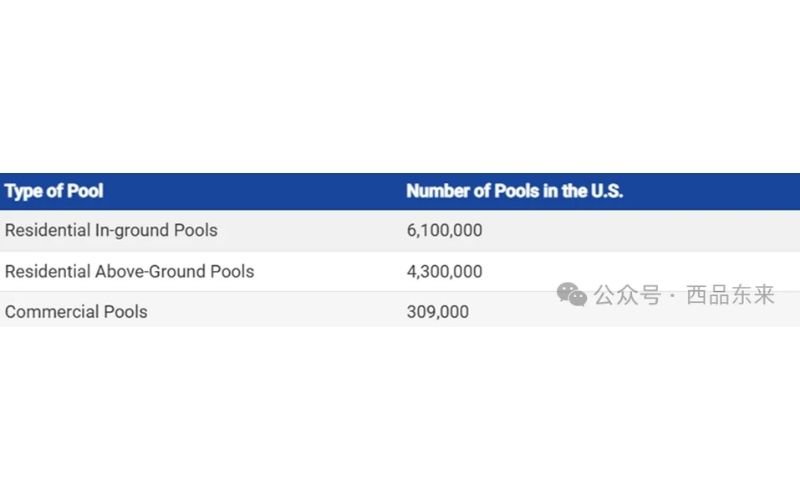
Number of swimming pools in the United States (source: RubyHome)
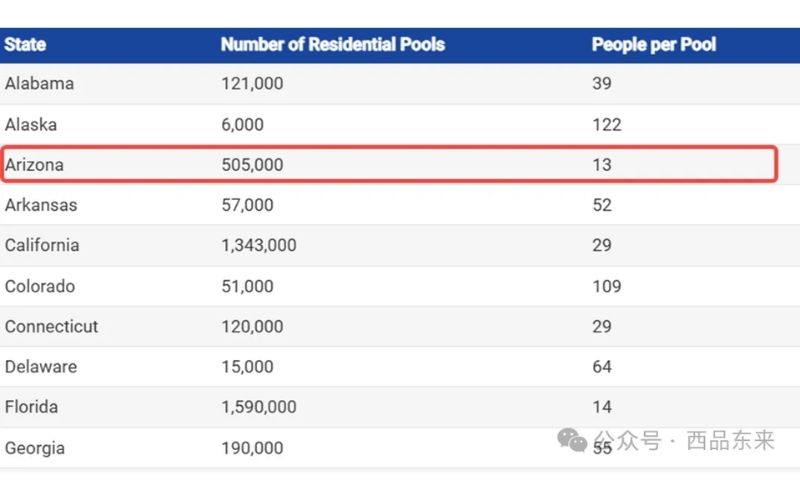
Number of swimming pools by US state (source: RubyHome)
What do these figures mean?
Pool ownership is not an experimental purchase. It involves a high order value, repeat spending and an ongoing need for maintenance.
The US market for pool cleaning and maintenance services alone is worth $7.2 billion a year.
Against that backdrop, automated pool-cleaning equipment has become a necessary upgrade for many households.
How should a brand approach this market? Can SEO provide a route in? Do Chinese brands expanding overseas have an opportunity to overtake the incumbent?
This article sets out our answer.
1. Introduction to Maytronics
- The leader in robotic pool cleaners, headquartered in Israel, launched its first pool-cleaning robot in 1983.
- It holds roughly 50% of the global market and ranks first in markets including the United States, France and Australia.
- Its sales channels combine independent websites, marketplaces and distributors. It has also increased direct online sales in recent years.
- Maytronics does more than sell robots: it serves the wider pool environment. The core Dolphin line ranges from several hundred dollars to almost $2,000 and includes residential, commercial and cordless models.
We will now examine the website in detail. Section 9, on SEO, is especially relevant to DTC brands looking for new approaches to international growth.
Let us begin.
2. Technology Stack
1. Commerce Platform
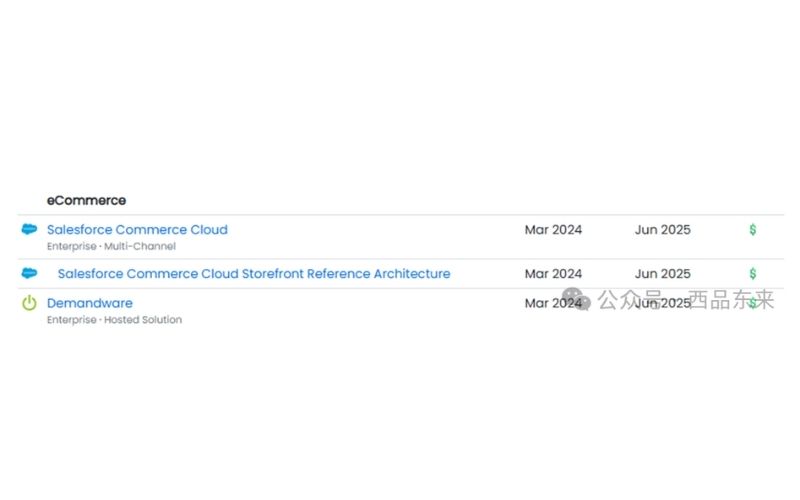
Maytronics uses Salesforce Commerce Cloud (SFCC), formerly known as Demandware.
Salesforce later acquired the platform, which is used by many international brands.
Its strengths include a stable back office and a capable product centre that can support complex order and inventory management.
That makes it sound like a reliable first choice for many brands building global sites.
For organic search, however, it is not as convenient.
Its SEO flexibility is limited.
Important settings such as URL structures, page templates and directory rules are often fixed within the platform's logic.
The site structure is also highly component-based.
It suits corporate sites with little content and infrequent updates; otherwise, the business becomes heavily dependent on developers.
Maytronics also uses SFRA, the Storefront Reference Architecture.
This is the official SFCC front-end framework. Pages are assembled from modules, and changes can be costly.
URL management, meta-tag control and structured-data injection are therefore not particularly easy.
Can it be done?
Yes.
But it requires a coordinated technical and operational system behind it.
We have worked with a number of brands using SFCC, and their teams have generally found it awkward for SEO.
If SEO is part of your future plan, choose SFCC carefully.
2. Multilingual Deployment
Maytronics uses a conventional path-based language structure, for example:
https://www.maytronics.com/en-us
https://www.maytronics.com/fr-fr
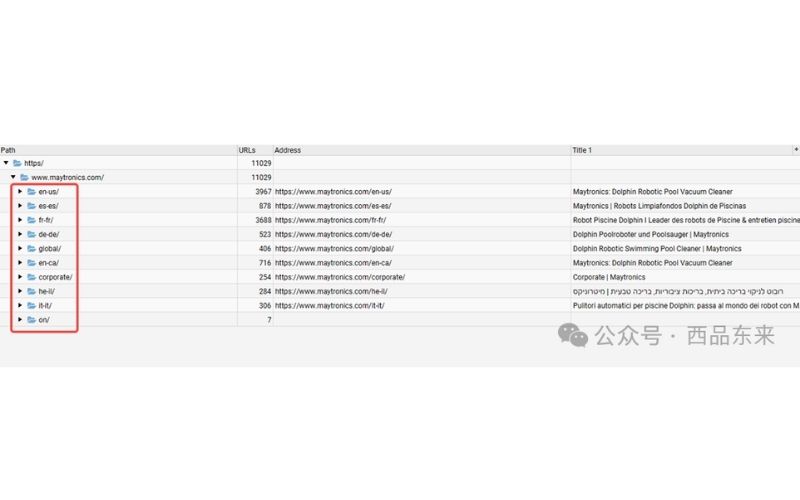
This common arrangement makes centralized management and access control relatively straightforward.
For SEO, it also makes hreflang annotations and sitemaps essential for telling Google that the language pages are equivalent versions.
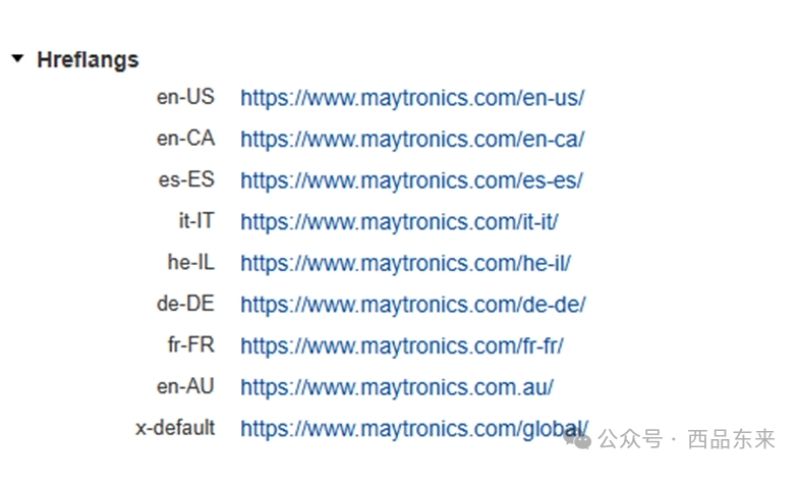
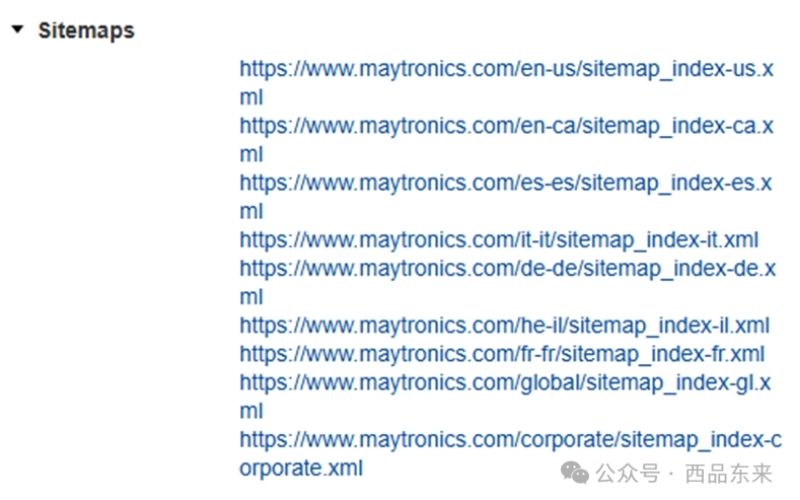
When we scanned the site, we found hreflang on the main domain, but coverage was only around 16%, with many pages missing the annotation.
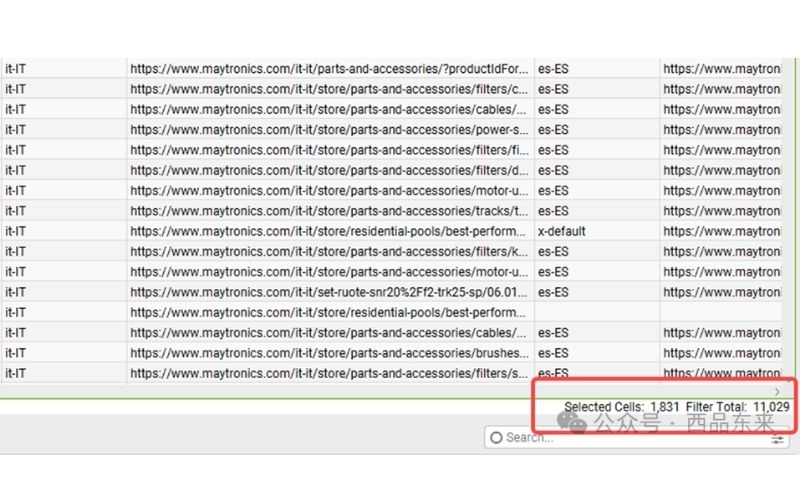
That percentage needs context.
Pages such as /store-locator/ are inherently specific to a market and may have no equivalent in another language, so they do not necessarily need hreflang.
After excluding those pages, the main product pages do use hreflang, but the reciprocal network remains limited.
Most pages reference only two or three languages rather than every corresponding version.
Without complete reciprocal links, Google may struggle to understand the relationship between language versions, and signals may not consolidate effectively across regional sites.
The company also operates a separate Australian domain:
https://www.maytronics.com.au
This site contains paths for:
/en-NZ/ (New Zealand)
/en-ZA/ (South Africa)
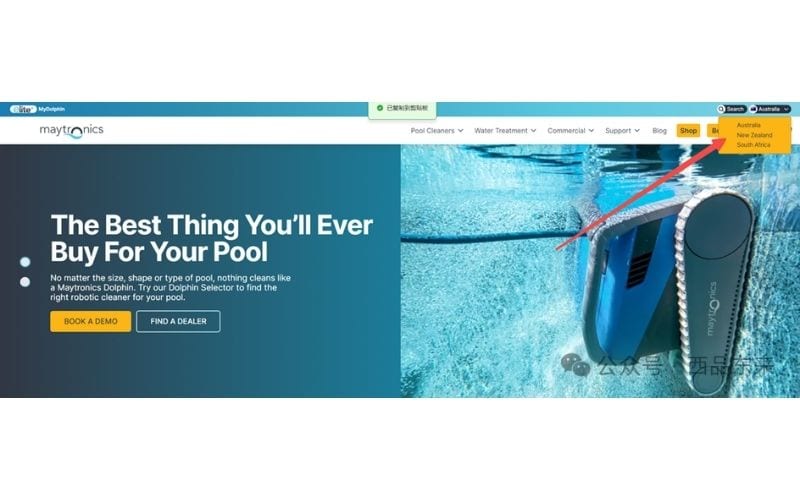
We did not find .com.au, en-NZ or en-ZA URLs in the hreflang annotations we reviewed. This suggests that these regional versions are not connected to the main site through language annotations.
Google may therefore treat them as entirely separate websites.
This problem is common on multilingual platform builds: the structure exists, but the annotations do not keep pace.
Brands pursuing regional growth through local search should define complete relationships among the primary language, secondary languages and x-default versions.
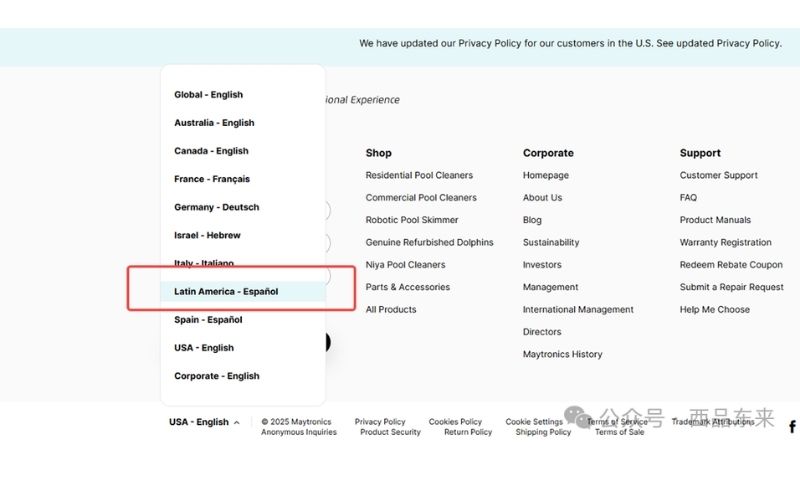
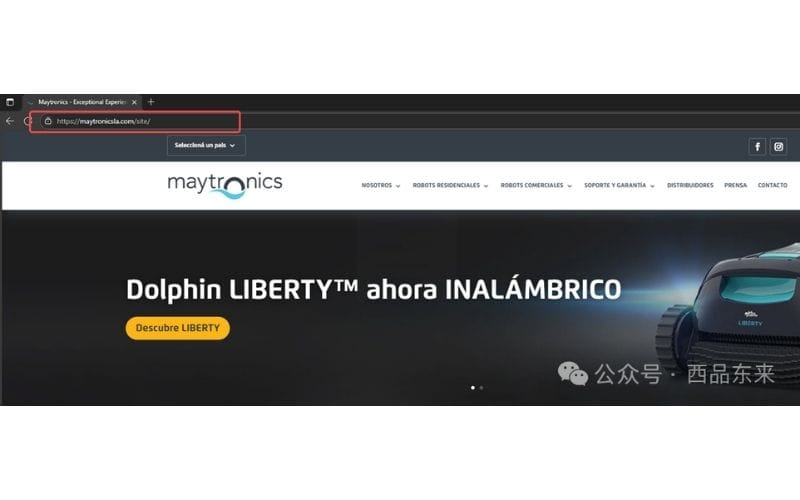
There is one more unusual case:
The Latin American site uses a separate, unconventional domain and an inconsistent path structure.
3. Traffic Analysis
At a headline level, the site's organic traffic has clearly grown.
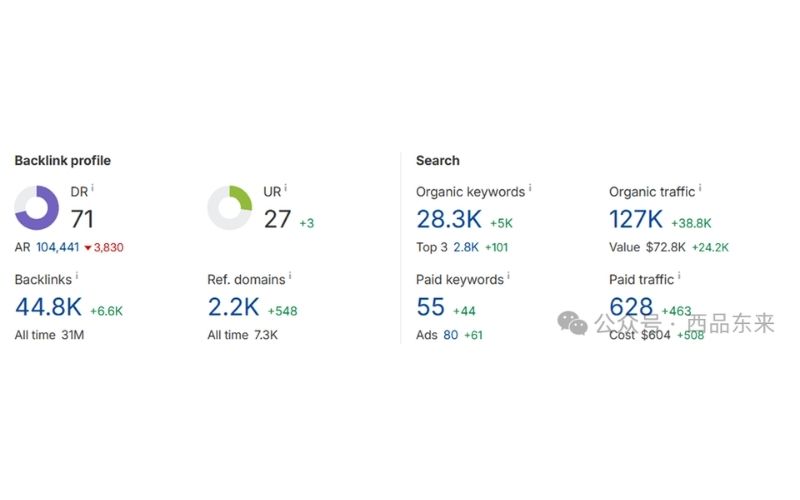
At a more detailed level, it still does not capture broad non-brand search intent in a comprehensive way.
We will examine several dimensions to understand where the traffic comes from and which issues deserve attention.
1. Organic Traffic Trend
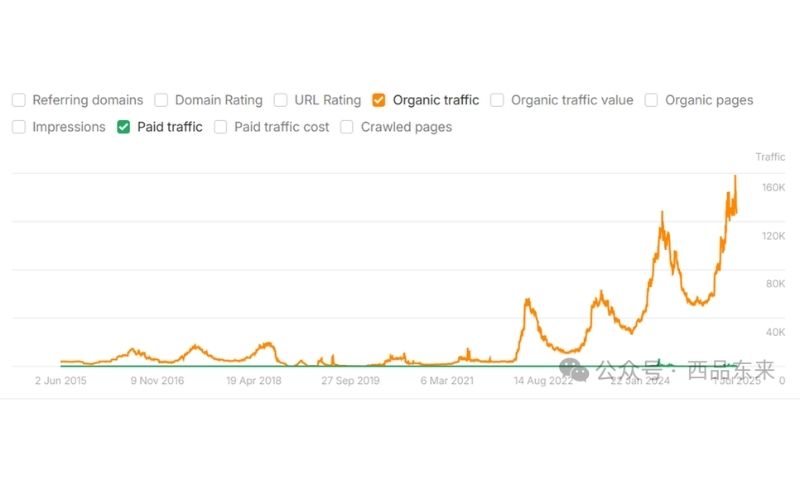
The chart shows a pronounced seasonal pattern: traffic begins to rise in Q2, peaks in Q3 and falls in Q4. This is typical for pool products.
Once seasonality is separated out, the underlying trend still moves upward. The baseline is becoming stronger and the peaks are getting higher.
That does not necessarily mean Maytronics executes SEO well, as we explain later.
The immediate question is whether the brand can lift the peaks and reduce the troughs.
It can, by using SEO to build a global footprint.
Pool seasons run in opposite directions across the Northern and Southern hemispheres.
A brand focused only on Europe and North America must wait for the following year when peak season ends. Coverage in Australia, Latin America and Southeast Asia can help offset that decline.
This is one natural advantage of SEO over paid media: organic visibility can exist globally and work throughout the year.
That matters especially for highly seasonal DTC categories.
2. Brand and Non-Brand Traffic Mix
Consider the traffic composition:
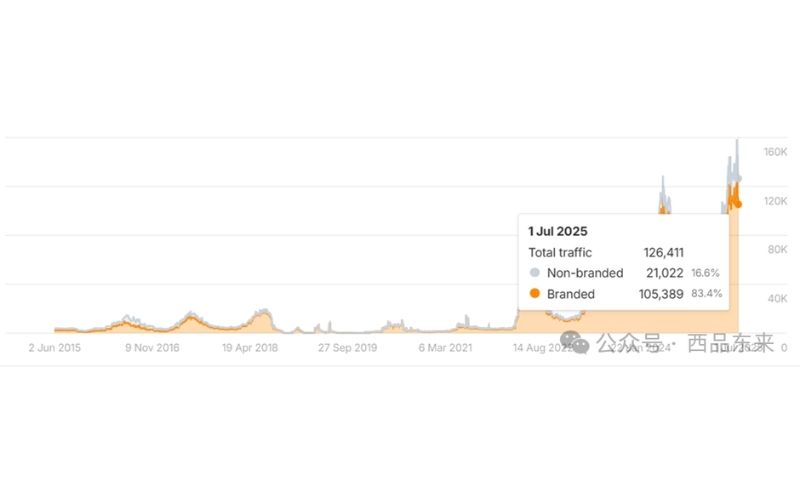
Brand terms generate 83% of organic traffic; non-brand terms account for around 16%.
This indicates weak SEO performance. Much of the traffic is driven by existing brand demand.
People search only after they already know the company.
To expand discovery through SEO, the brand needs broader topical coverage.
Generic terms such as 'pool' and 'swimming' have far more search demand than brand terms. Capturing relevant users from that demand would create a healthier traffic mix.
We estimate that the core global non-brand keyword cluster for robotic pool cleaners alone represents 185,000 searches, before other related clusters are included.
By not building topical coverage for upper- and mid-funnel users, Maytronics leaves room for newer competitors to catch up.
3. Geographic Distribution of Traffic
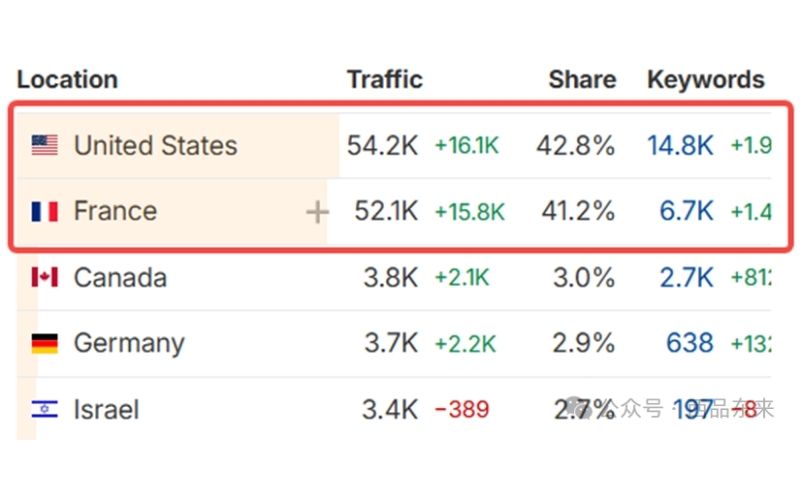
Traffic is concentrated in the United States and France, which together account for roughly 80%.
That is understandable because pool ownership and demand are high in these countries.
The other language sites are much weaker, and their remaining traffic is smaller still after brand terms are removed.
For SEO, non-English markets can offer relatively low competition and substantial opportunity. Brands should invest beyond their primary markets to capture additional demand.
4. Google Ads
The United States is the main paid market, followed by France.
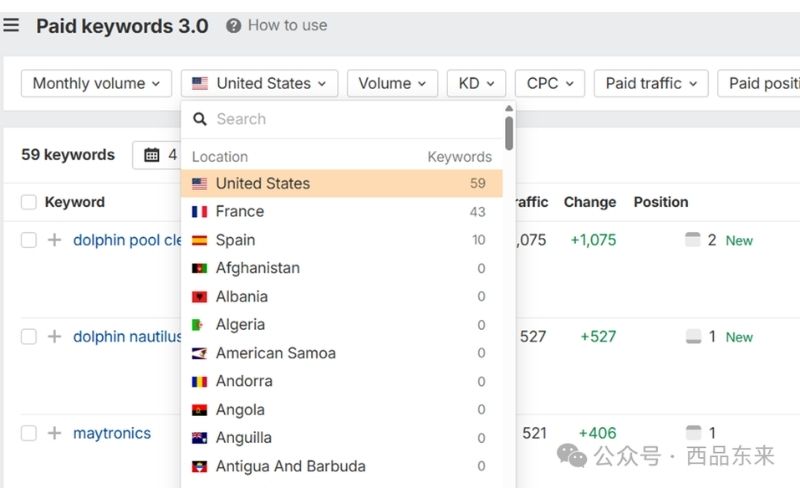
Maytronics US has a clear Google Ads strategy: it focuses on brand terms and barely targets generic searches.
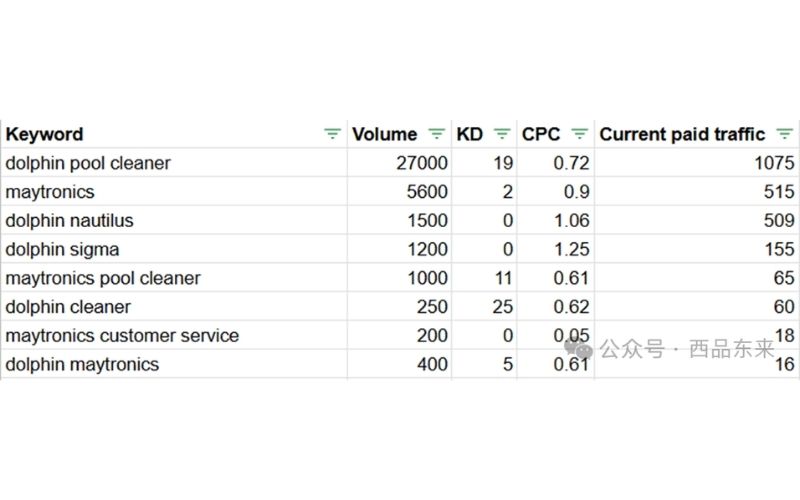
We reviewed 58 keyword groups. Of these, 86% were brand-related, with an average cost per click of about $0.79. Paid traffic centred on terms such as 'dolphin pool cleaner', 'maytronics' and 'dolphin nautilus'.
The strategy protects existing demand rather than pursuing incremental demand.
1) The account structure contains three main types of campaign:
• product sales for direct conversion; • promotions through rebate pages; • problem-solving through support queries.
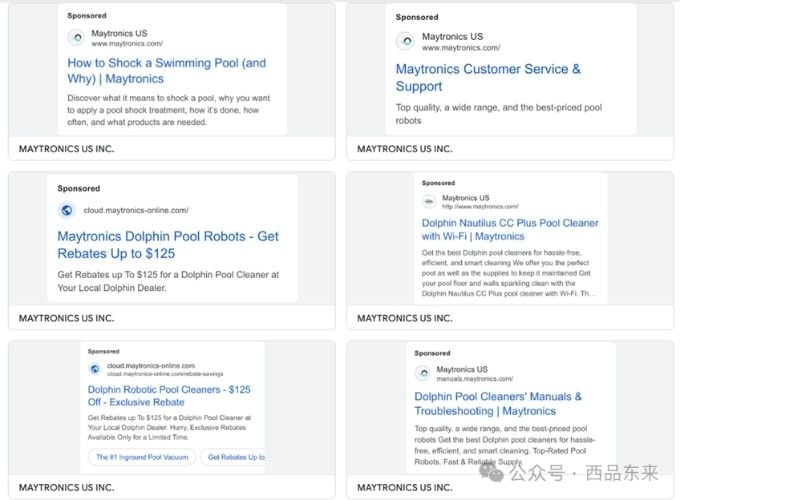
Rebates receive particular emphasis. Many ads lead to a separate promotional domain at cloud.maytronics-online.com, usually offering a $125 discount subject to regional restrictions.
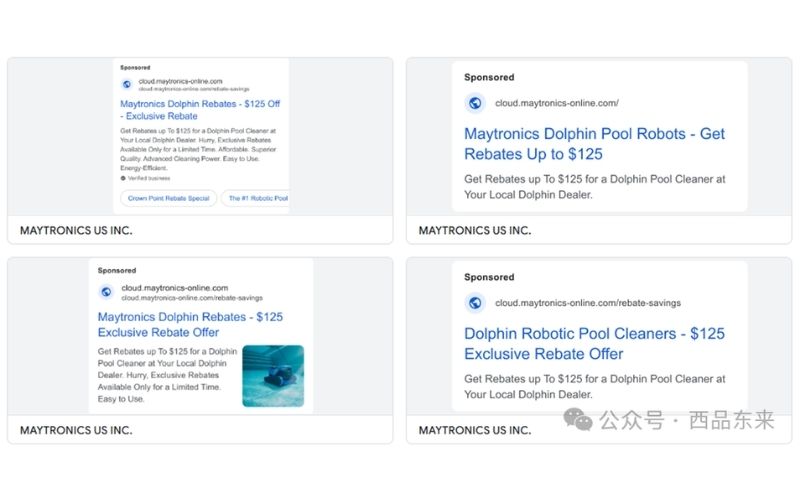
Ad copy frequently includes place names such as 'Toledo Rebate' and 'Southampton Local Discount' to improve click-through rate and direct users to a local dealer.
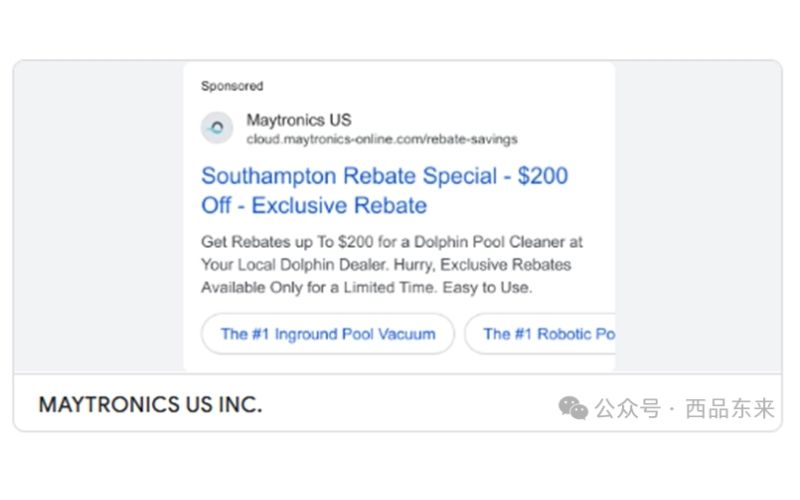
This structure fits the localized US distribution model, but the creative focuses almost entirely on discounts rather than helping customers choose or compare products.
Another campaign type captures support intent, such as searches about a failed power supply.
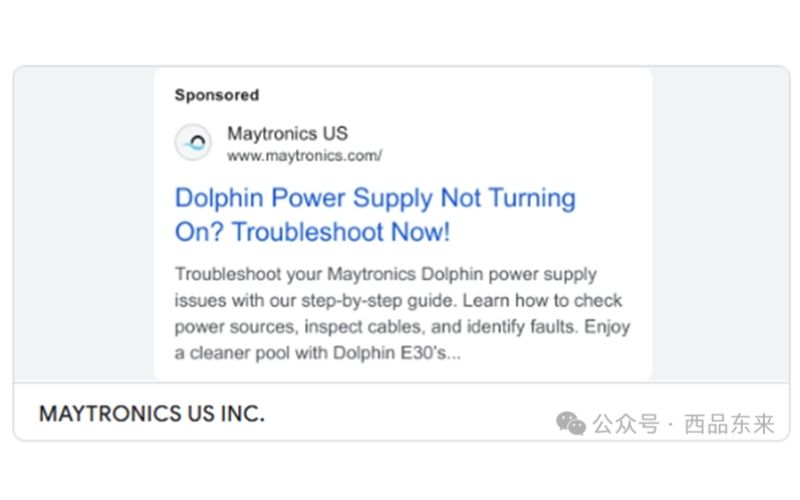
These users often have meaningful purchase intent. Maytronics responds conservatively with basic information, but it does not recommend a SKU or offer an upgrade path. The journey therefore ends abruptly.
2) Paid placement coverage:
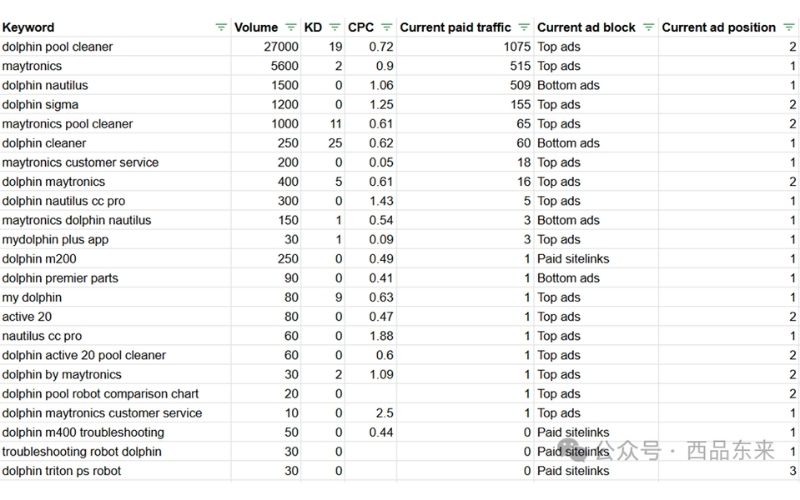
Top Ads account for 73%, with an average position of 1.6. Multiple sitelinks occupy almost all of the space above the organic results.
The placement strategy is mature and tightly focused.
The creative, however, relies on nearly identical discount copy and standardized images.
The broad-format assets do not differentiate SKUs or distinguish features, positioning or intended users.
Overall, Maytronics takes a conservative approach to paid search. It protects existing demand but does little to acquire new demand.
That approach can continue if the only goal is to harvest established brand interest.
Growth, however, requires generic keywords, stronger content destinations and better differentiated creative.
5. Facebook Advertising
Maytronics France uses Facebook advertising sparingly and with a clear purpose.
It focuses on one outcome: sending people to physical stores to complete a purchase.
Creative, timing and copy all serve that objective.
1. Campaign Timing
The ads are concentrated in June and July, the local peak season for pools in France.
On 3 July, the brand added a time-sensitive version counting down to the end of the offer on 15 July.
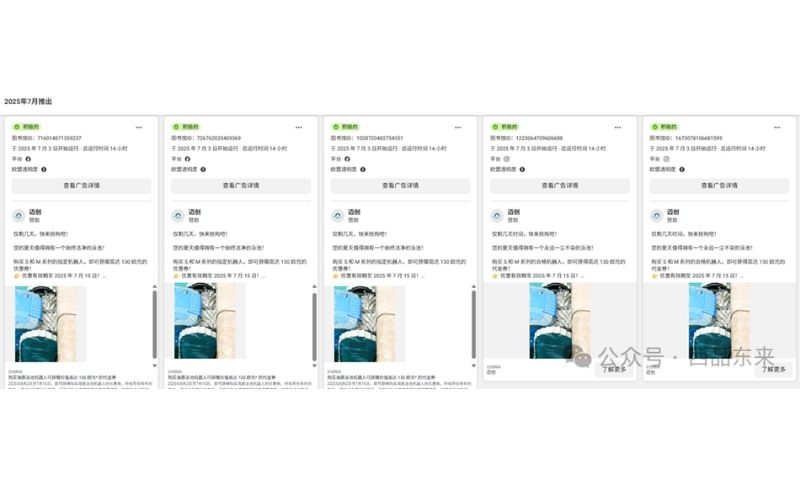
The campaign window clearly supported a seasonal promotion delivered with channel partners.
Brands with distributor networks can draw directly on this build-awareness, offer-value and close-the-sale sequence.
2. Campaign Content
Maytronics France uses three main types of ad content:
1) Promotional content:
Ads feature the Dolphin S and M series and offer vouchers worth up to €130 for in-store purchases. This is the most frequent format, using direct messages centred on limited time and store visits.
2) Feature and use-case creative:
Newer products such as the Liberty 600 and Skimmi emphasize cordless operation, solar power and intelligent obstacle avoidance. Real pool settings build trust and attract people learning about the category for the first time.
3) Brand-building content:
These ads centre on the Dolphin Nautilus and emphasize its arrival in France, 40 years of technical experience and more thorough cleaning to build a professional brand image.
In short, promotions drive conversion, feature-led creative builds understanding, and brand content builds trust.
Instead of relying on price alone, the company uses all three categories to move customers through the full robotic-pool-cleaner purchase journey.
3. Targeting Method
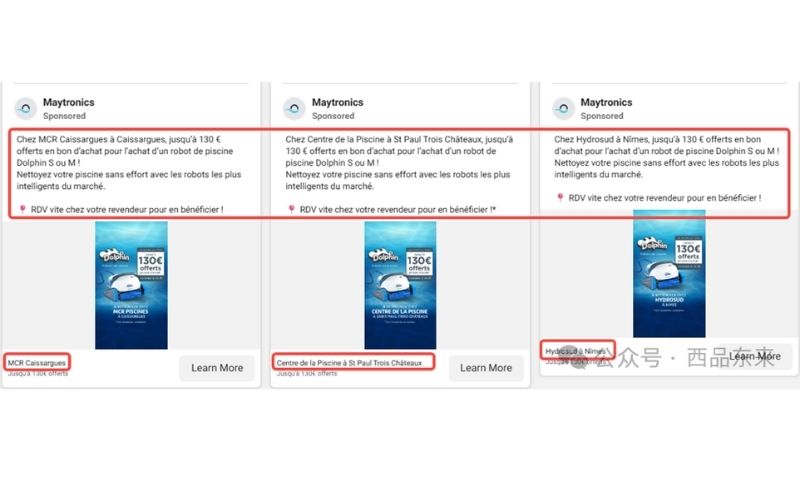
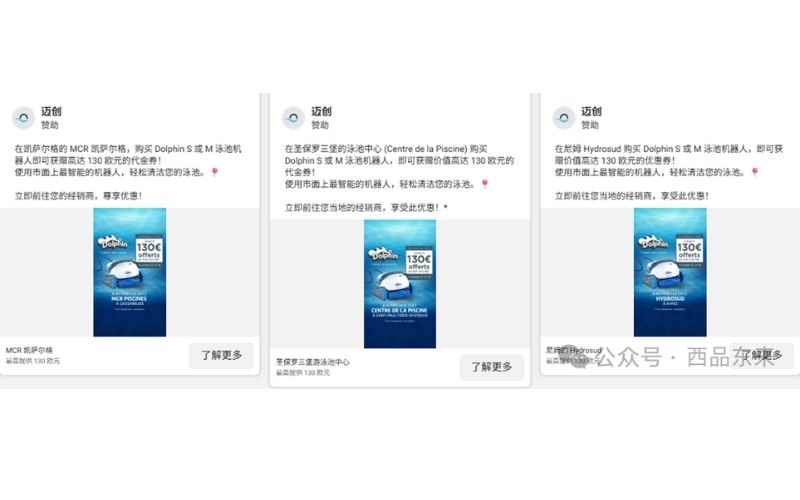
The campaign clearly uses geographic targeting.
We found localized messages for individual stores, including 'Hydrosud Nîmes' and 'MCR Caissargues'.
The brand may be using one creative concept with Facebook's system to generate variants and target potential customers near each location dynamically.
This method provides rapid localization without requiring every distributor to run its own campaigns, which is efficient for brands selling through regional channels.
The defining quality of the Maytronics campaign is simple: limited volume, precise execution.
The team knows when the product will sell, who will buy it, which benefit will attract them and how to complete the sale in a store.
This store-led structure suits high-value household equipment with a long decision cycle.
For brands with limited budgets that still want to increase distributor sales, it offers a controlled-cost approach with a clear outcome.
6. Social Media
For social media, we focus on YouTube. Approximate subscriber counts were:
5,100 on the main channel and 1,000 to 3,000 on the other regional channels.
These figures are far lower than the audiences of more than 100,000 on the regional Facebook accounts.
1. Separate Content for Each Market
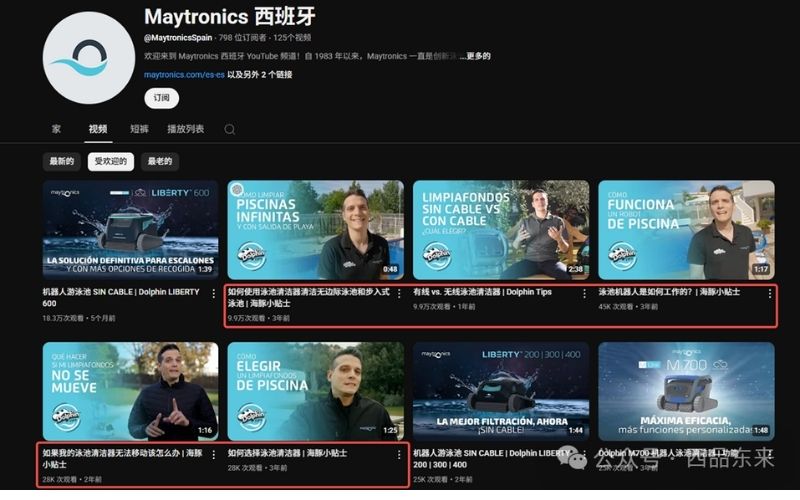
Maytronics operates one global channel and seven local channels for North America, France, Australia, Spain, Latin America, Germany and Israel. Each uses its own content and local language.
This channel matrix makes coordinated advertising harder, but it can support SEO.
Local keywords, brand terms and product combinations, reinforced by video pages and local domains, can help a brand win Google video placements in different markets, especially for long-tail queries.
The Spanish channel publishes steadily and often combines a presenter with a product demonstration. This format suits problem-led searches such as cleaning an infinity pool or choosing between corded and cordless models.
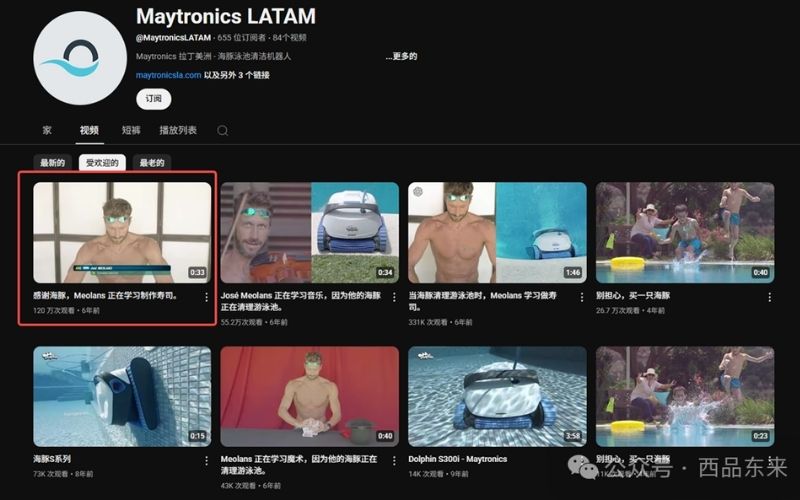
The Latin American channel uses a lighter style. A lifestyle video built around 'I am learning to make sushi as Dolphin cleans my pool' reached 1.2 million views, showing that a smaller market can still produce a breakout result.
The German and Israeli channels publish less frequently, but their foundations - images, links and website connections - are sound.
2. Visual Content Wins
The strongest videos focus on cleaning demonstrations, comparisons and realistic scenarios.
For example:
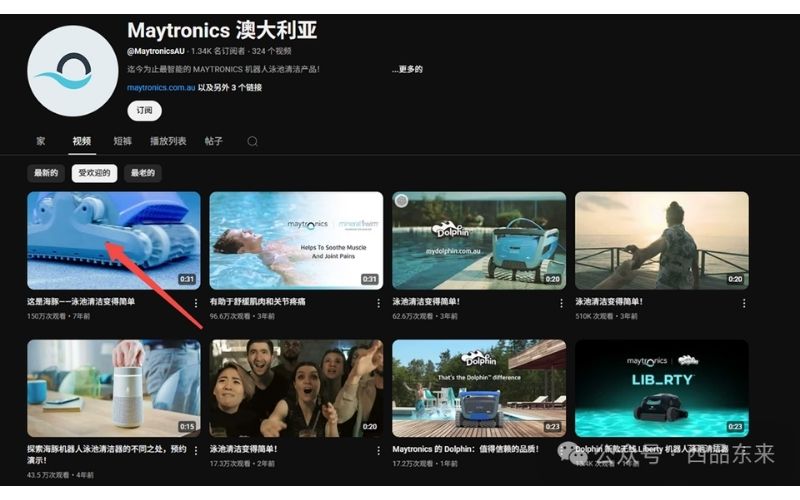
One video on the Australian channel, published seven years earlier, had accumulated 1.5 million views.
Several videos in the North American 'Struggling to clean your pool?' series exceeded 700,000 views.
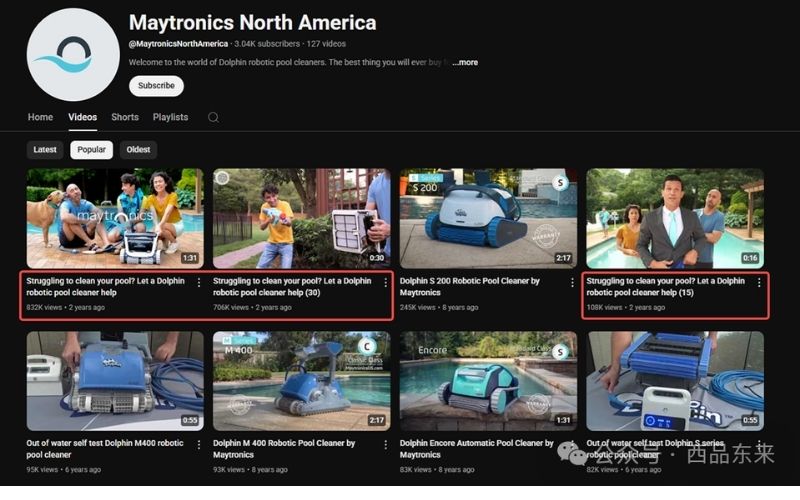
A recent video on the French channel reached 250,000 views within two months. The Spanish and Latin American channels also produced videos with more than 100,000 views.
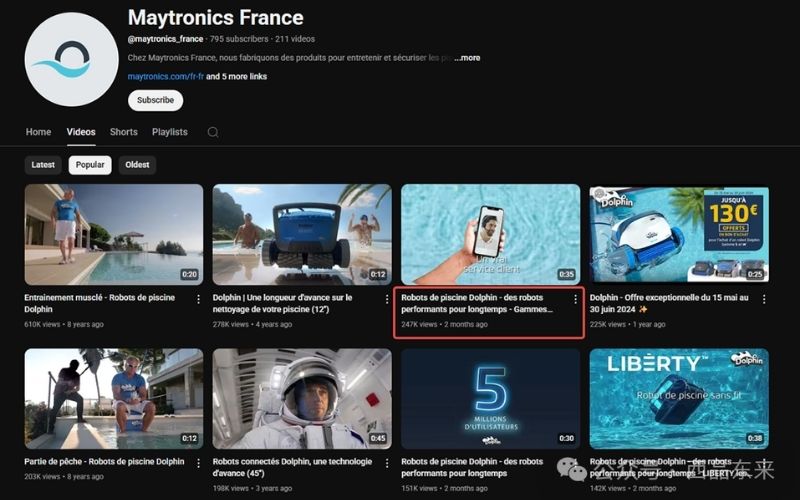
The core message is simply: look, the pool is clean.
Viewers see not just a machine, but a solution operating in a real setting.
This visually led content aligns closely with how people evaluate a product after searching.
3. The North American Channel Breaks the Journey
Most channels, including France, link to websites, articles or related social accounts.
The North American channel includes no onward link at all, which is a clear gap.
If an external video ranks for a product query but provides no route to the site, the brand gives up a valuable point in the funnel and the video cannot support on-site SEO.
The gap is easy to fix and the benefit can last.
4. Influencers and Shorts Have Not Yet Found a Formula
We found only scattered third-party product reviews, generally with modest view counts. Influencer activity does not yet form a coherent programme.
Shorts are fragmented, with views ranging from the hundreds to the low thousands and no stable publishing rhythm.
Overall, YouTube functions more as a library of product demonstrations than as a developed content-marketing asset.
7. On-Site Experience
1. Purchase Journeys Across Sites
The global maytronics.com site does not support purchases.
It has no shopping cart. The site mainly presents products and the brand, directing visitors to local sites or distributor and dealer information.
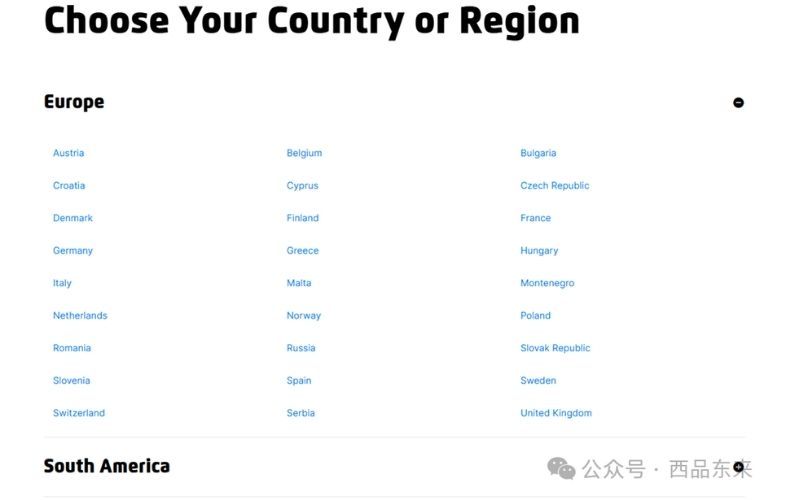
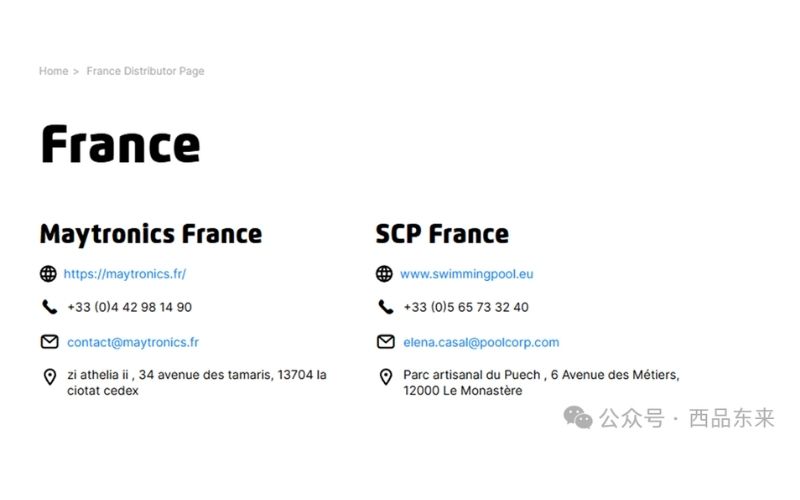
From an SEO perspective, this brand-portal structure is clear and keeps information concentrated.
Because visitors cannot transact on the site, it records fewer direct signals from completed purchases and cannot reinforce them over time.
The country sites take different approaches.
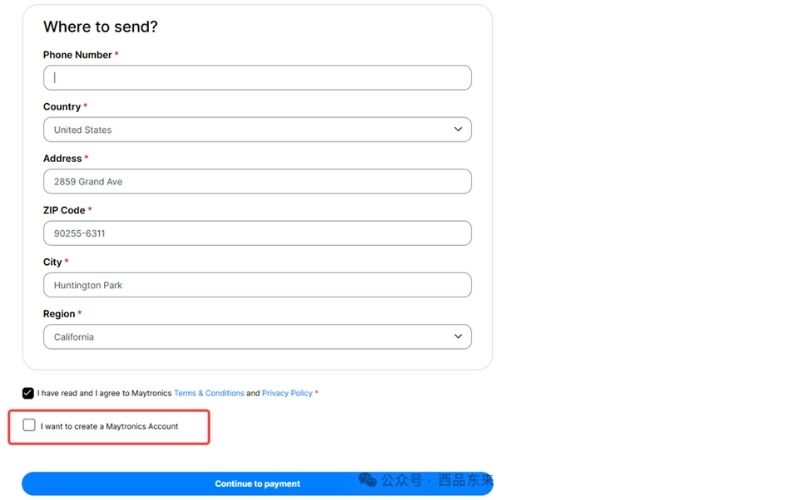
The US, French, German and Australian sites support purchases through online or offline channels.
On the US site, a 'Create a Maytronics account' checkbox appears below the terms acceptance field.
The French site introduces a dedicated login page before checkout and encourages visitors to register.
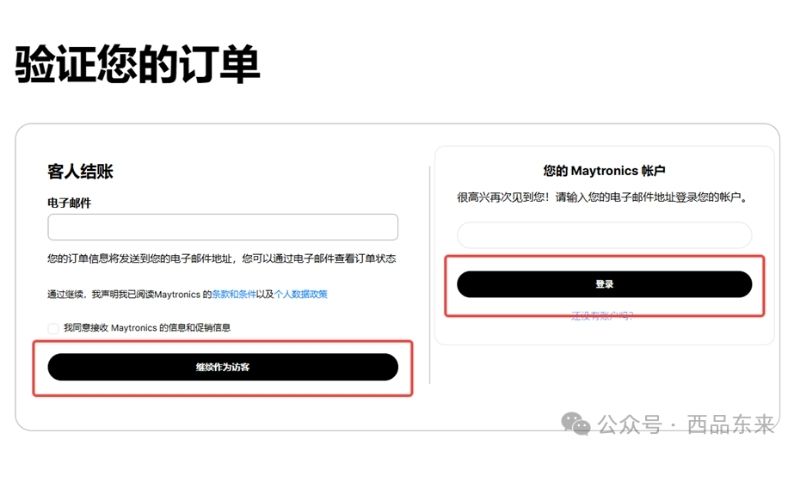
These details can improve account creation and support retention and repeat purchases.
For SEO, an account system can also produce a more complete user journey and deeper engagement, both of which may provide useful behavioural context.
The German site's online purchase process is unusual.
Clicking to buy on a product page sends the customer to an external retailer.
The retailers include mein poolroboter, esta poolshop, Amazon, poolpowershop, weigand and yapool.
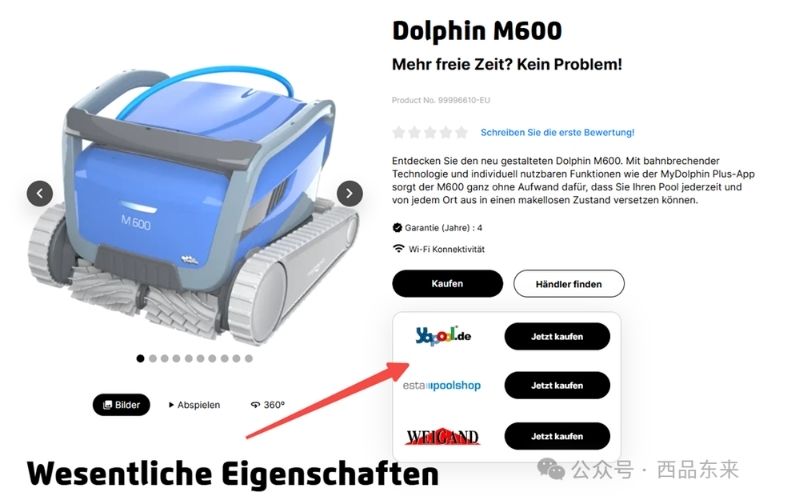
Although the transaction happens off-site, the range shows the depth of Maytronics' German distribution network.
The trade-off is a broken on-site conversion path and weaker accumulation of first-party behavioural signals.
The Spanish, Italian, Israeli and Canadian sites sell entirely through offline channels.
The Latin American site is much less effective.
It offers two routes - an enquiry form and offline dealers - but the purchase guidance is not prominent.
We could not find a purchase call to action on the product pages.
2. Page Content Structure
Category pages generally contain an introduction, navigation and a product-comparison module.
The content is simple but clear enough to help visitors understand product differences.
Landing pages and product pages use broadly similar structures, with different copy and design emphasis.
Frequent reuse of modules may create some duplicate content, which deserves attention in SEO planning.
Product pages contain the most information and are organized clearly:
Introductions, benefits, technical specifications, after-sales support, comparisons, compatible accessories and reviews cover almost everything customers are likely to need.
The browsing sequence is smooth, and the hierarchy makes key information easy to find.
3. Payment Methods
The US site offers the widest selection of payment methods.
Link receives the most prominent position, with Visa, JCB, Mastercard and American Express also supported.
This coverage of major card networks fits the purchasing habits for high-value products.
Taken as a whole, the Maytronics web estate uses a strongly decentralized, locally adapted architecture.
It gives up some central control over ecommerce in exchange for stronger channel coordination and market fit.
For the brand, this supports deeper local development and a stable distributor system.
For SEO, the challenge is that data is fragmented and conversions leave the site, making it difficult to consolidate signals.
8. Email and Subscriptions
There is not much to say about the Maytronics subscription module.
We found no pop-up and no behaviour-triggered prompt.
The subscription field sits in the lower-left corner of the footer, where it is easy to overlook.
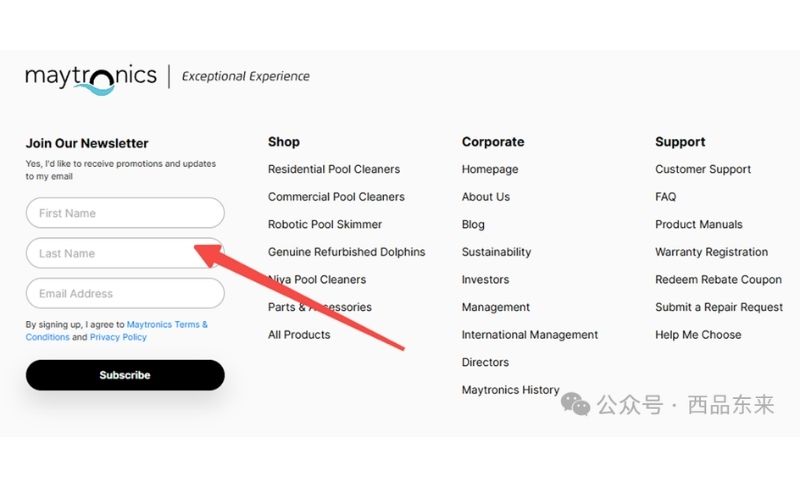
Once an email address is submitted, however, the next step becomes visible:
The prompt 'Would you like to receive exclusive offers?' encourages the subscriber to create an account.
The process is simple: add a password and continue.
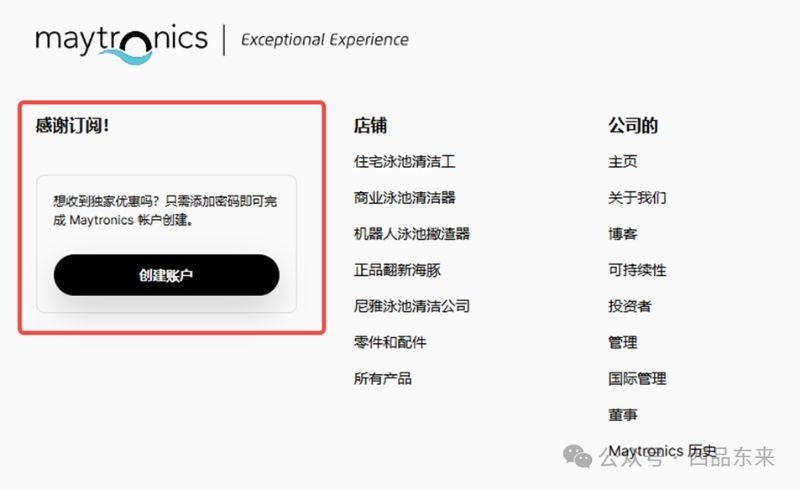
The design is uncomplicated but thoughtful.
Instead of ending with a conventional thank-you message, it extends the subscription into account creation.
That shows how much the brand values its account system.
From an SEO perspective, accounts can lead to richer user data and a greater likelihood of repeat visits, which may support brand demand and conversion analysis over time.
The current journey still lacks pop-ups, email segmentation and follow-up messaging.
Even so, this small prompt begins to connect subscription and registration.
A small detail with a clear idea behind it.
9. SEO Analysis
We use the Maytronics US site as the example.
1. Crawling and Indexation
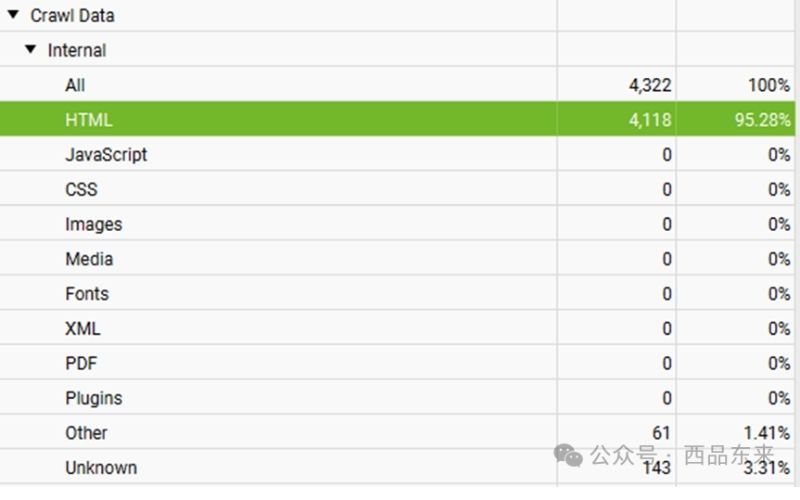
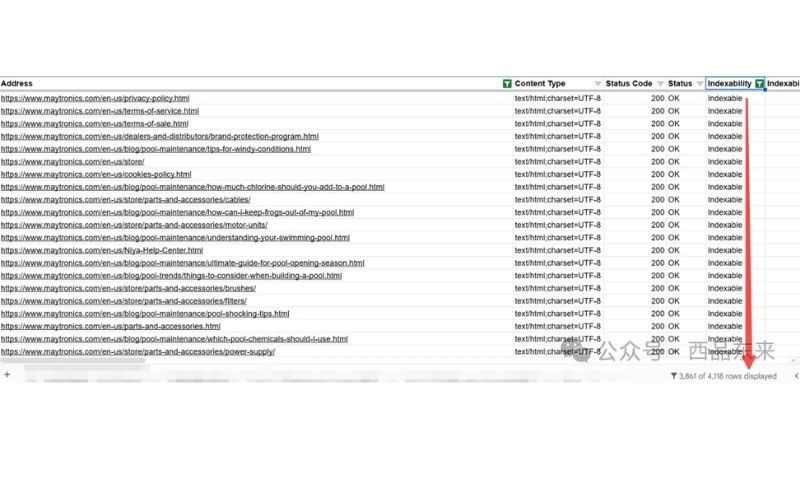
The site performed well in our crawl. We crawled 4,118 pages, with a 95.28% crawl rate and a 93.8% indexation rate.
One basic issue still deserves separate attention.
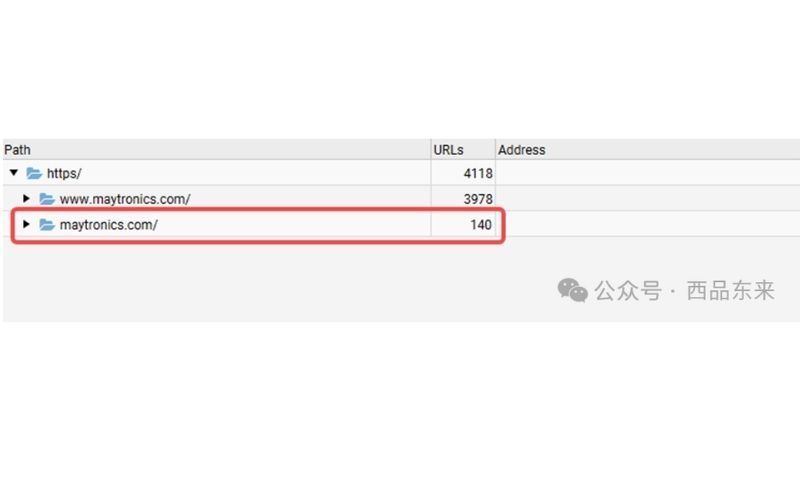
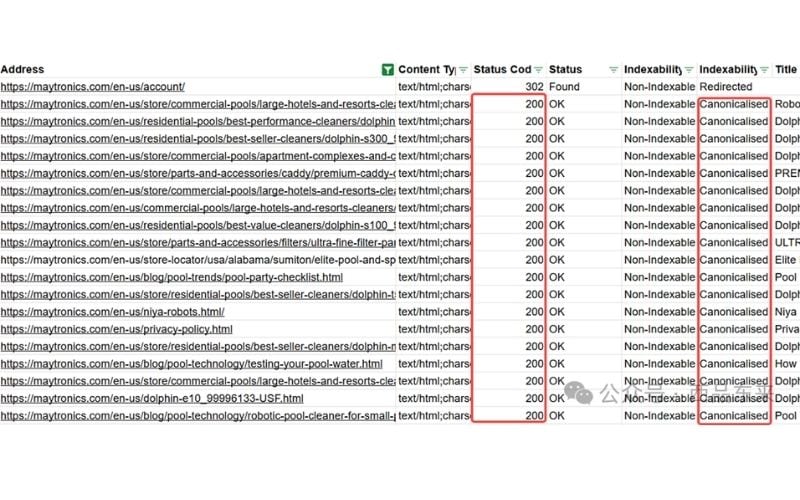
Screaming Frog found 140 pages on the non-www version of the domain.
These pages use canonical tags but do not redirect with HTTP 301.
Google therefore has to crawl a duplicate host even though the canonical annotation asks it to prefer another version.
This reduces crawl efficiency, fragments signals and can create ambiguity for search engines.
The sitemap itself is clean, so these URLs may come from historical backlinks, overlooked internal links or legacy redirect rules.
We recommend redirecting every non-www page to its corresponding canonical www URL with HTTP 301.
The change is simple, but it can improve crawl efficiency, indexation and the consistency of site-wide signals.
2. On-Page SEO
1) Titles:
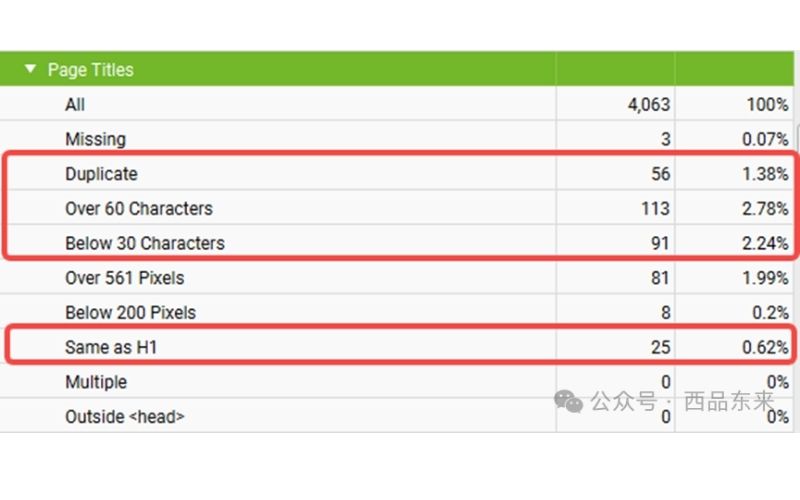
Some titles are too long, too short or duplicated.
Long titles may be truncated in search results. Vague titles often lack a focused keyword and match intent poorly.
Some pages also use identical text for the title and H1, leaving the semantic roles undifferentiated.
That narrows keyword coverage and reduces the range of ranking opportunities.
2) Meta descriptions:
A high proportion of pages use duplicate descriptions, making many pages appear indistinguishable to Google.
Pages may then compete against one another or perform poorly as a group.
Another 23 pages use descriptions longer than 160 characters.
This is not a critical defect, but the text may be truncated in search results, hiding useful information and reducing click-through rate.
3) H1 headings:
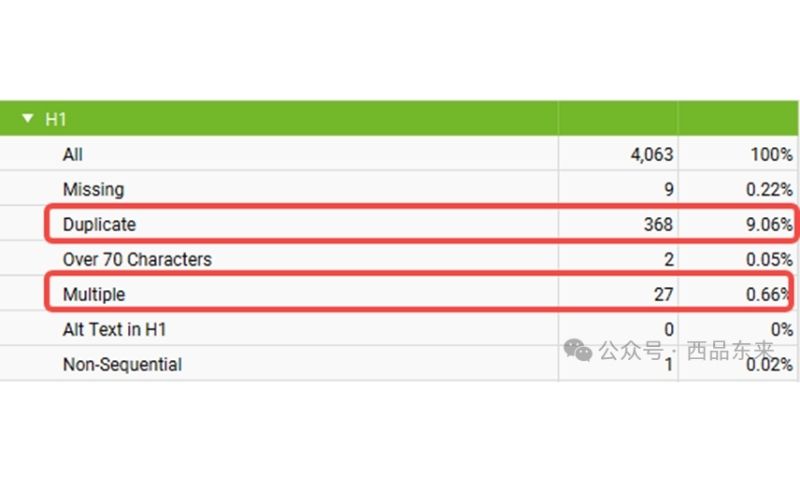
The duplicate rate is close to 10%. The pages differ, but their primary headings use similar wording and convey nearly the same meaning.
That makes it harder for Google to identify the distinct subject of each page and may weaken indexation and ranking.
We also found 27 pages with multiple H1 elements.
This usually comes from inconsistent front-end templates, with several components competing for the primary semantic position.
If left unresolved, it blurs the page hierarchy and makes the main subject harder for search engines to identify.
3. Content SEO
Let us start with the blog.
1) Topical coverage:
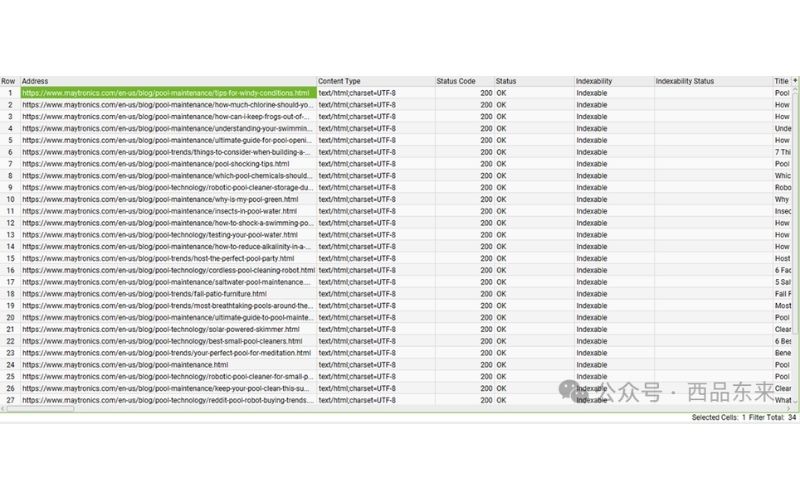
Maytronics has roughly 34 blog posts. The library is small and concentrates on general pool maintenance and safety rather than robotic pool cleaners.
There is little systematic coverage of selection, usage guidance or common problems.
Those topics should form the core content that supports conversion and product-query rankings.
For a DTC brand in this category, the volume and breadth are insufficient to build topical authority or capture a wider set of rankings.
2) Content expertise:
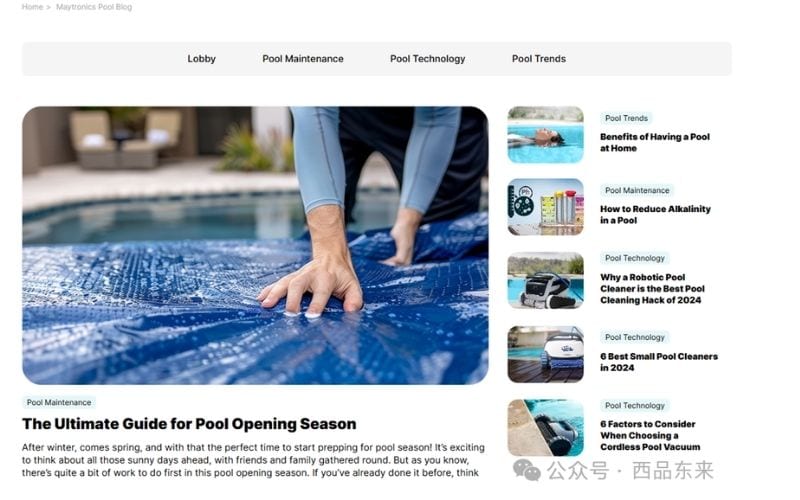
Because the library is small, we began with several featured Maytronics articles.
They read more like light brand content for consumers.
There are no named authors or visible expert credentials, little first-hand experience, and no clear indication of who produced the content, which weakens trust.
The articles also stay at a high level. They explain demanding subjects such as choosing a model or maintaining water only in broad terms.
The average article is around 800 words and even the longest is no more than 1,300 words, which makes it difficult to satisfy the depth of search demand for a high-value category such as robotic pool cleaners.
Overall, the content sends weak experience, expertise, authoritativeness and trust signals. It does little to establish the site as a reliable source on the topic.
3) Reading experience:
The Maytronics blog is generally approachable in both layout and language.
The problem is alignment with search intent.
Consider its article on lowering pool alkalinity:
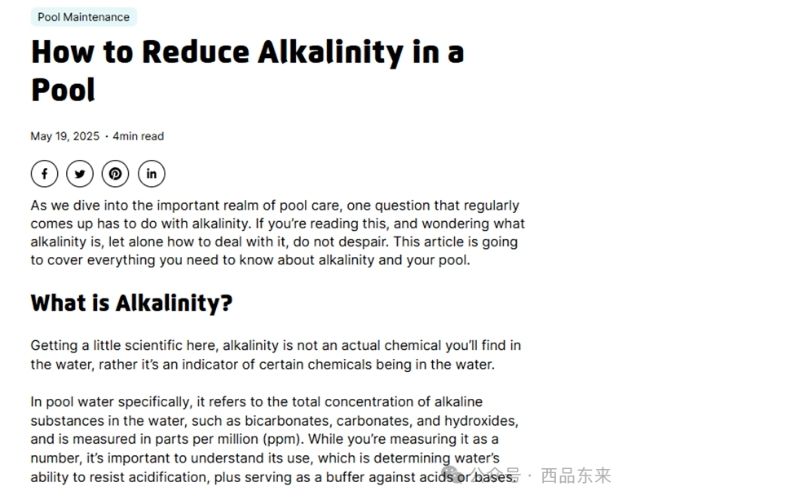
The opening 150 words contain neither the main keyword nor close semantic coverage and do not answer the user's question quickly.
The first H2 should carry the section's clearest subject signal, but it also delays the answer and explains what alkalinity is instead.
For Google, the page drifts from the query. For the reader, it delays the answer.
The writing sequence is logical, but it does not satisfy the immediate search intent.
Without improvement, the article is unlikely to earn stronger rankings.
4) Natural keyword usage:
The Maytronics articles are broadly acceptable in their keyword usage.
Again, consider the article on lowering pool alkalinity:
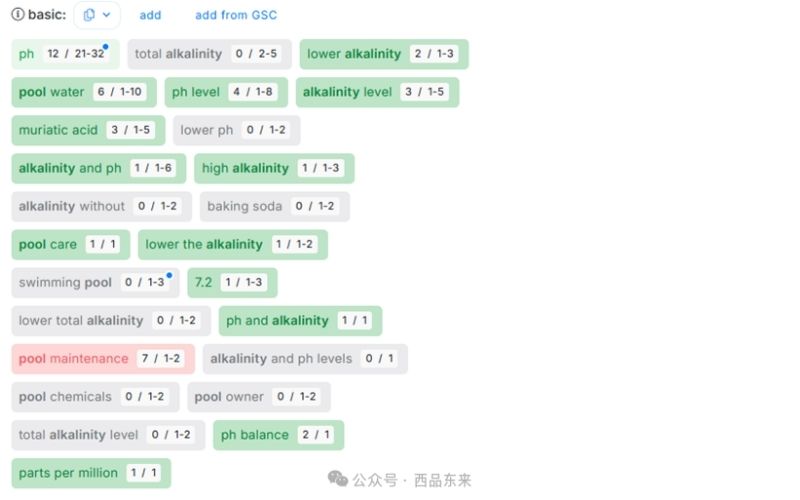
It covers the core terms naturally without appearing to be written only for a search engine.
The figures shown by the analysis tool are only a reference and do not represent Google's actual evaluation.
There are still gaps: synonym variation is weak, some H2 headings omit the subject term, and some keyword choices lack precision.
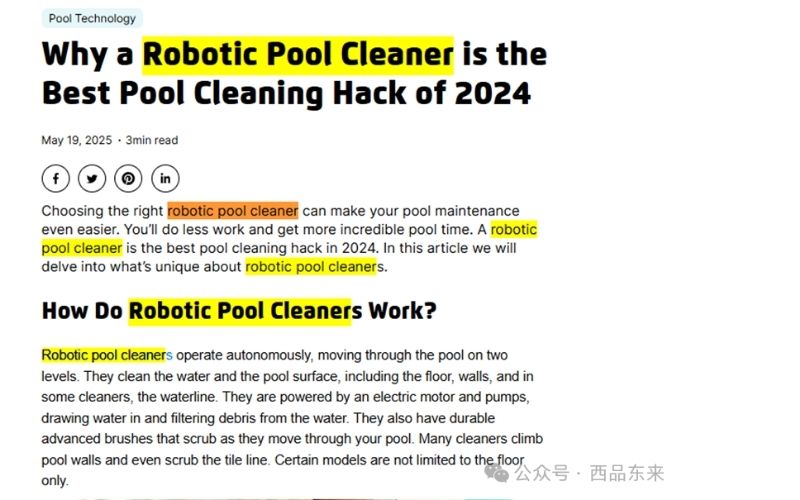
In addition to covering the primary term, the article should use natural synonyms, semantically related variants and combinations to broaden coverage and capture more long-tail demand.
Now consider the landing pages and product pages.
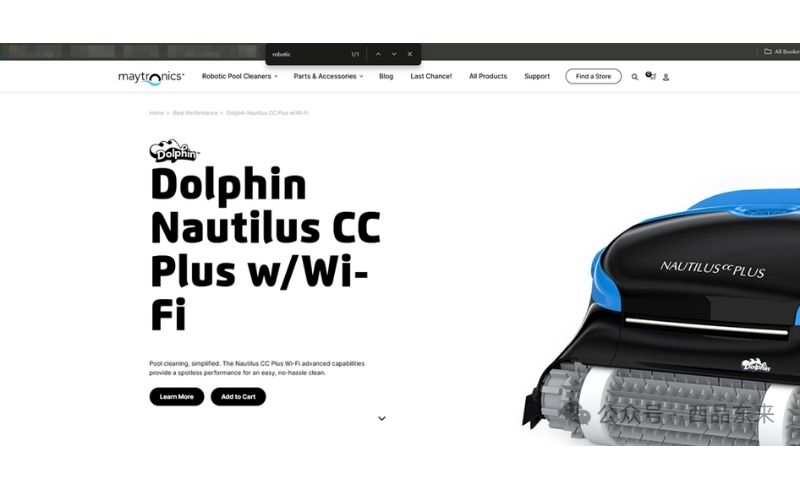
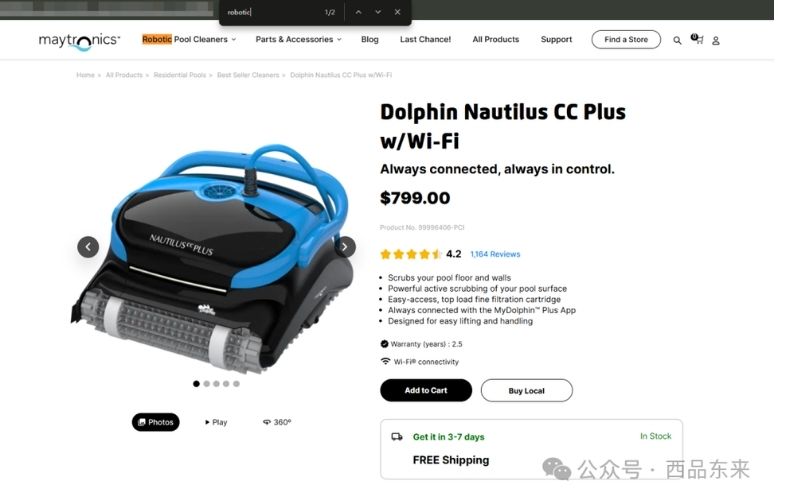
Core product keywords are poorly mapped, and the implementation is weaker than Polaris in this respect.
The content itself is professional and includes the elements expected on a DTC brand site, but there is room to go deeper, especially around combinations of model names and use cases.
The browsing experience is strong: the structure is clear, the layout is clean and the journey is easy to follow, so conversion should not suffer from basic usability.
Overall, content SEO is weak. The site looks like an official brand site but not like one designed to be found through non-brand search.
4. Technical SEO
1) Page speed:
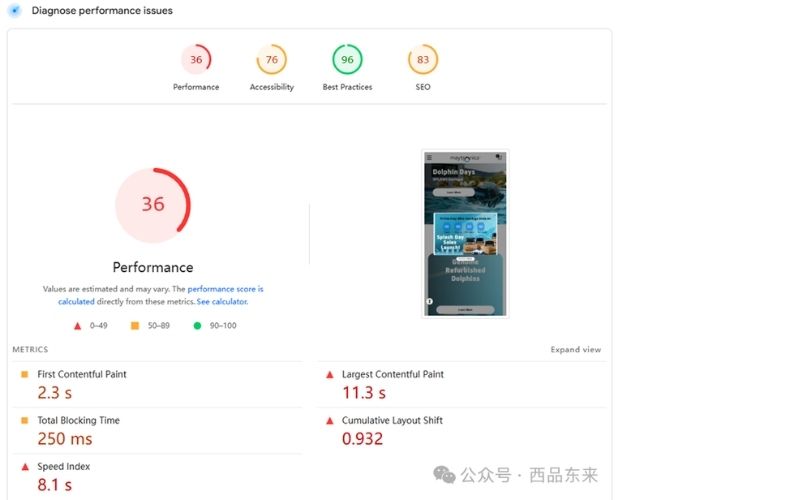
Mobile
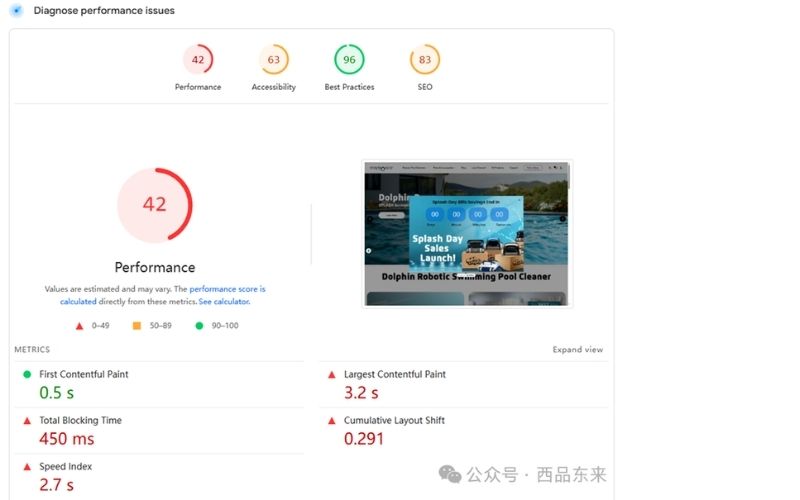
Desktop
At the time of our test, neither the mobile nor desktop pages passed the Core Web Vitals assessment.
Two issues stood out:
Cumulative Layout Shift reached 0.93, causing severe movement during page load.
Largest Contentful Paint exceeded 11 seconds at its slowest, creating both loading and conversion risk.
Failure is common, particularly on Shopify sites and pages with many animated components.
But ecommerce sites that pass Core Web Vitals often show more stable SEO performance, especially on mobile.
Brands planning to grow organic traffic should prioritize this work early.
2) Multilingual configuration:
Maytronics uses hreflang, but we found two categories of issue.
First, 157 pages lack x-default, leaving Google without a declared default-language version.
Second, some hreflang URLs point to noindex pages, effectively inviting Google to a page but blocking it from the index.
Google may ignore these annotations, resulting in traffic being sent to the wrong regional pages.
Brands serving several markets need a coherent configuration; otherwise, even a strong content programme can miss its intended users.
3) Canonical tags:
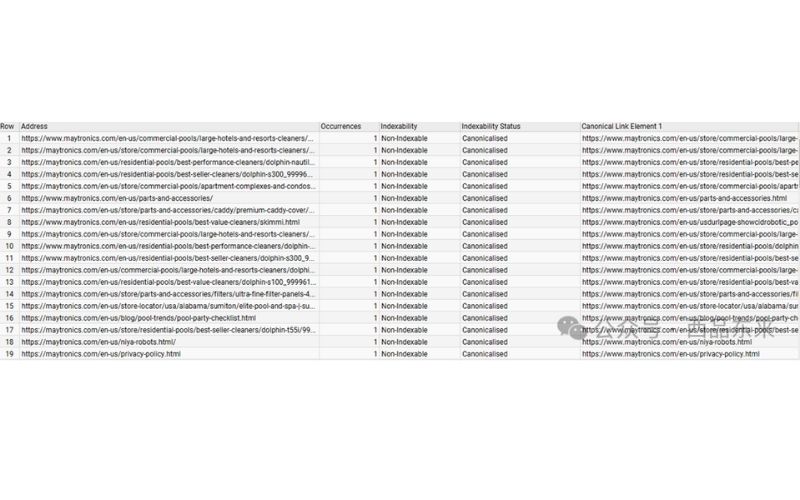
Around 200 pages use canonical tags. Some point to non-indexable pages; others form reciprocal or circular references.
These technical details are easy to overlook but directly affect how signals are consolidated.
Product and category pages need an explicit strategy for which URL remains primary and which version yields; the decision should not be improvised.
4) Image sizes:
More than 200 images exceed 100 KB, which can slow page loading and weaken the user experience.
On mobile in particular, that delay can increase abandonment and reduce conversions.
5) Security headers:
The site does not set X-Frame-Options or Referrer-Policy. This does not directly affect search rankings, but some browsers may flag the missing protections as a potential risk.
For a global brand, details like these influence the user's first impression.
10. Bonus Finding
During our review of the French site, we found a subtle usability problem.
We could not remove an item from the cart and initially assumed that the page had frozen, even after refreshing several times.
The actual cause was a confirmation prompt at the very bottom of the screen that barely looked like a prompt. Readers can test the interaction on a desktop computer.
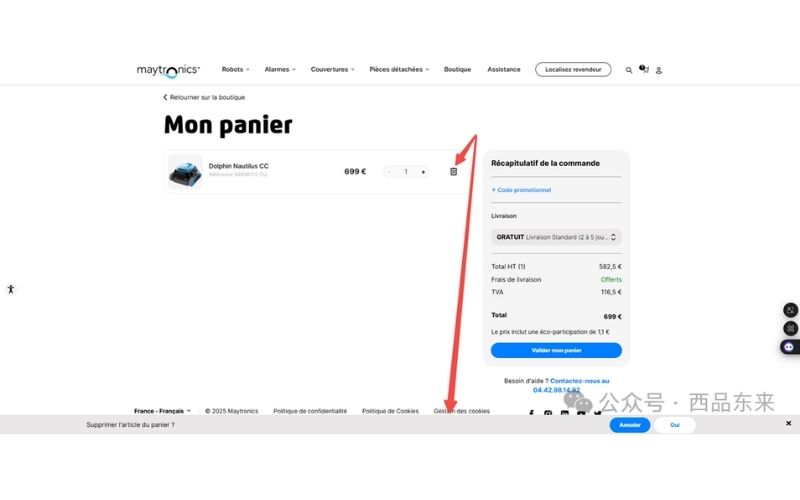
This can make users think the system is broken and abandon the process.
Independent-site owners should check for similar interactions. They are usually easy to fix but can be highly discouraging.
11. Conclusion
The Maytronics example shows that DTC success requires more than launching an independent site and buying ads. Every part of the system must work together.
Its strengths are stable architecture, clear positioning and effective channel coordination.
Its weaknesses are limited content coverage, serious SEO gaps and traffic sustained largely by established brand demand.
That creates an opportunity for Chinese brands: strengthen the areas the incumbent neglects and you may be able to overtake it.
The case also exposes a more general mistake.
Many brands expanding overseas concentrate on advertising and the sales funnel but overlook the independent website itself. Its structure, content and trust signals are the assets that can create lasting value.
What sustains repeat purchases and reputation over time is not a temporary click-through rate.
It is whether people can find the website, whether its pages convert, whether the content solves real problems and whether the brand looks trustworthy.
Across our work with DTC brands expanding internationally, one pattern appears repeatedly:
The brands that break through are not those with the flashiest advertising, but those that take every stage of the journey seriously.
They understand that SEO is not a keyword game. It is a long-term effort to build the brand.
If you want an independent website to accumulate brand value and use SEO to create sustained growth, now is the time to strengthen the foundations.
Whether you are just starting or already have a site in place, we can help clarify the route so that you move with greater confidence and speed.
If this analysis prompted new ideas, you are welcome to like, comment or share it, or contact us for a conversation.
One conversation is enough to find out whether we can help.
We hope more Chinese brands will not merely go overseas, but become genuine participants in global markets.
We want the world to see both the quality of the products and the brand strength and long-term thinking behind them.
On the road to international growth, we aim to be the most dependable map before you set out.