
On this pageTable of contents+
- 1. Overall US Traffic Performance
- 2. Technical Optimization
- 2.1 Domain Foundation
- 2.2 Crawling and Indexation
- 2.3 Canonicalization Problems
- 2.4 URL Standardization
- 2.5 Core Web Vitals
- Why Does This Matter?
- Recommended Direction
- 3. On-Site Optimization
- 3.1 Basic Optimization
- 3.2 Content Quality and Coverage
- 3.3 Content Structure
- 3.4 Internal Links
- 4. Off-Site Optimization
- 4.1 Backlinks
- 4.2 Brand Signals
- 5. User Experience
- 6. AI Search Visibility
- 7. Case Summary
- 8. Benchmark Example: Azazie
- 8.1 Strong Basic Optimization
- 8.2 Clear Information Architecture
- 8.3 Strong On-Site Content
- Conclusion

Have you encountered any of these problems?
- You have added many SPUs and SKUs and keep adjusting the product structure, but traffic across the site still will not grow.
- Your official media or social channels perform well, but the independent website shows little progress.
- Organic traffic grows very slowly, and almost no keywords beyond the brand name have meaningful visibility.
These problems are common. They are recurring difficulties for independent ecommerce sites.
We have encountered them repeatedly in previous projects and addressed them one by one.
Every independent site calls for a different approach.
Yet the reasons why traffic fails to grow are often remarkably similar.
This article examines a fast-fashion brand with more than a decade of history, referred to below as Brand M, to identify hidden constraints on its organic traffic and explain how those gaps could be addressed.
It covers:
- The real reasons why organic traffic has stalled.
- The parts of on-site SEO that teams most often overlook.
- Three critical areas for optimization.
- An example of a strong independent womenswear site that illustrates why these priorities matter.
This is a long article, so you may want to save it and read it when you have time.
1. Overall US Traffic Performance
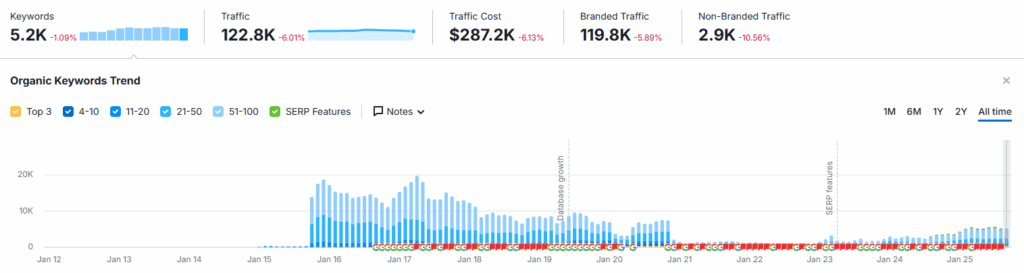
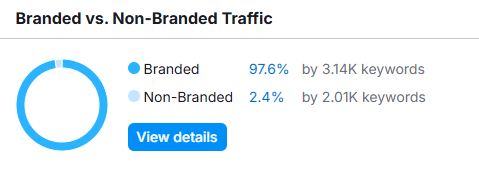
At the time of the source analysis, Brand M had about 122,000 monthly organic visits. That placed it in the middle tier of an intensely competitive womenswear category.
Reaching that level was already difficult, especially in the crowded fast-fashion market.
The data nevertheless suggested that Brand M had the potential to become a market leader, but had not yet released the full value of SEO.
Several indicators showed where the problem lay:
- The site ranked for only about 5,200 keywords, a relatively small footprint for womenswear.
- More importantly, over 97 percent of its traffic came from branded searches, suggesting that its content did not yet cover the full range of user intent, related topics or shopping contexts.
- The site was also losing keywords while ranking for relatively few new ones. This suggested that some pages might never have been indexed or may have dropped from the index, leaving important pages without the visibility they could otherwise earn.
A well-run SEO program will generally continue to earn indexation for new pages and rankings for new keywords.
Brand M's position therefore showed a contrast: brand marketing was a strength, while SEO execution lagged behind.
That left a substantial gap for growth.
The source also reported that Brand M had three million Facebook followers, indicating a large existing social audience.
If SEO had closed this gap, the source argues that Brand M might already have been a category leader rather than merely approaching that tier.
2. Technical Optimization
2.1 Domain Foundation
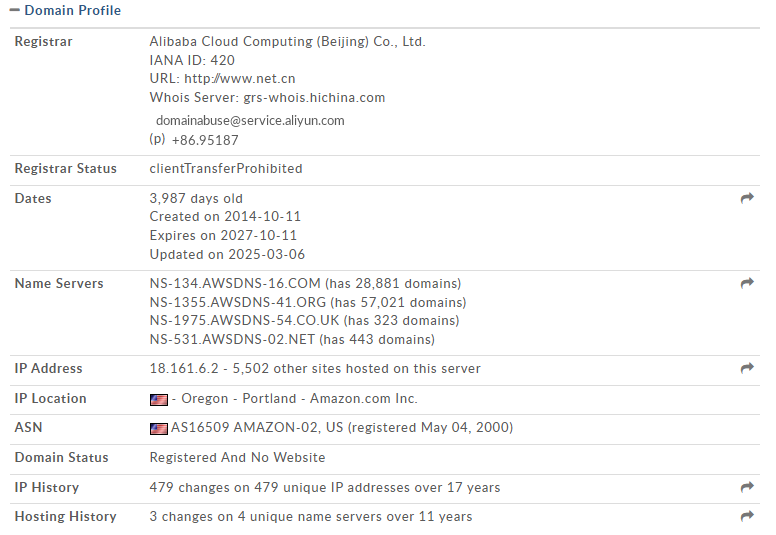
Brand M used a domain that had been active for more than 11 years. The source found it clean and stable, making it a valuable existing asset.
In an increasingly competitive search environment, an established domain can support trust and give a site a stronger starting point.
With that foundation, resolving common problems in a custom-built site, such as page structure, URL hierarchy and canonicalization, may create meaningful room for traffic growth.
Sustainable growth depends on sound foundations.
2.2 Crawling and Indexation
First, consider the crawl data.
Screaming Frog found about 6,400 valid pages.
A Google site search suggested that roughly 8,000 pages were indexed at the time.
The difference was not large enough to indicate an obvious site-wide crawling failure.
Next, consider indexation.
Without Google Search Console access, the exact number of indexed product pages could not be verified, especially on a womenswear site with many SKUs.
Category pages offered a more stable basis for an estimate because:
- Their structures were relatively consistent and their indexation was easier to compare.
- They usually carried more internal importance than individual product pages and could provide a clearer signal of the site's SEO health.
The analysis therefore used two major product categories to estimate how well the wider category structure was covered.
Those categories were tops and dresses. They represented major groups of keywords and search intents, as well as important entry points for visitors.
If indexation was weak even for these central categories, other long-tail category pages might have faced similar problems.
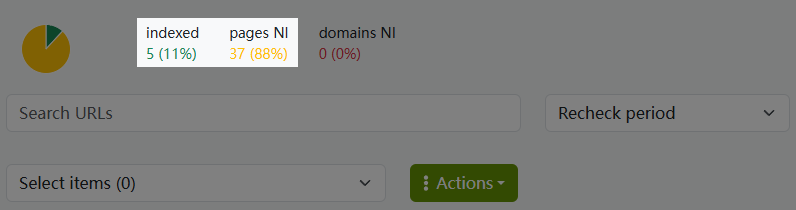
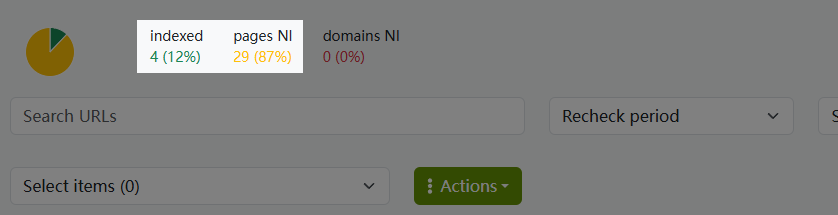
The screenshots suggested that only about 11 to 12 percent of the category pages for tops and dresses were indexed. In this sample, only about 11 or 12 of every 100 pages were eligible to rank and receive organic traffic.
In other words, most of the sampled pages had not yet entered the search engine's evaluation set, so they had little chance of earning rankings or visibility.
Even the small group of indexed pages needed more than indexation to win non-branded traffic. The site also needed clear structure, useful content and adequate semantic coverage.
Those capabilities were closely connected to indexation across the site.
The structural pattern of many pages but few useful indexed pages was therefore one likely reason for Brand M's weak non-branded visibility and constrained organic growth.
2.3 Canonicalization Problems
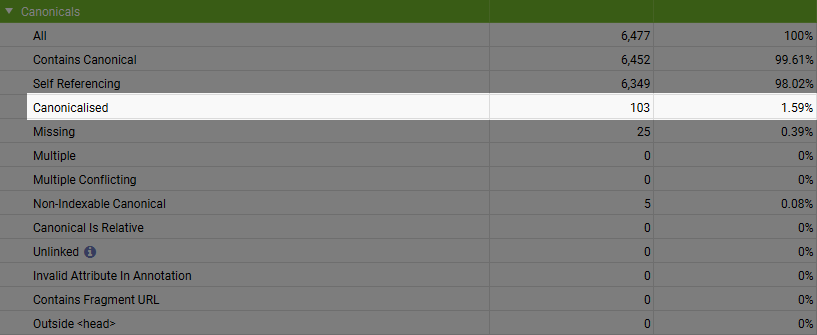
The crawl found 103 non-canonical pages. These pages were marked as alternatives rather than primary versions, indicating duplication or uncertainty between page variants.
Search engines normally use canonical signals to choose a preferred version. Alternative pages may be crawled without being indexed separately, which can affect indexation and the consolidation of signals.
At first the number appeared limited, but a closer review showed that many of the affected URLs were category pages.
Because category-page indexation was already weak, incorrect canonicalization was a plausible contributing factor.
If important category pages point to the wrong canonical version, search engines may not select or display the intended page, regardless of how useful its content is.
This was therefore more than a technical detail. It represented a possible source of lost search visibility that deserved investigation.
2.4 URL Standardization
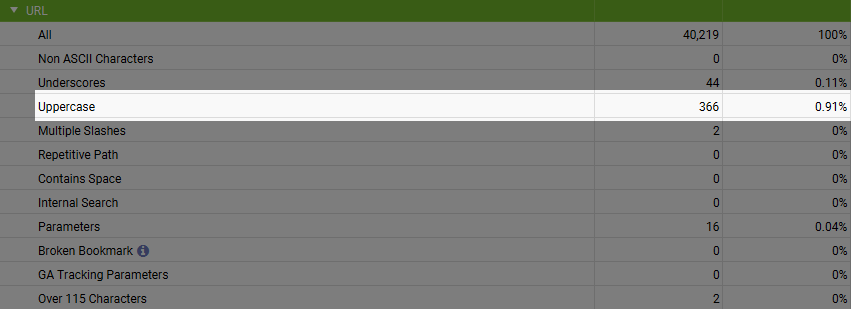
The crawl identified 366 URLs with inconsistent formatting, including:
- Uppercase letters or mixed case.
- Characters such as plus signs that were not used consistently.
The sample showed upper- and lowercase versions of the same page appearing in search, which could split signals and create duplicate variants.
The repair itself was straightforward, but the impact could be material.
Recommended actions included:
- Use lowercase characters consistently in URLs.
- Replace special characters such as plus signs with hyphens where this preserves meaning and creates a stable pattern.
- Redirect old variants permanently to the preferred URL so signals and users reach one version.
This is a common web standard and an important part of a reliable SEO foundation.
Consistent URLs are not merely cosmetic; they make the site clearer for both users and crawlers.
2.5 Core Web Vitals
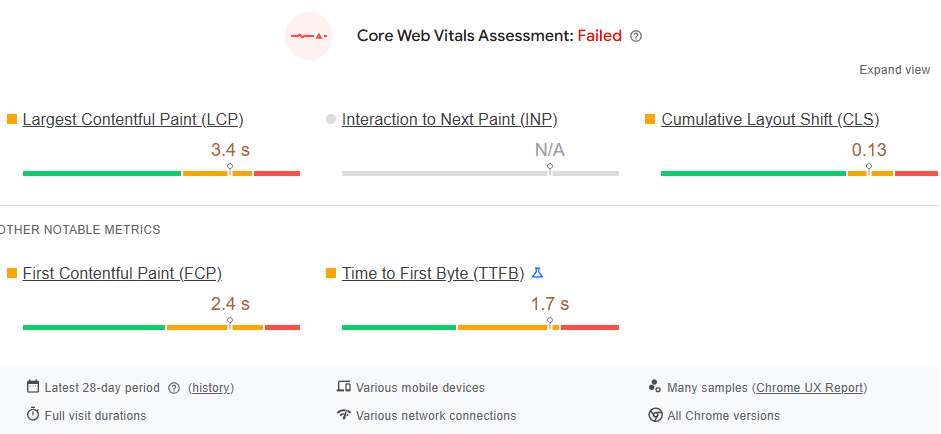
The test snapshot showed that Brand M's mobile pages did not pass the Core Web Vitals assessment and that both mobile and desktop experiences loaded slowly.
In a search environment that increasingly values page experience, site performance can influence SEO outcomes.
Why Does This Matter?
- Slow pages can reduce crawler efficiency, especially on very large sites.
- A poor mobile experience can increase abandonment and reduce conversion.
- Google uses page-experience signals as one part of its ranking systems, particularly for mobile experiences.
Performance problems are common, but leaving them unresolved can constrain long-term SEO growth.
Recommended Direction
- Reduce image size and use efficient formats such as WebP where appropriate.
- Reduce unnecessary JavaScript and CSS that blocks rendering.
- Use a content delivery network where it improves delivery to the target audience.
- Monitor the current Core Web Vitals metrics; the source-era screenshot referred to LCP, FID and CLS, while implementations should follow current Google guidance.
These technical issues sit deep in the site, but they affect whether pages can be crawled, indexed and improved effectively. Technical foundations create the room for later optimization.
Technical work alone, however, does not determine whether SEO succeeds.
Technology is the foundation; content gives the site meaning.
The ceiling for organic traffic often depends on content planning, site structure and keyword strategy.
The next section examines Brand M's information structure, content strategy and semantic coverage, and explains how systematic on-site work could unlock more search potential.
3. On-Site Optimization
3.1 Basic Optimization
Page Titles and Descriptions
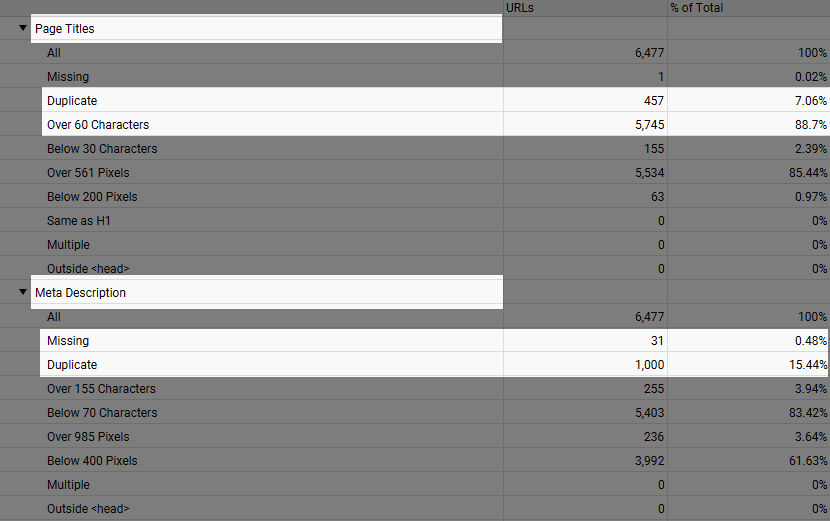
The data snapshot found 457 duplicate titles, 5,745 titles that exceeded the preferred display length, 31 pages without descriptions and 1,000 duplicate descriptions.
Potential effects included:
- Titles may exceed display limits in some cases, but the problem becomes significant at this scale.
- Missing descriptions have limited direct impact, while widespread duplication makes pages less distinct.
- When titles and descriptions repeat across many pages, search engines have fewer clear signals for distinguishing them, which can weaken indexation and keyword coverage.
Recommended action:
Unique, accurate titles and descriptions are a cost-effective way to improve indexation and keyword coverage. They do not determine rankings on their own, but they support the overall health of the site and its long-tail visibility.
H1 Headings
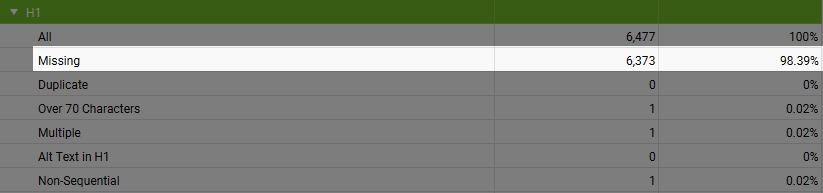
Most pages lacked an H1, which was a meaningful structural warning.
The source treats the H1 as an important topic signal. Without a clear H1, a page loses a strong semantic anchor and may weaken its ability to communicate the primary subject.
Image Alternative Text
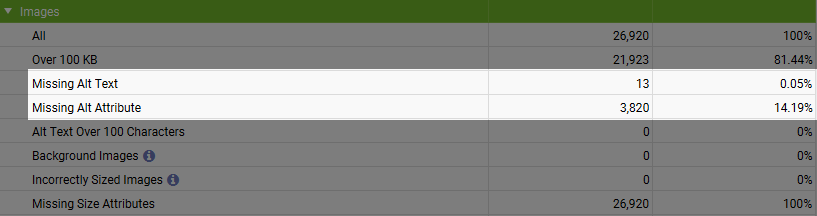
Current state: many images lacked alternative text.
Impact: a womenswear site relies heavily on images, while search systems and assistive technology use alternative text to understand their purpose and meaning.
Why alternative text matters:
- Useful alt text can support visibility in image search.
- It can help images qualify for relevant search-result features when other eligibility requirements are met.
- For an image-led category, descriptive alternative text is a comparatively low-cost improvement.
3.2 Content Quality and Coverage
Category Pages
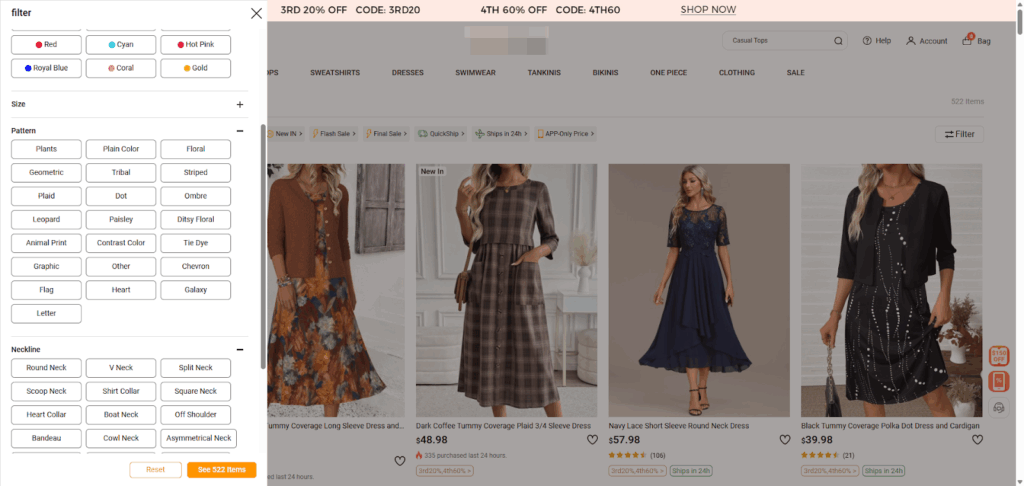
Current state: category pages provided basic information and filters, with some trust signals, but still had room to improve.
Recommended action: add useful supporting content, such as buying guidance and relevant questions, near the bottom of the page. This can clarify expertise and address needs across the customer journey.
Product Pages
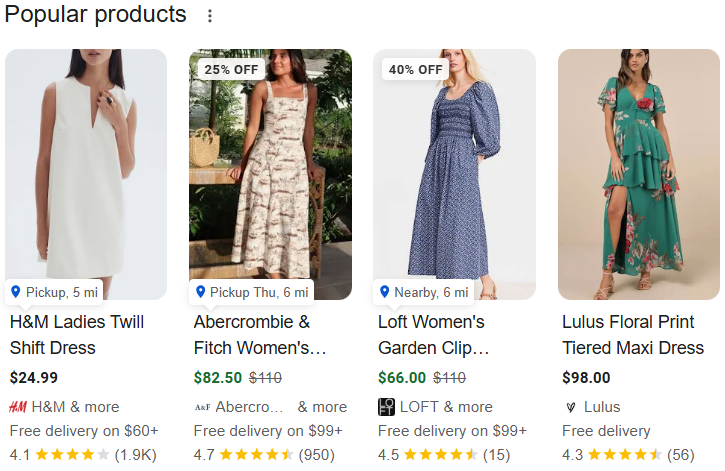
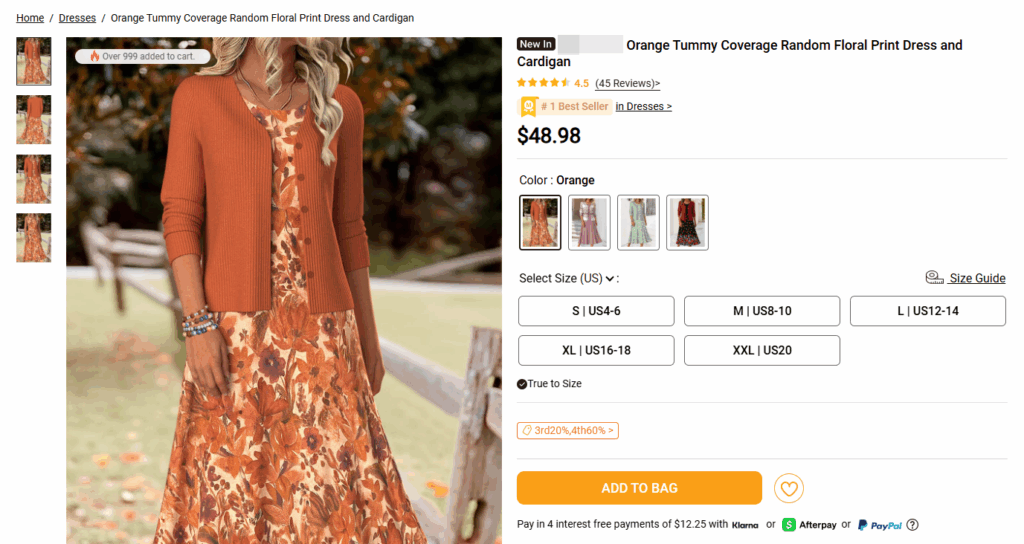
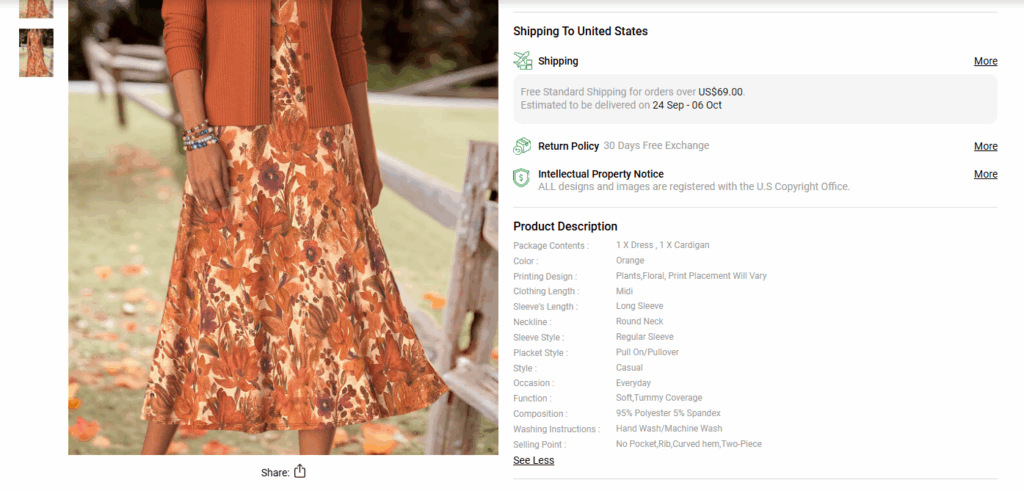
The pages contained the basic information, but appeared thin when compared with stronger competitors and offered limited distinctive value.
They needed clearer benefits, richer detail and more specific use contexts.
Article Pages
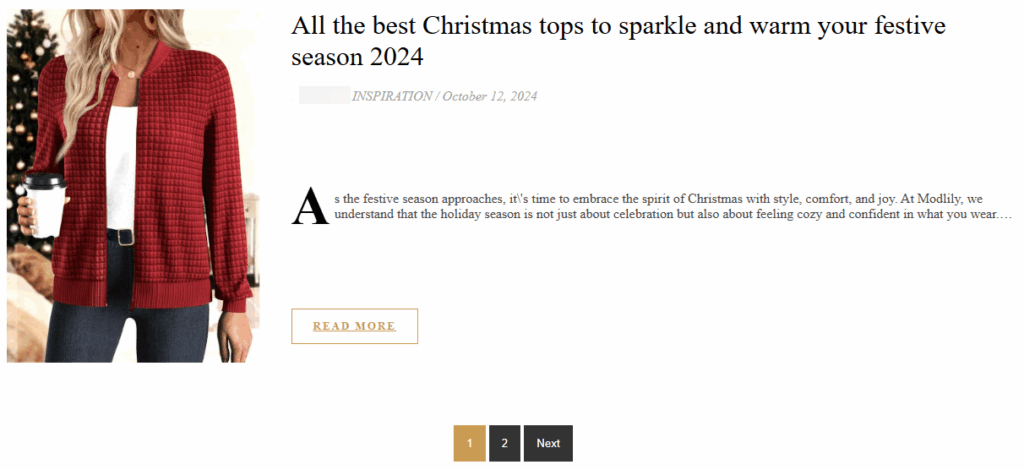
The site had only six articles in the source snapshot, and almost none appeared to be indexed.
This was the largest missed opportunity.
Articles can attract informational demand and support the site's semantic network and topical authority.
Other Pages
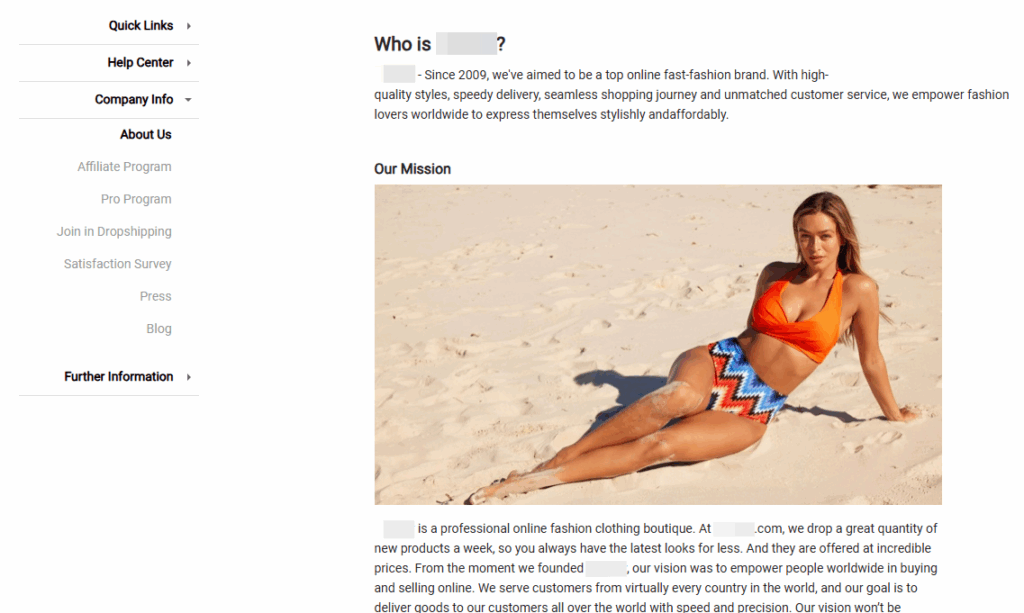
Brand and company information was limited. The brand story was brief, lacked emotional depth and did not provide enough evidence of experience, expertise, authority and trust.
Some pages delivered more than 90 percent of their information through images rather than text. From an SEO and accessibility perspective, this created several problems:
- Search systems rely heavily on HTML text, while text inferred from images is a weaker substitute.
- The pages lacked semantic structure and were difficult for crawlers to interpret.
- Missing alt text made the problem worse.
The likely result was weaker indexation and fewer ranking opportunities, as illustrated in the source screenshot.
3.3 Content Structure
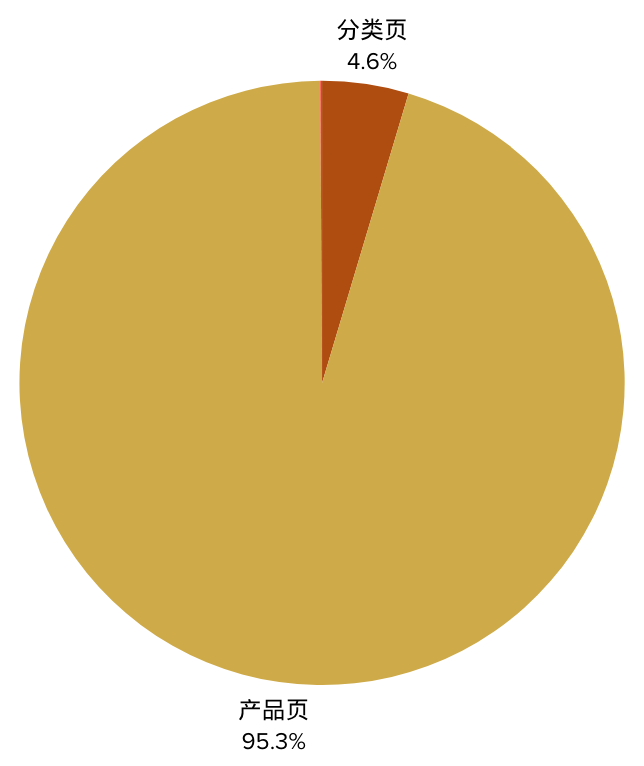
Page-Type Distribution
Category pages accounted for about 5 percent of the site, product pages for about 95 percent, and articles were almost absent. That mix is common in womenswear ecommerce, but having almost no editorial content was still a significant weakness.
Without articles, the site pursued commercial demand without contributing enough informational value. The source argues that this limited its ability to earn broader search preference.
The basic role of articles is to cover more stages of the customer journey, build a more complete semantic system and strengthen authority over time.
With a sound editorial strategy, the site could rank for many more keywords and gradually increase its share of non-branded traffic, creating more genuinely organic demand.
That work could also support rankings for the homepage and category pages and improve conversion opportunities.
A strong article strategy can reduce dependence on paid link acquisition.
That can lower link costs, produce more durable value and reduce risks associated with excessive artificial link building.
Keyword Cannibalization
Because the site had many pages with limited differentiation, several URLs competed for the same queries.
Keyword cannibalization cannot always be eliminated on a large ecommerce site.
Distinct category purposes and content can nevertheless reduce unnecessary overlap between pages.
3.4 Internal Links
The screenshot showed more than 1,000 followed internal links on one product page, mainly from large groups of recommended products. This could:
- Spread internal importance too thinly.
- Send crawlers through repetitive recommendation paths and consume crawl resources.
- Reduce the efficiency of indexation and ranking.
Recommended direction:
Limit recommendations to a useful number and design links deliberately, so users, crawlers and internal signals concentrate on pages with real value.
The source summarizes the relationship this way: on-site work establishes the floor, while off-site work can raise the ceiling.
On-site improvements help a website become visible.
Off-site evidence helps search systems decide whether to trust it and assign more visibility.
4. Off-Site Optimization
4.1 Backlinks
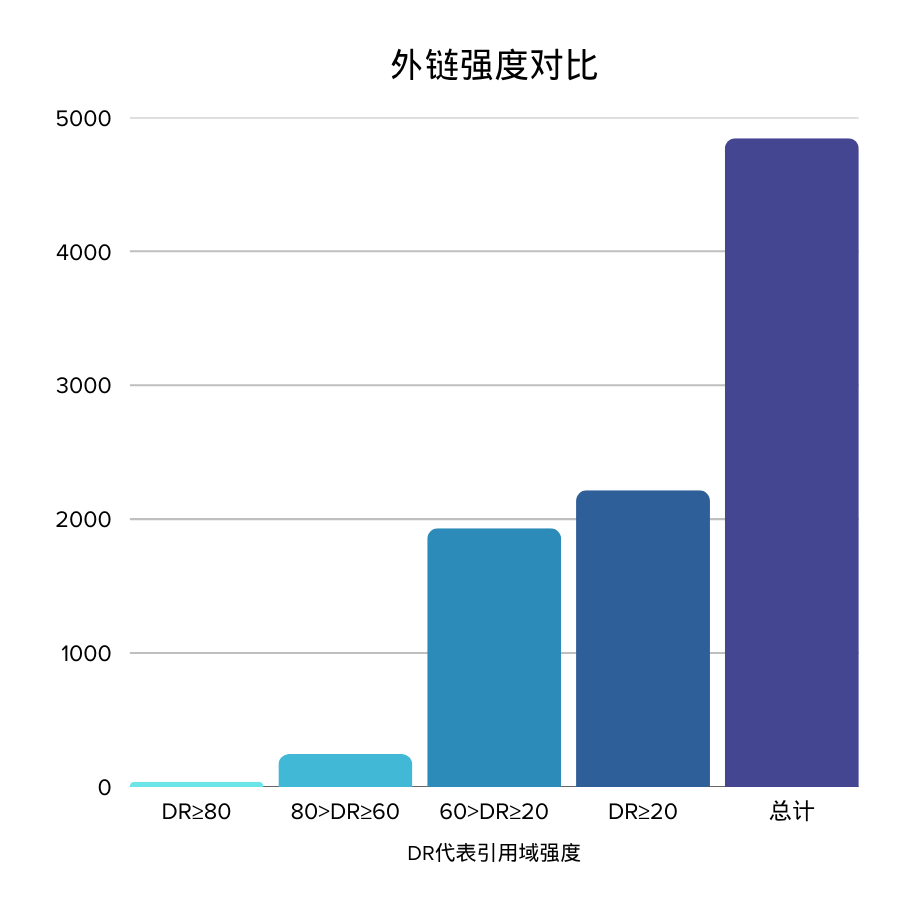
The source snapshot showed 4,845 followed backlinks across the main Domain Rating ranges and about 39,748 backlinks in total when nofollow links were included.
The volume was substantial, but the quality mix and strategy still had room to improve.
This is a common weakness in SEO programs.
Link building is one of the easiest areas in which to spend money and create risk instead of value.
Even after learning to assess individual links, a team still needs a portfolio strategy. Industries depend on links to different degrees, and the appropriate strategy changes as a site matures. Link type, anchor text, cadence, destination pages and follow attributes all require deliberate decisions.
Many international-trade websites do not need to buy links at all because useful products and resources can attract a steady flow of natural references. Reviewing those links reveals genuine user paths and motivations, and the surrounding content is often more authentic than a paid placement. This kind of natural pattern can be more resilient during algorithm changes.
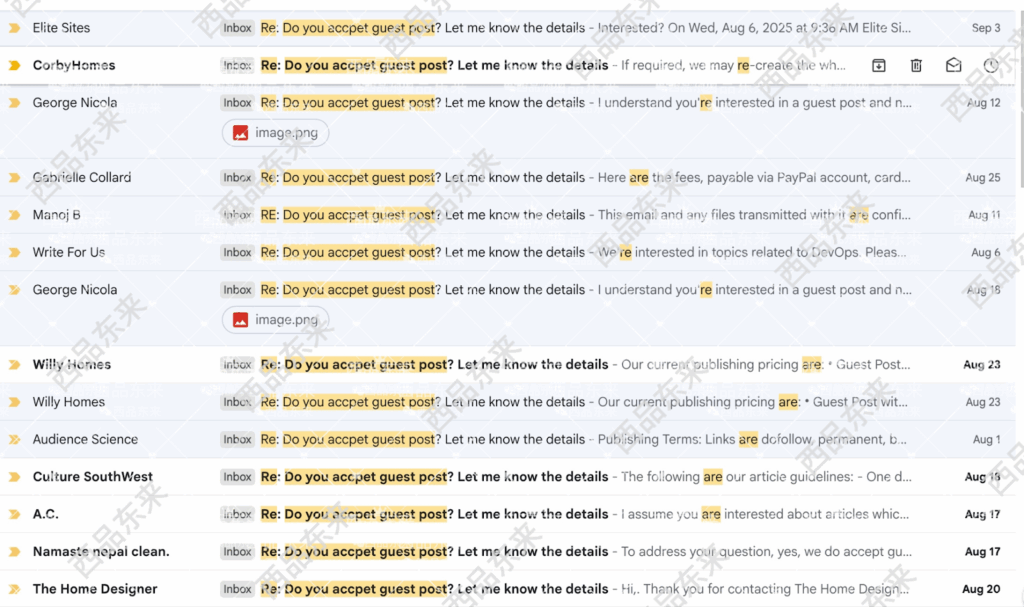
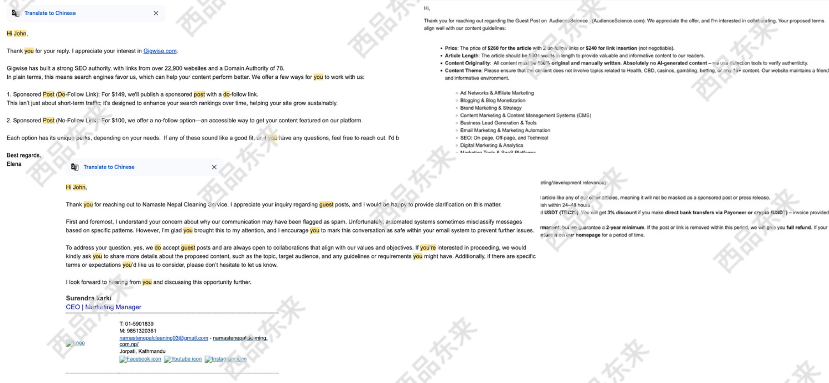
Sites that still need active link acquisition may eventually require outreach: identifying relevant publishers, discussing an editorial contribution and meeting meaningful content standards.
That is the purpose of responsible link building: not merely passing signals, but earning contextual trust.
The source then shows examples of outreach emails from day-to-day work.
4.2 Brand Signals
Brand Search Demand
The data snapshot attributed about 120,000 organic visits to Brand M, with 98 percent coming from branded queries.
This indicated meaningful brand awareness: most search visitors already knew the brand name.
That pattern had two sides:
- Strength: high branded search demand suggested strong recognition and gave search systems a useful trust signal.
- Weakness: heavy dependence on branded queries left non-branded coverage thin and the traffic mix unbalanced, which created a long-term growth risk.
Brand demand can be a strong SEO signal, but content coverage and site structure determine whether it can support a broader ceiling for growth.
Sitelinks
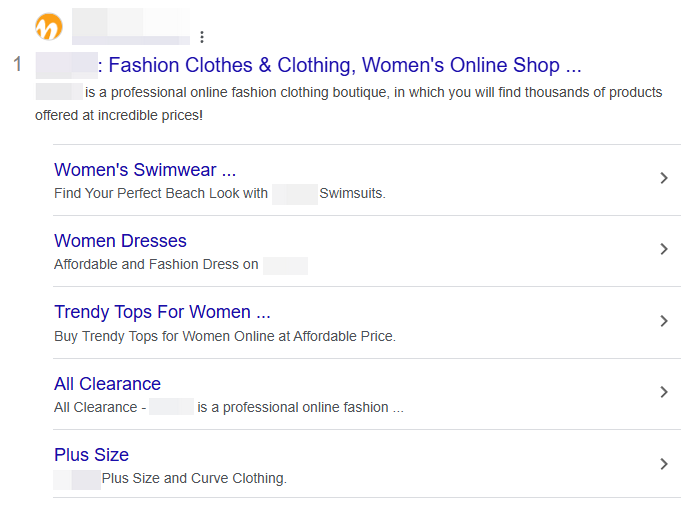
Sitelinks often reflect the destinations users value and how Google understands a site's architecture and brand.
In this snapshot, Brand M's sitelinks broadly matched its on-site and off-site profile, suggesting that Google had formed a coherent view of the brand.
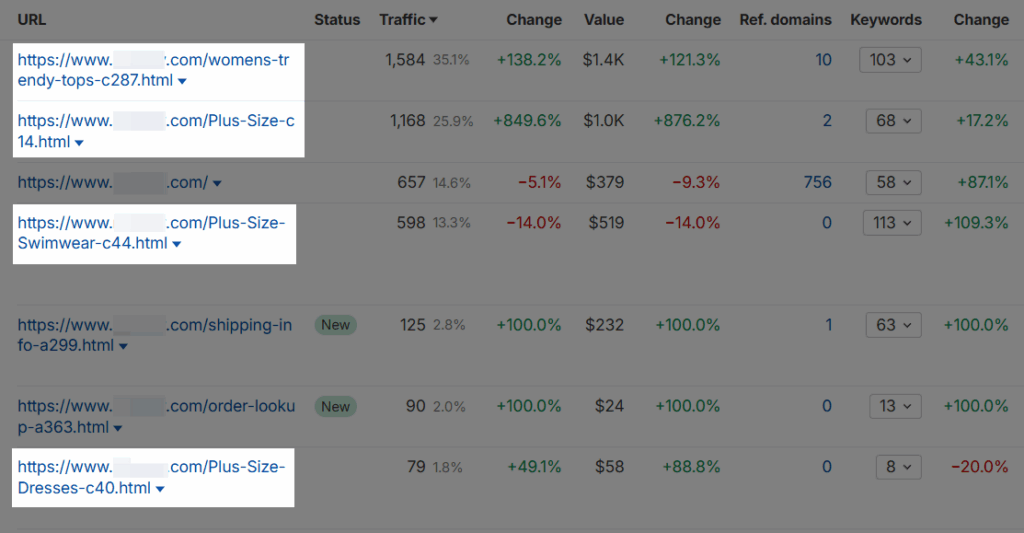
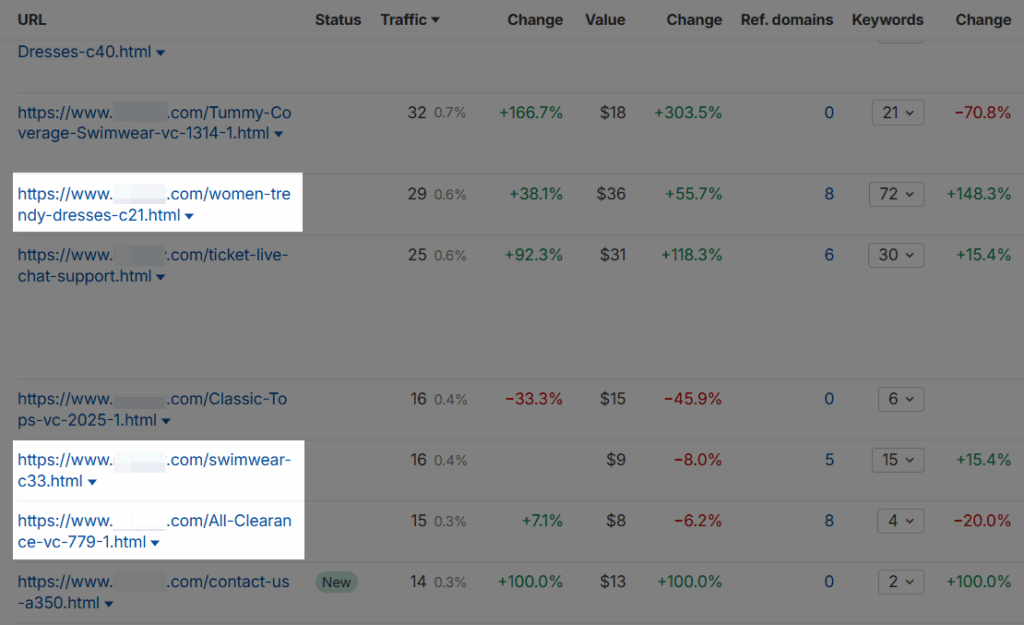
Top pages:
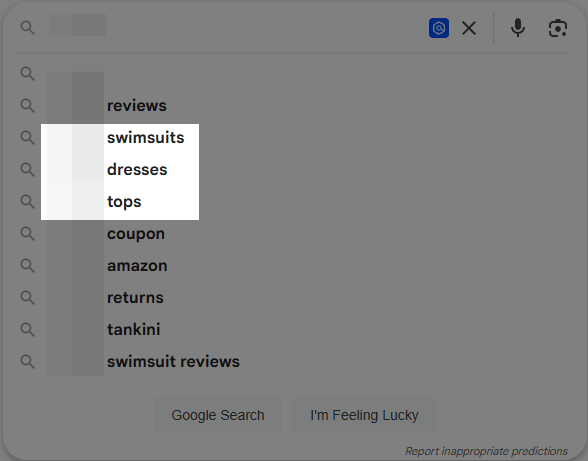
Google search suggestions:
Official Media and Social Presence
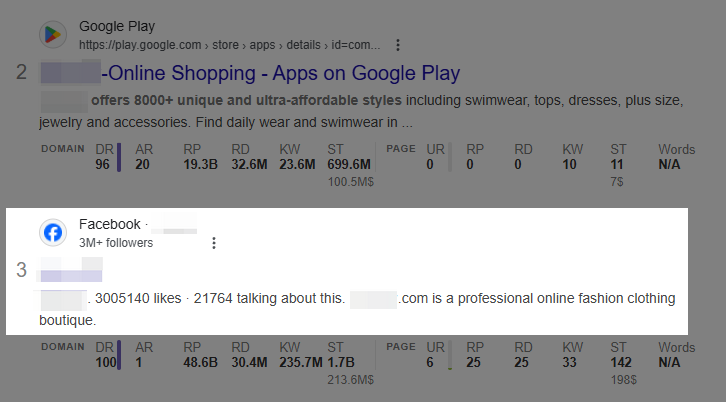
Brand M's official social accounts ranked for branded searches, suggesting that Google recognized the brand across more than one source.
Video results were missing, which represented an opportunity.
YouTube is an important part of Google's ecosystem and may receive prominent placement for suitable queries.
The missing video presence suggested that Brand M had not yet built complete cross-format visibility.
A systematic YouTube content and optimization program could help it compete for that space.
Brand-Plus-Product Search Performance
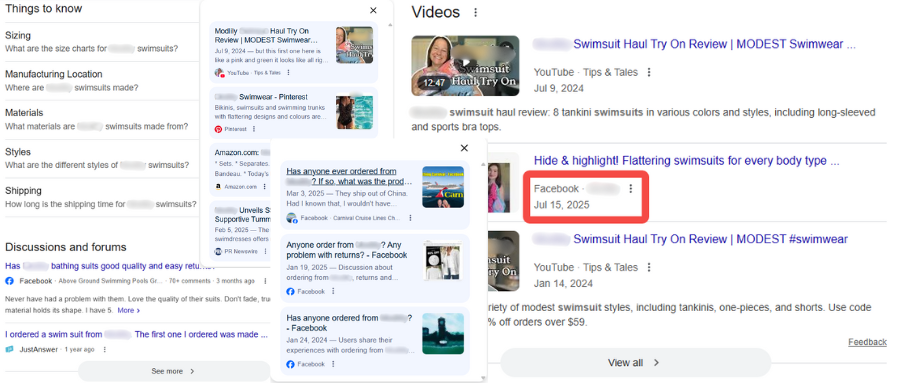
Brand visibility differed across product categories:
The screenshot showed strong social signals in swimsuit-related search features.
Signals for tops were weaker.
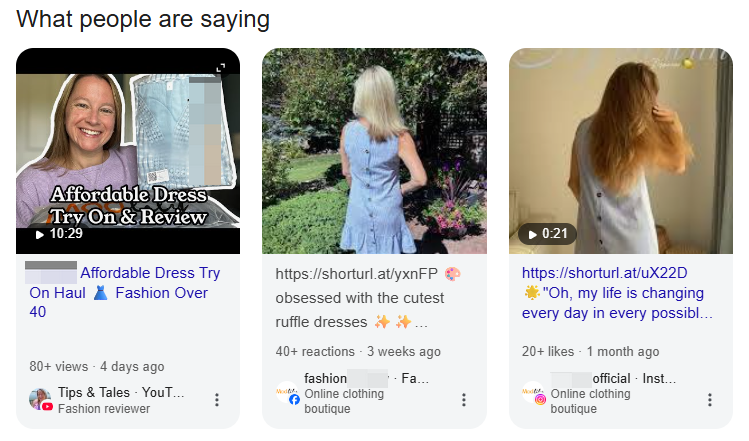
Dresses were closer to swimwear and also showed a visible social presence.
Overall, social sources dominated Brand M's brand-plus-product results, while first-party website content and authoritative editorial references were less prominent.
AI Search Performance
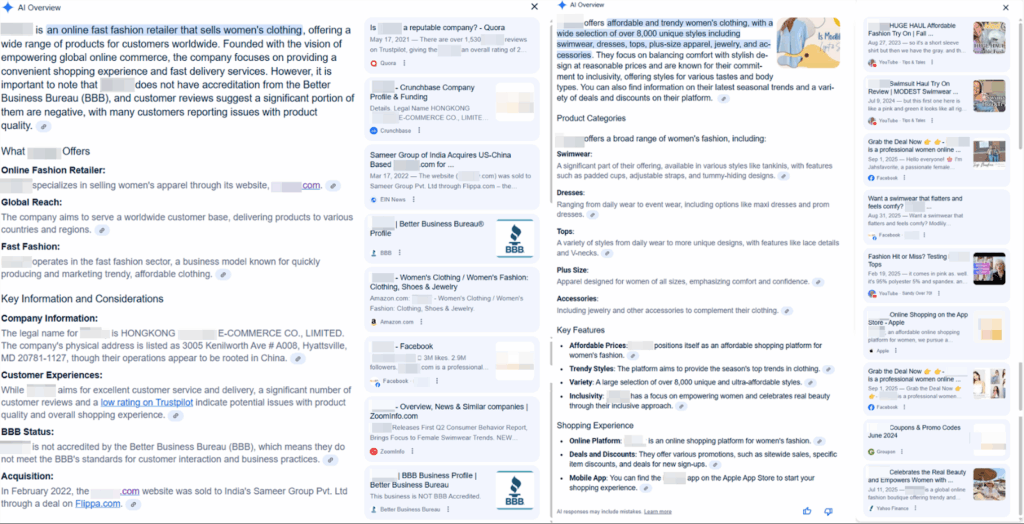
The source identified four visible problems in AI-generated search results for Brand M.
First, the summaries were generic and less detailed than the comparisons shown for competitors.
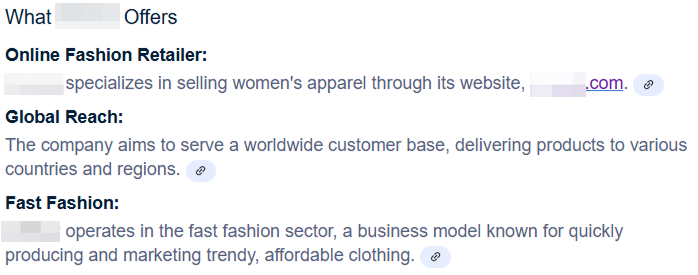
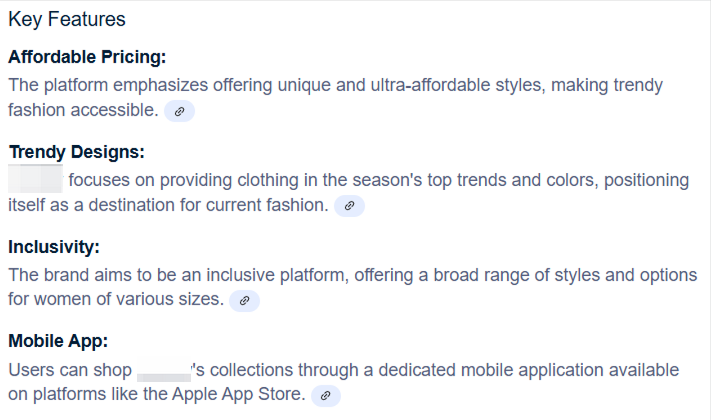
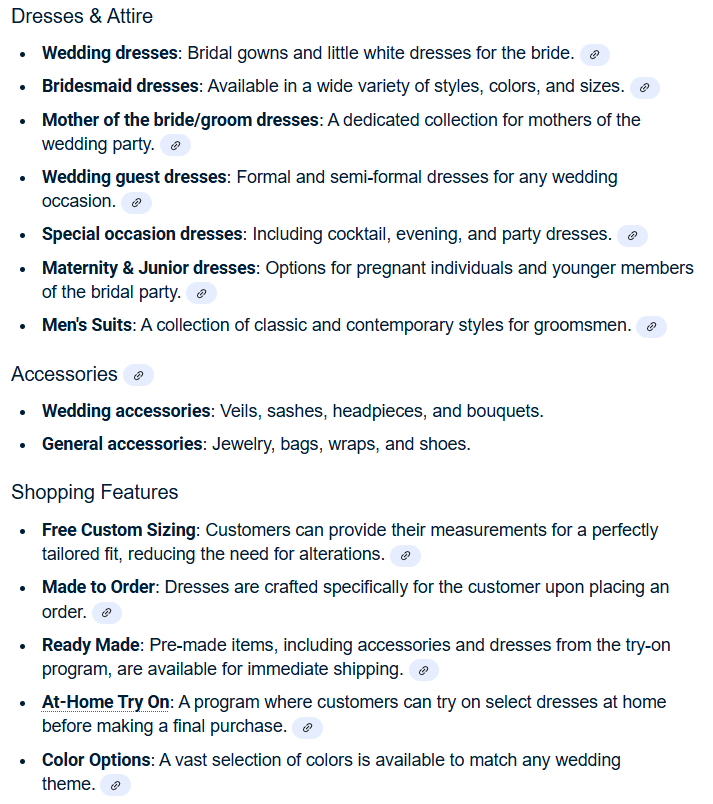
Second, the answers lacked clear structure. The source interpreted this as evidence that the website's own content structure did not make the brand easy to understand.
A comparison screenshot showed what the source considered a clearer, more structured answer.
Third, most cited sources were third-party websites or social platforms rather than Brand M's own website or official media.
Fourth, the generated answers included a substantial amount of negative brand commentary, which could affect perception.
Taken together, these signals suggested that Google recognized Brand M, but relied more on social and third-party sources than on the official website.
The source connects that pattern to weaknesses in the site's SEO foundations.
Brand perception in search depends partly on whether search systems can find clear, consistent and credible information on the official site and in authoritative external sources.
Brand M had useful branded demand and social evidence, but its weak SEO foundation left external sources with disproportionate influence over how the brand was described.
The source therefore treats SEO and generative-engine visibility as connected rather than separate channels.
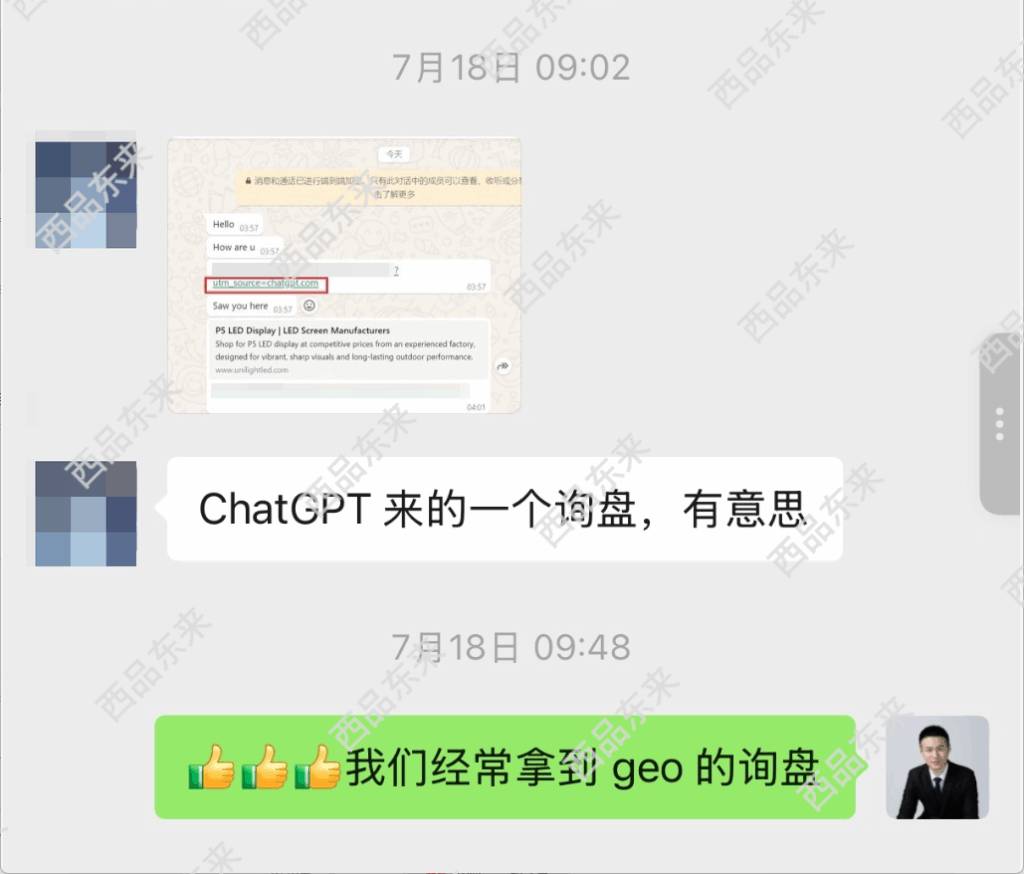
Strong SEO foundations can also support visibility in AI-mediated discovery. The source reports that some international-trade clients were found through AI answers and that even Chinese-language projects received visits from services such as DeepSeek. These are observations, not guaranteed outcomes.
5. User Experience
| Area | User-experience observation | Assessment |
| Performance and stability | Slow loading | Negative |
| Layout shifts caused by the header | Negative | |
| Site navigation | Detailed categories and relatively clear navigation | Positive |
| Page design | Serviceable visual design | Neutral to negative |
| Clear sections, but clutter and information overload | Negative | |
| Filters open in a separate panel and add another interaction | Negative | |
| Large groups of recommended products create information overload | Negative | |
| Help-center and company-information pages feel cramped and underprioritized | Negative | |
| Some pages replace text with images and are less accessible | Negative | |
| Product range | A broad catalog serves more needs | Positive |
| Shopping flow | Adding items and completing purchases is relatively smooth | Positive |
| Product options are difficult to change | Negative | |
| Payment and checkout | Several payment methods are available | Positive |
| Installment payments are available | Positive | |
| Address details can be completed automatically | Positive | |
| Overall experience | Average | Neutral to negative |
Overall, Brand M's browsing experience combined useful strengths with clear friction.
For an independent site, user experience is not only an operating concern; it is also the purpose that SEO should ultimately serve.
Improving it requires a step-by-step review of the customer journey, from discovery and comparison to purchase and repeat use.
This article does not explore every step, but the principle is clear: SEO should serve the user, and optimization should not be separated from that goal.
6. AI Search Visibility
The earlier section on AI search results covers part of the issue.
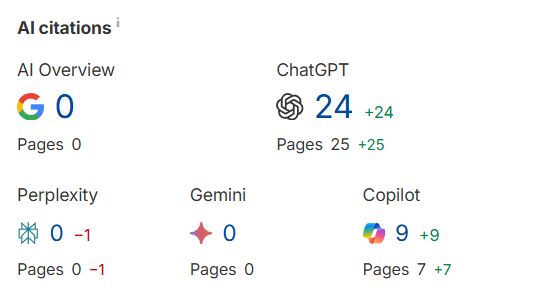
Overall, the source found Brand M's visibility in AI-generated search results to be negligible.
The screenshot also compares this with other search-result features.
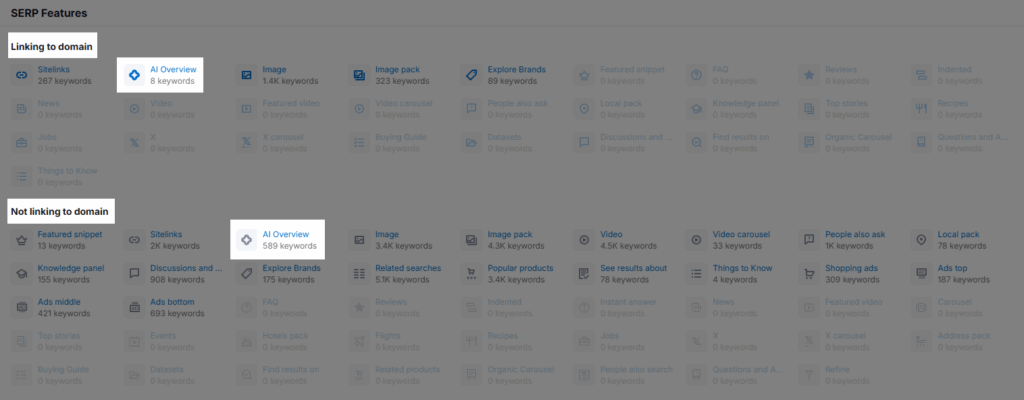
Very few of the brand's keywords appeared in AI Overviews, with a reported visibility rate of 1.34 percent.
The source interpreted this as low AI visibility.
Claims about AI SEO vary widely, but the source's central argument is straightforward:
- AI-mediated discovery still depends heavily on accessible search and web evidence.
- If Google cannot interpret a website clearly, AI systems are also less likely to select it confidently.
The first step in AI search optimization is therefore to strengthen the site's traditional SEO foundations.
Clear structure, useful content and positive brand evidence give automated systems a better chance of understanding and citing the site, but cannot guarantee inclusion.
7. Case Summary
The diagnosis showed that Brand M still had substantial room to improve its SEO.
Three priorities stood out:
- Technical repair: defects in the underlying structure can prevent other improvements from delivering their full value.
- Basic on-page improvements: titles, descriptions, H1 headings and alt text can be comparatively low-cost changes with meaningful practical value.
- A systematic content-marketing strategy: editorial coverage influences non-branded demand and the brand's long-term growth ceiling.
8. Benchmark Example: Azazie
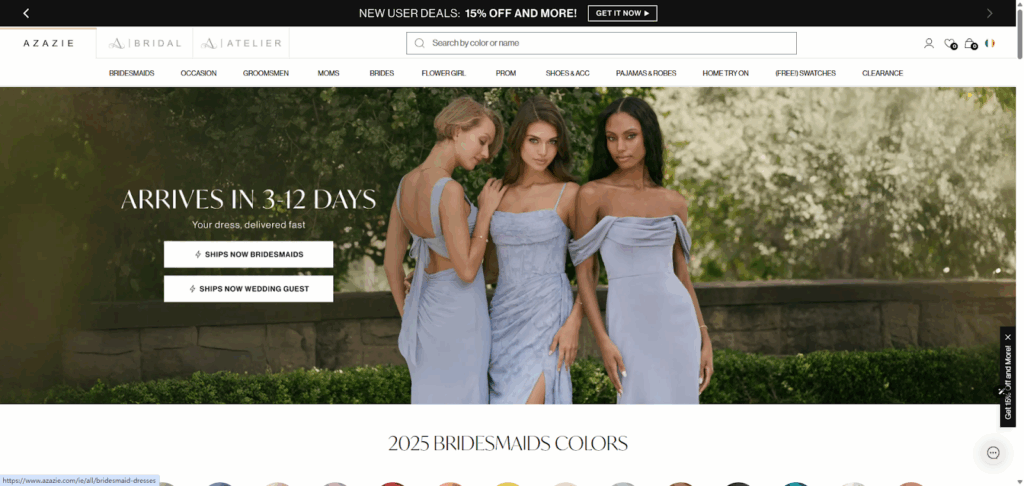
The source compares Brand M with a stronger example to make the differences more concrete.
Azazie focuses on bridal and occasion wear and had become a leading site in that womenswear niche at the time of analysis.
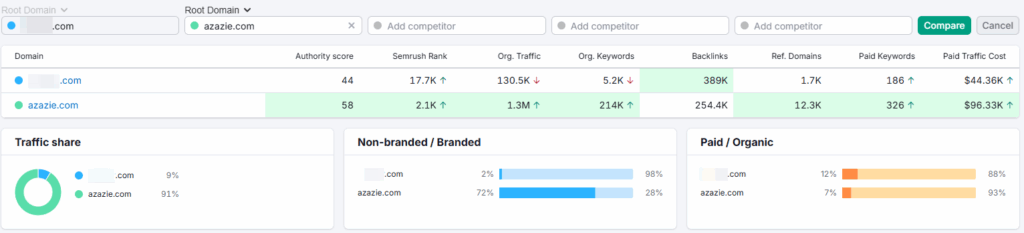
The comparison showed:
- Brand M ranked for about 5,200 keywords, while Azazie ranked for about 214,000, a difference of more than 40 times.
- Estimated organic traffic was 122,000 versus 1.3 million.
- More importantly, Azazie's traffic mix was less dependent on branded searches and included a larger share of non-branded demand.
The source attributes that result to several practices.
8.1 Strong Basic Optimization
Problems with titles, descriptions and H1 headings were limited, and many apparent duplicates came from multilingual pages with correctly implemented hreflang.
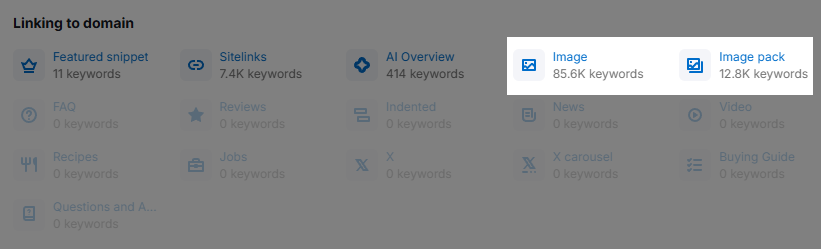
Images had descriptive alt text, supporting indexation and image-search visibility.
The site appeared in many search-result features and had strong organic traffic.
Alternative text is only one of many factors that influence whether an image appears in a search feature.
8.2 Clear Information Architecture
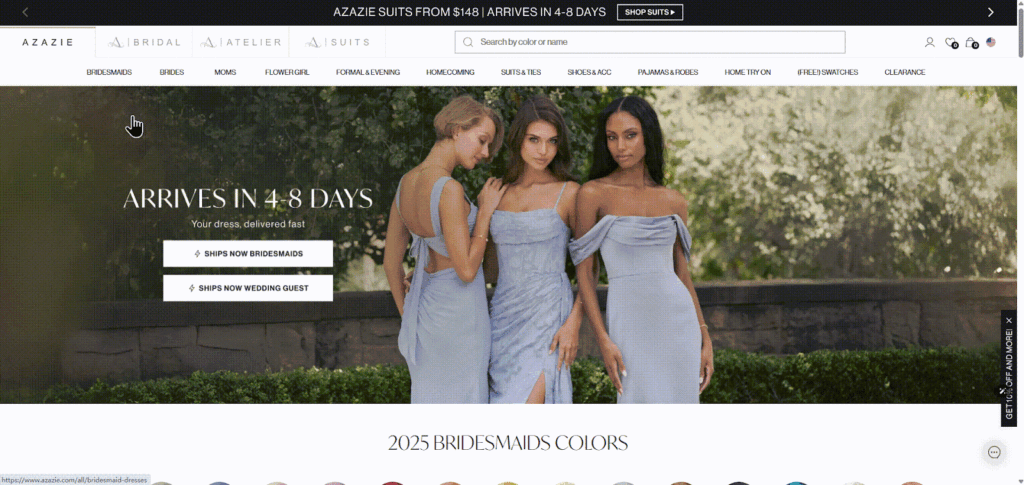
Detailed categories covered the product range from many useful angles.
The specialization made the site's subject easier to understand.
Important pages were generally reachable within three clicks, reducing navigation friction for users and crawlers.
8.3 Strong On-Site Content
Homepage
The homepage combined images with substantial supporting copy, balancing presentation and search context.

The source compares how much readable content each homepage provided.
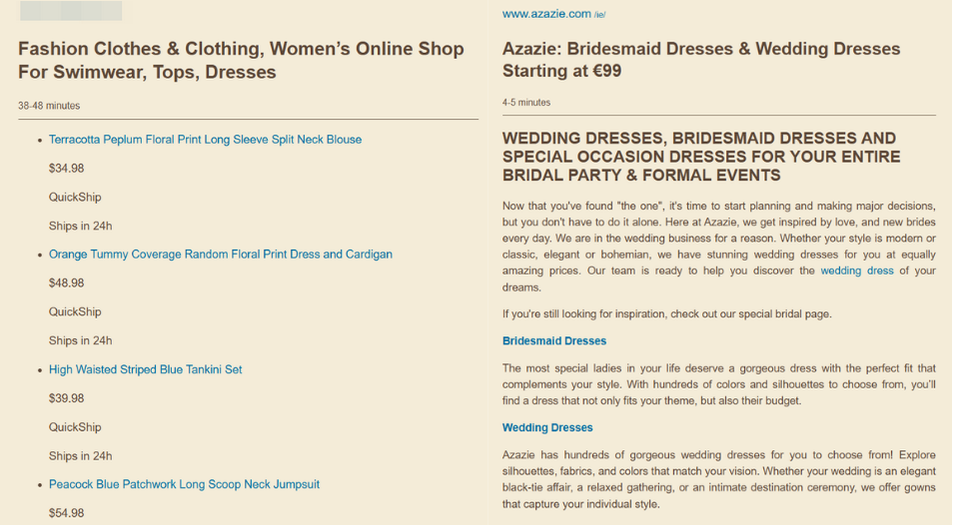
Brand M's homepage mainly showed product links and contained little supporting copy.
Azazie added substantial text near the bottom of its homepage to explain and complement the images.
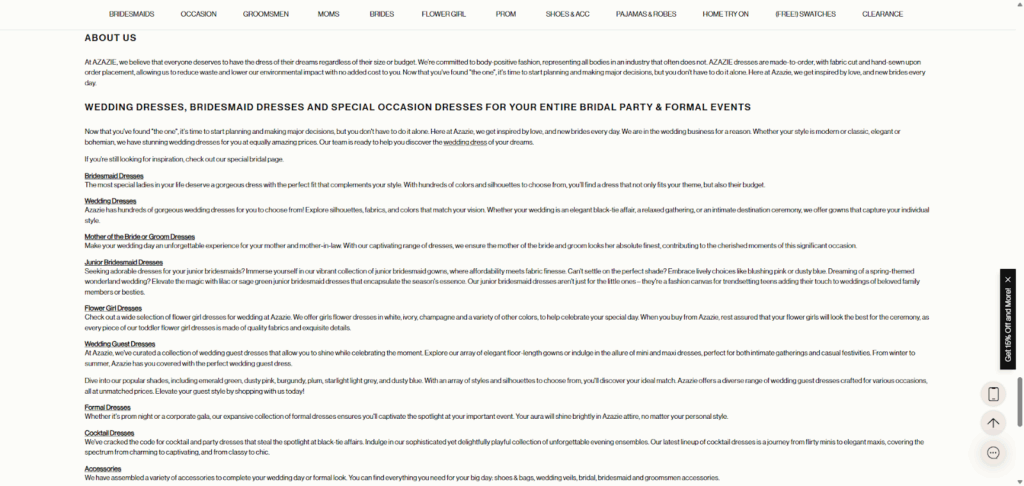
That approach balanced merchandising needs with SEO context.
Category Pages
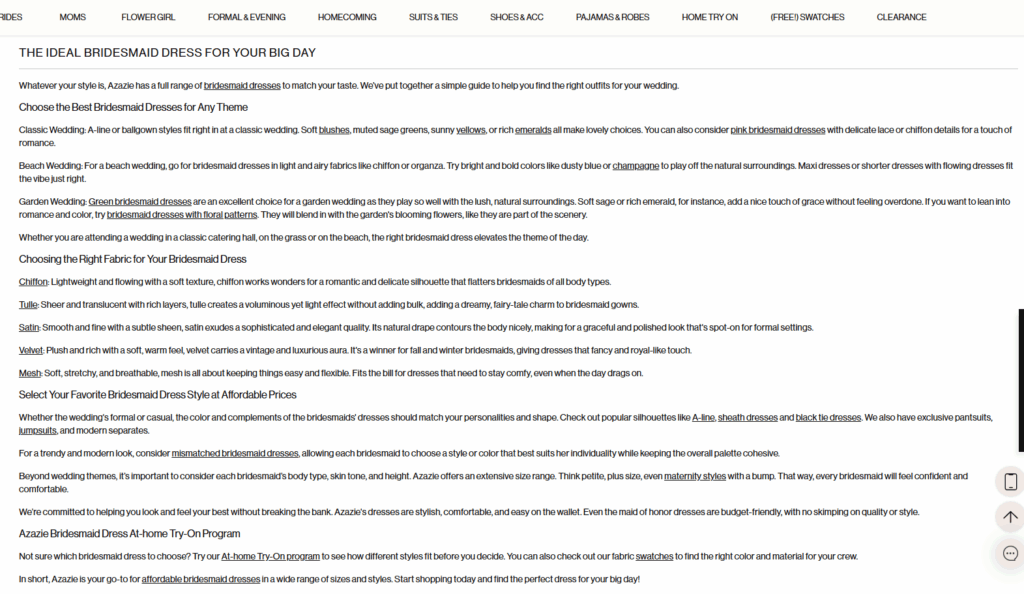
Buying guidance, frequently asked questions and other supporting content appeared near the bottom of category pages, strengthening trust and helping customers choose.
Product Pages
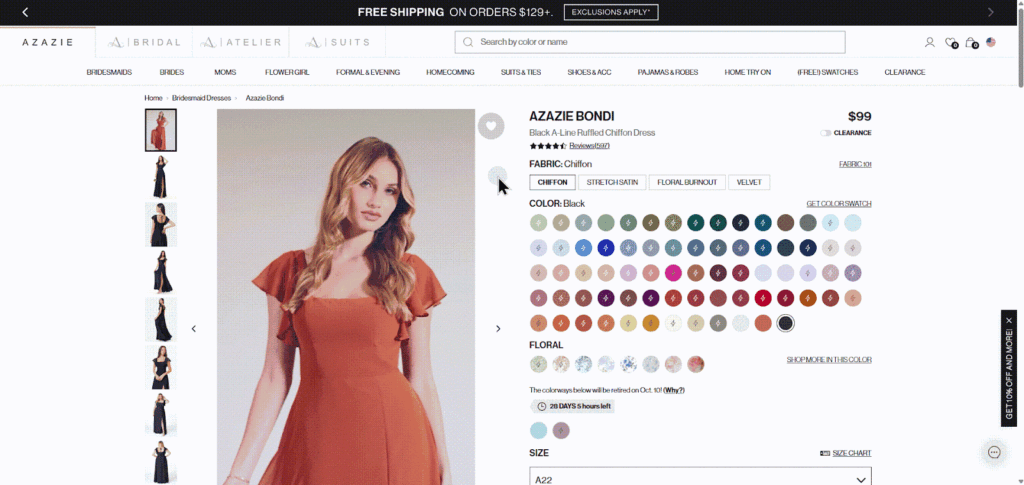
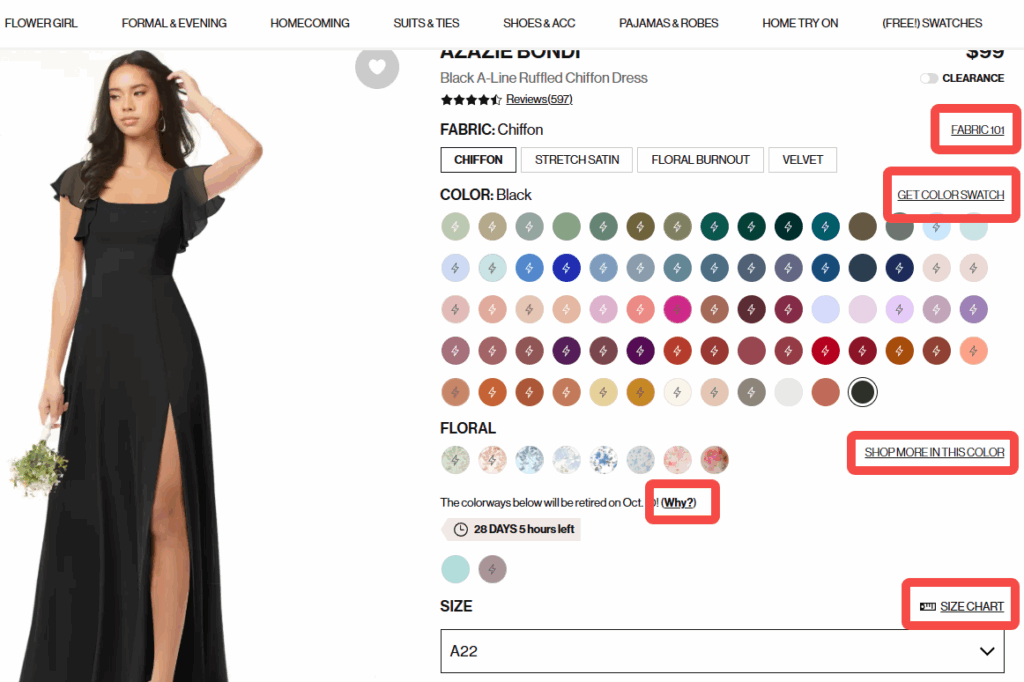
First, detailed product descriptions provided information from several angles.
Where the page itself lacked room, linked resources or PDFs supplied further details without preventing search systems from accessing the information.
Second, customer reviews and customer-submitted images added useful user-generated content. This strengthened trust and helped differentiate otherwise similar product pages.
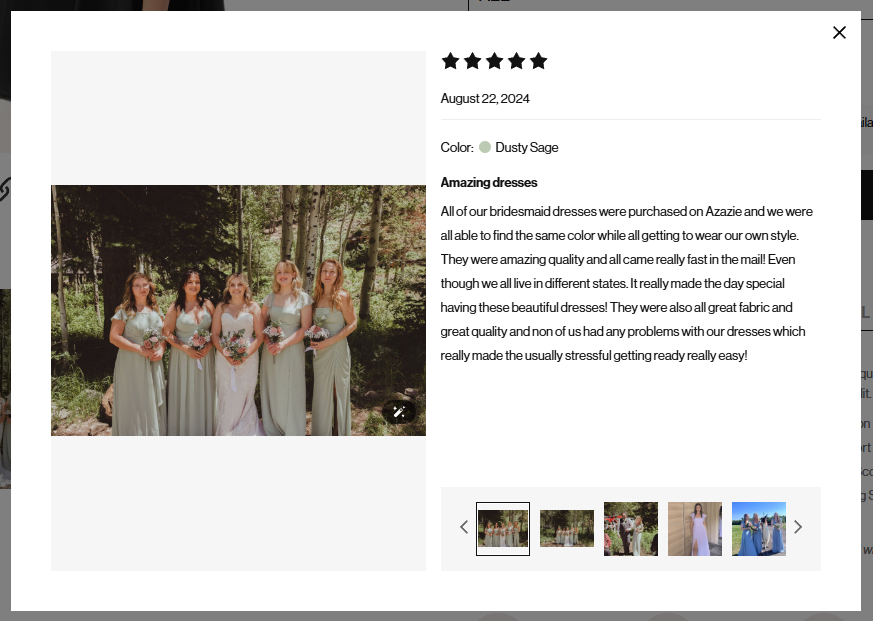
The screenshot showed a customer gallery beneath the main product images, with uploaded photos and reviews available after selection. Brand M also reportedly had more than 254,000 customer reviews that could be used more effectively.
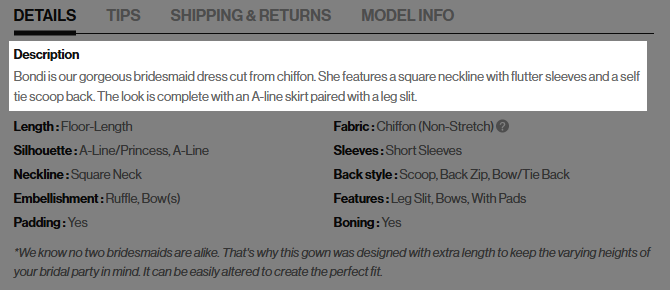
Third, recommended products were limited to a useful number, avoiding excessive internal links.
Other Pages
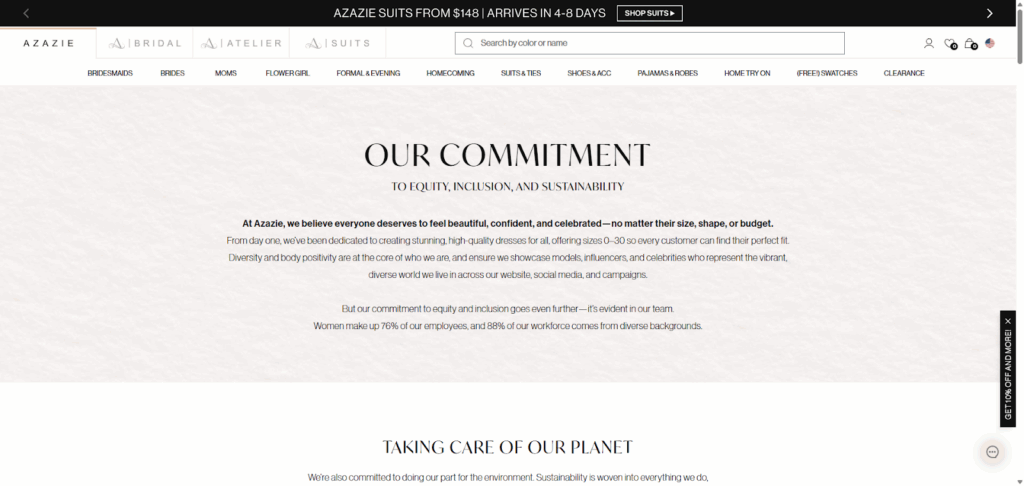
Brand content was thorough and carefully designed, helping search systems and AI tools form a clearer view of the business.
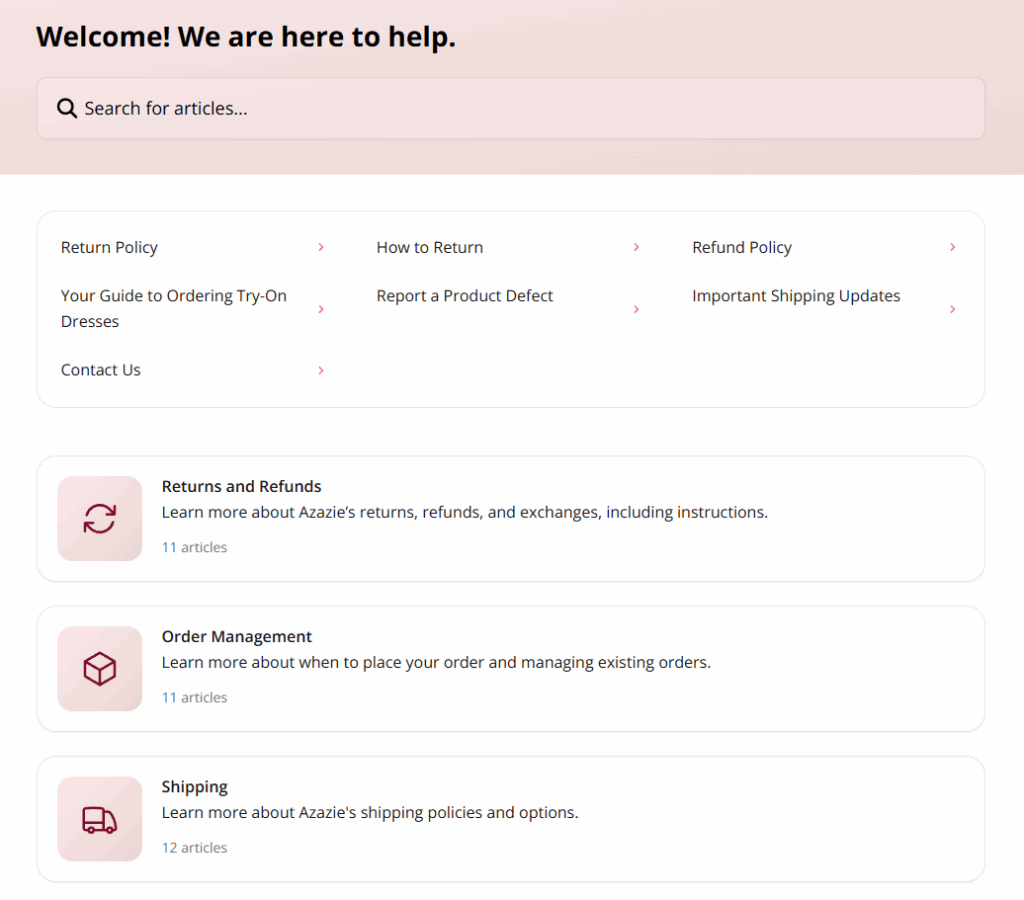
Azazie's customer-service center completed the core support structure and made information easier to find, supporting the user experience and branded search coverage.
Blog Pages
Azazie had about 600 articles in the source snapshot, covering a wide range of topics and supporting both non-branded traffic and the wider site.
The topics were nevertheless marketing-led, so they performed especially well for brand-related searches while leaving some non-branded demand undercovered.
A more systematic topic plan built around the customer journey and related semantic themes could create an even more complete content network and further expand organic traffic.
Conclusion
The comparison between Brand M and Azazie reinforces one principle: technology is the foundation, content is the structure and the brand determines the height.
- Technical repairs help the website become discoverable.
- On-site work makes the content clearer.
- Links and brand signals affect how far the site can extend its authority.
- Sustained content marketing is essential for expanding the ceiling for organic demand.
The source presents Shein as a fast-fashion company that invested early in SEO and argues that long-term organic foundations supported its later scale.
SEO is not a shortcut; it is a long-term discipline.
The lesson the source draws from Shein is consistency: patient, practical work creates a stronger foundation for category leadership.

If organic growth has stalled or the site needs a systematic SEO review, professional support may help identify the next constraints.
The source states that the team has helped more than 100 international-trade websites and cross-border brands with technical, on-site and off-site SEO. This is a company claim, not an independently verified guarantee.
The Chinese page ends with a WeChat contact prompt for readers who want to discuss a project.